

Maddy summaryHR 3982 establishes the "Tariff Response and Damages to Exports Fund" (TRADE Fund) in the Treasury, funded by tariff revenues from imported goods in specific tariff categories. The fund provides direct payments to U.S. agricultural producers affected by export declines, foreign trade barriers, or increased production costs due to trade disruptions. Payments are made by the Secretary of Agriculture based on documented impacts, with annual reports to Congress detailing fund usage and economic effects. The program expires on September 30, 2030, with unspent funds permanently rescinded.
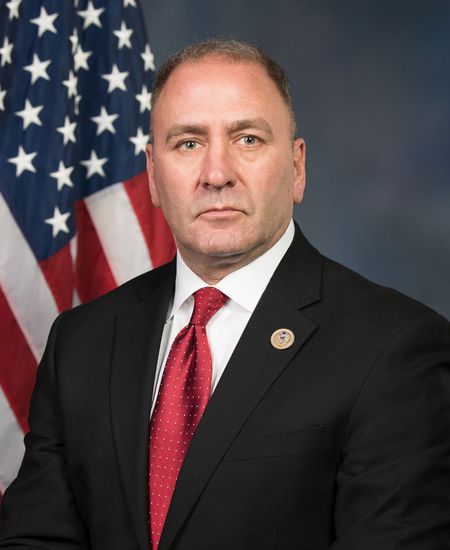
Rep. Clay Higgins
Sponsored bills
Maddy summaryThis bill blocks the U.S. Defense Department from signing new contracts for software source code with companies having specific ties to China. It prohibits contracts with entities that own or fund AI facilities in China, share source code allowing Chinese reverse engineering, or operate data centers in China for such software. The Secretary of Defense may waive the ban for national security reasons, but the rule only applies to contracts entered into within three years of the law's enactment. It directly affects defense contractors and tech firms seeking to provide sensitive software source code to the Pentagon.
Maddy summaryThis bill prohibits the District of Columbia from maintaining policies that block government officials from sharing immigration status information with federal authorities or refusing to comply with federal immigration detainers. It specifically requires DC to share citizenship/immigration data and honor detainer requests under federal law, except when an individual is a crime victim or witness. The law directly affects DC government entities, officials, and policies, mandating cooperation with federal immigration enforcement. It does not change DC's authority to protect crime victims but eliminates existing sanctuary-like restrictions.
Maddy summaryHRES 506 is a non-binding House resolution expressing support for preserving Social Security. It states the House believes Social Security must be protected for current beneficiaries (over 66 million Americans receiving retirement, disability, and survivor benefits) and future generations. The resolution emphasizes that workers’ payroll taxes create a promise of income security that should be honored. It does not create new law or change policy - it solely reflects the House’s position. The resolution was introduced by multiple representatives and referred to the Ways and Means Committee.
Maddy summaryHR 3881, the "Stop Dangerous Sanctuary Cities Act," denies certain federal grants to states or localities that restrict sharing immigration status information or comply with federal immigration detainers. Specifically, it defines "sanctuary jurisdictions" as those with policies prohibiting cooperation with federal immigration enforcement requests (under Sections 236/287 of the Immigration and Nationality Act). The bill blocks recipients from receiving Economic Development Administration grants and Community Development Block Grants if they are deemed a sanctuary jurisdiction. Local officials complying with federal detainers gain legal protections, including immunity from lawsuits, while jurisdictions violating the law face mandatory return of funds. The policy takes effect October 1, 2025.
Maddy summaryHR 589, the FACE Act Repeal Act of 2025, would repeal a federal law (Section 248 of Title 18, U.S. Code) that prohibited obstructing access to reproductive health care facilities through physical means, intimidation, or violence. This repeal would eliminate the federal criminal penalty for such conduct, meaning federal prosecutors could no longer charge individuals under this specific law. The bill applies to all pending or future federal prosecutions related to these actions. It does not affect state laws that may still regulate access to reproductive health care facilities.
Maddy summaryHRES 483 is a House resolution recognizing the 250th anniversary of the U.S. Army's founding on June 14, 1775. It expresses appreciation for the Army's service over 250 years, honors soldiers' valor and core values, and calls for public observance through ceremonies and activities. The resolution has no policy impact or funding provisions - it is purely commemorative. It was introduced by 30 bipartisan House members and referred to the Armed Services Committee.
Maddy summaryHCONRES 35, the Exposing Congressional Drug Abuse Act, would require all members of the U.S. House of Representatives and Senate - including delegates and resident commissioners - to undergo random, unannounced drug tests once per legislative term. Confirmed positive results for illegal drugs (verified by a second test and medical review) would be shared with the member and their chamber's ethics committee, which must publicly disclose any refusal to test. Members would cover the cost of their own tests, and ethics committees would take appropriate action against those who decline participation. This procedural resolution aims to establish internal drug testing standards for congressional members.
Maddy summaryThis bill adds a death penalty option for individuals convicted of distributing, manufacturing, or possessing fentanyl with intent to distribute when their actions cause a death. It directly affects fentanyl traffickers and dealers found guilty under specific drug trafficking laws (sections 401(a)(1) or 416 of the Controlled Substances Act) if their distribution results in a fatality. The key provision allows courts to impose the death penalty, life imprisonment, or any term of years, along with fines under federal law. This policy change specifically targets fentanyl-related offenses causing death, not other drugs or non-fatal cases.
Maddy summaryHR 3598, the Deescalation Drone Pilot Program Act of 2025, establishes a federal pilot program to test nonlethal drones for law enforcement during active shooter events. The program, managed by the FAA, will review nonlethal devices (like sound emitters or cameras) for drones, develop training and safety protocols, and assess effectiveness in indoor scenarios to increase officer safety. It requires drones to be manufactured in the U.S. and mandates a report to Congress within 3 months of the pilot's conclusion, followed by rulemaking to create a formal approval process for law enforcement use. The bill directly affects Federal, State, local, and Tribal law enforcement agencies responding to active shooter events as defined by the legislation.