

Maddy summaryThis resolution (HRES 618) formally commends the U.S. Coast Guard, specifically Air Station Corpus Christi and the crew of helicopter CG-6553 (including Lt. Ian Hopper, Lt. Blair Ogujiofor, AMT3 Seth Reeves, and AST3 Scott Ruskan) for their rescue efforts during the July 4, 2025, catastrophic flooding in Texas. The bill highlights their actions in saving 165 lives and evacuating 15 people amid rapidly rising rivers and severe weather, including 3 aborted landing attempts due to poor conditions. It recognizes their response as one of the most consequential rescue operations in U.S. history, emphasizing Coast Guard professionalism during the disaster. As a commemorative resolution, it does not enact policy but serves as a formal expression of gratitude to the Coast Guard personnel and all first responders.
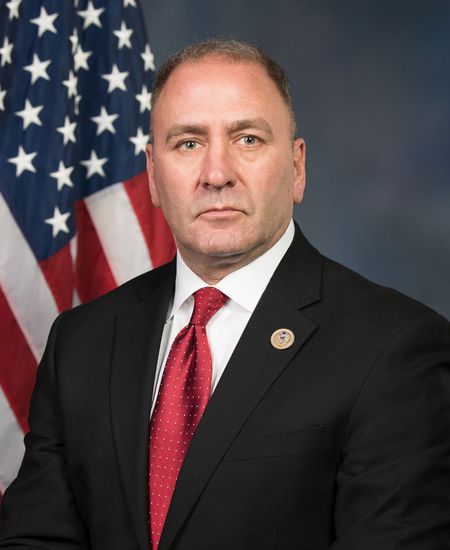
Rep. Clay Higgins
Sponsored bills
Maddy summaryHR 4800, the Fisheries Modernization Act of 2025, expands eligibility for fishery disaster relief by adding "infrastructure-related cause" to the definition of qualifying events under the Magnuson-Stevens Act. This specifically covers disruptions caused by Federal or State infrastructure failures (like flood control systems, levees, or spillways) that impact commercial or subsistence fisheries, habitat, or water quality. The bill explicitly includes the red swamp crawfish and white river crawfish fisheries in eligibility requirements, requiring information on hydrological conditions, water quality, or environmental disruptions affecting them. It does not change existing relief for marine or anadromous fisheries but clarifies that infrastructure-related events now qualify for assistance.
Maddy summaryHR 4788 would amend a 1932 District of Columbia law to allow Members of Congress (Senators and Representatives) to carry concealed firearms in Washington, D.C., if they hold a valid concealed carry license from a state where they are permitted to carry, or are otherwise legally allowed to carry concealed in their home state. The bill requires these members to not be federally prohibited from possessing firearms, to carry a valid state-issued license or proof of residency rights, and to present photo identification. This exception applies only to Members of Congress and does not alter D.C.'s general concealed carry laws for other individuals. The provision would take effect upon the bill's enactment.
Maddy summaryHJRES 111 is a joint resolution seeking congressional disapproval of a U.S. Fish and Wildlife Service rule on barred owl management. The rule, published in September 2024, outlined strategies to reduce barred owl populations to protect the endangered spotted owl. Under the Congressional Review Act, this resolution would nullify the rule, preventing its implementation. If enacted, the rule would have no legal effect, and the agency could not enforce the barred owl management strategy.
Maddy summaryHR 4676, the Modern Firearm Safety Act, preempts state and local laws that require specific handgun design features not mandated by federal law. It directly affects handgun manufacturers, sellers, and consumers in jurisdictions with such requirements, such as those mandating loaded indicators, magazine safety mechanisms, or identification systems. The bill prohibits any state or local government from enforcing or creating regulations that require handguns to include features like cartridge identification, magazine insertion sensors, or other mechanisms not required by federal statute. This law establishes federal standards as the sole requirement for handgun design, overriding conflicting state or local regulations.
Maddy summaryThe End the Vaccine Carveout Act changes the National Vaccine Injury Compensation Program (NVICP) to allow individuals to sue vaccine manufacturers or administrators directly in court for vaccine-related injuries or deaths, without first needing to file a claim under the NVICP. It removes time limits for filing NVICP claims and repeals rules that previously let people choose between the program and a lawsuit for the same injury. The bill also specifically excludes COVID-19 vaccines from the definition of "covered countermeasure," meaning they are no longer protected by the same emergency liability shield that applied to other pandemic vaccines. This affects vaccine manufacturers, providers, and individuals who experience vaccine-related harm, shifting liability from the NVICP to the court system for most cases.
Maddy summaryHR 4706 prohibits Chinese government-linked entities (including Chinese corporations, CCP-affiliated organizations, and entities controlled by China) from acquiring, leasing, or owning U.S. agricultural land or residential real estate. The bill requires such entities to sell all existing U.S. agricultural land holdings within one year (with a 180-day letter of intent deadline) and residential real estate holdings within one year, imposing daily fines of $100 per acre for agricultural land violations and $1,000 per residential unit. It also voids noncompete agreements between these entities and their employees. The law applies to all 50 states and territories, with enforcement by the Agriculture and Commerce Departments, and includes a 2-year temporary residential purchase ban ending in 2026 (extendable by the President).
Maddy summaryHR 4620 amends federal law to include rioting as a form of racketeering activity under Title 18, United States Code. This change would allow prosecutors to charge individuals who organize or participate in riots as part of a larger criminal enterprise under federal racketeering laws. The bill specifically targets coordinated riot activities linked to organized crime, not isolated or spontaneous protests.
Maddy summaryHR 3095 requires the U.S. Postal Service to assign a single, unique ZIP Code to 74 specific communities across 16 states (including Canyon Lake, CA; Castle Pines, CO; and Estero, FL) within 270 days of the bill's enactment. This addresses current issues where these communities share ZIP Codes with neighboring areas, causing mail delivery confusion. The bill directly affects residents and businesses in these designated locations by simplifying mail routing. It creates a concrete administrative change without altering broader postal policies or funding.
Maddy summaryHRES 594 is a non-binding resolution passed by the U.S. House of Representatives condemning the persecution of Christians in Muslim-majority countries. It cites specific examples like violence against Christians in Nigeria (including attacks on Palm Sunday and Yelewata), restrictions in Egypt (such as limited worship spaces and forced conversions), and blasphemy-related violence in Pakistan. The resolution urges the President to prioritize protecting persecuted Christians in U.S. foreign policy, including through diplomatic engagement and trade negotiations with affected countries. As a symbolic resolution, it does not create new laws or directly affect any individuals, but aims to influence U.S. diplomatic efforts.