

Maddy summaryThis bill increases mandatory minimum prison sentences for several serious crimes in the District of Columbia. It mandates life imprisonment without parole for first-degree murder, raises the minimum sentence for rape to 25 years (30 years if the offender has a prior violent crime conviction), and sets new minimums of 10 years for second-degree murder, kidnapping, and burglary. Carjacking without a weapon now requires a minimum of 10 years, while armed carjacking requires 20 years. These changes apply to individuals charged on or after the bill's enactment date and affect all D.C. criminal cases involving these offenses.
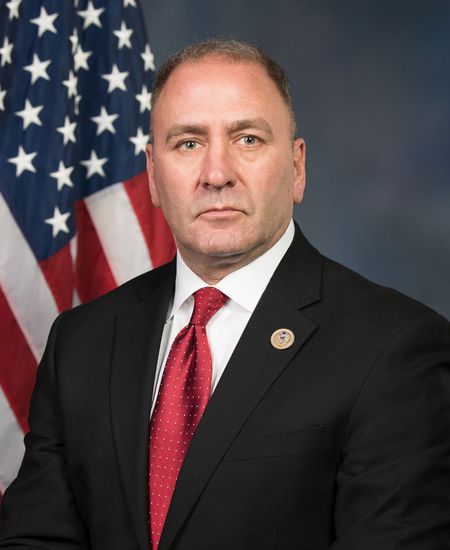
Rep. Clay Higgins
Sponsored bills
Maddy summaryThis bill adds Medicare coverage for multi-cancer early detection screening tests (blood or biological tests analyzing cell-free DNA) starting January 1, 2028. It directly affects Medicare beneficiaries aged 68 and older (starting in 2028, with the age limit increasing by 1 year annually), requiring tests to be FDA-cleared and deemed reasonable/necessary by the Secretary for early cancer detection across multiple organ sites. Payment will initially match current stool DNA test rates before 2031, then shift to a lower rate or new payment system after 2031, with limits preventing more than one test per year. The bill explicitly states it does not alter coverage for existing cancer screenings like breast, colorectal, or prostate cancer tests.
Maddy summaryThis bill would require all states to recognize valid concealed carry permits issued by other states, allowing permit holders to carry concealed handguns (excluding machine guns) in any state that either issues such permits or doesn't prohibit concealed carry. It directly affects law-abiding gun owners with valid permits from their home state, ensuring they can carry in states with similar permit systems or no prohibitions. Key provisions include treating valid permit documents as proof of legal carry (reducing officer stops), shifting the burden of proof to prosecutors if challenged, and allowing civil lawsuits for violations with attorney's fee awards. The bill does not override state laws restricting firearms on private property or government land, nor does it affect federal gun restrictions like those in section 922(q).
Maddy summaryHR 5620, the "Prioritizing Agricultural Disputes and Enforcement Act," creates an Agricultural Trade Enforcement Task Force to address foreign trade barriers harming U.S. agricultural exports. The task force, established within 30 days of the bill’s enactment, identifies WTO violations (like India’s excessive price supports exceeding 10% WTO limits - e.g., 87.9% for rice), develops dispute strategies, and reports quarterly to Congress. It specifically mandates a 90-day plan to file a WTO dispute against India’s subsidies, including identifying co-complainants and a timeline for consultations and panel requests. This bill directly affects U.S. farmers and ranchers by targeting systemic barriers that reduce export competitiveness, while focusing on existing WTO mechanisms rather than new tariffs or regulations.
Maddy summaryThis bill changes how the District of Columbia's Attorney General is appointed. It requires the President to appoint the DC Attorney General directly (replacing the current mayoral appointment), with the position serving at the President's pleasure and ending when the President's term ends - no Senate confirmation needed. The current Attorney General's term ends immediately upon the bill's enactment. The change affects the DC Attorney General's office and DC residents, as the Attorney General handles local law enforcement and legal matters for the district.
Maddy summaryThis bill extends the National Flood Insurance Program (NFIP) through November 21, 2025, ensuring continued coverage for policyholders. It directly affects homeowners and businesses in flood-prone areas who rely on NFIP policies for protection against flood damage. The key provision changes the program's expiration date in two specific sections of the law, updating the end date from September 30, 2023, to November 21, 2025. This extension prevents the program from lapsing and maintains access to federal flood insurance.
Maddy summaryHR 5581, the Uniform Standards Protection Act of 2025, prevents states from requiring federal law enforcement officers to wear specific uniforms. It directly affects federal officers, including those enforcing immigration laws, by overriding state laws that impose uniform requirements. The bill prohibits any state law mandating uniforms for these officers and stops ongoing state court cases against them for violating such laws. This creates a federal standard, ensuring uniform requirements for federal officers are set solely at the national level.
Maddy summaryHRES 719 is a House resolution honoring Charles "Charlie" James Kirk, the founder of Turning Point USA who was assassinated on September 10, 2025. The resolution condemns his assassination and all political violence, extends condolences to his family, and calls on Americans to reject violence while promoting civil discourse. It specifically recognizes Kirk's legacy as a defender of constitutional principles and his role in inspiring youth through free speech and faith-based civic engagement. As a commemorative resolution, it does not enact policy changes but formally expresses the House's stance on honoring his life and legacy.
Maddy summary# Summary of National Flood Insurance Program Reform Bill This comprehensive legislation proposes significant reforms to the National Flood Insurance Program (NFIP) with a focus on policyholder protections, program transparency, financial solvency, and flood mitigation. ## Key Themes 1. **Policyholder Protections & Transparency** - Establishes an Independent Office for Policyholder Appeals with clear deadlines (90 days for final decisions) - Requires disclosure of all claim documents to policyholders within one week of request - Prohibits manipulation of engineer reports and requires final engineering reports to be transmitted directly to policyholders - Creates a "grace period" for policyholders renewing lapsed coverage (90 days) 2. **Transparency & Data Access** - Mandates public release of premium calculation formulas - Requires a public tool for estimating premium rates under Risk Rating 2.0 - Requires annual publication of premium rate distributions by state, county, and zip code - Studies feasibility of licensing historical claims data to third parties 3. **Mitigation Focus** - Requires consideration of mitigation projects (including Army Corps of Engineers projects) in premium calculations - Creates incentives for policyholders to accept mitigation offers (refusal increases premiums by 25% annually) - Provides clarification on coverage for pre-FIRM condominium basements - Establishes a "rebuttable presumption" for foundation/structural damage caused by flood 4. **Financial Solvency** - Provides 5-year forbearance on interest payments for NFIP debt - Caps Write Your Own company compensation at 22.46% of premiums - Requires transparency on third-party service provider costs - Creates a "National Flood Mitigation Fund" to use saved interest payments 5. **Claims Process Improvements** - Sets 60-day deadline for initial claim determination (with 30-day extension for extraordinary circumstances) - Requires clear documentation of foundation conditions before flood events - Establishes standards for engineering reports used in claims adjustment - Creates an Agent Advisory Council to provide recommendations on policyholder experience The bill aims to create a more sustainable, transparent, and fair flood insurance program while encouraging flood mitigation and improving the claims experience for policyholders.
Maddy summaryHR 5125, the District of Columbia Judicial Nominations Reform Act of 2025, eliminates the District of Columbia Judicial Nominating Commission and shifts the judge appointment process directly to the President. The bill removes all references to the commission from the District's Home Rule Act, requiring the President to nominate judges without needing recommendations from the commission. This change applies to all future judicial appointments made on or after the bill's enactment date. The reform directly affects how judges are selected for the District of Columbia courts.