Miracle on Ice Congressional Gold Medal Act This act provides for the award of Congressional Gold Medals to the members of the 1980 U.S. Olympic men's ice hockey team in recognition of the team's achievement at the 1980 Winter Olympic Games.
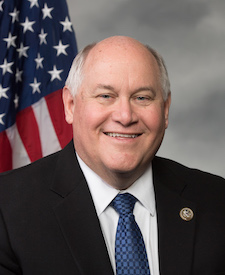
Rep. Ron Estes
Sponsored bills
Maddy summaryThis bill requires federal agencies to report the budgetary costs of executive actions (like rules, orders, or memos) to Congress within 10 days of implementation. It directly affects all departments, agencies, and commissions that issue such actions by mandating they submit documentation on implementation and cost estimates. Agencies must report if an action is projected to cost $50 billion or more over ten years, with a table of these major actions included in annual budget reports. The law aims to improve transparency around the fiscal impact of executive decisions.
Maddy summaryThis bill adjusts Medicare eligibility rules for rural emergency hospitals. It expands eligibility to include off-campus emergency departments that operate as dedicated emergency services in rural counties, meeting specific federal definitions. Hospitals previously classified as outpatient departments could now qualify for Medicare payments if they maintained a dedicated emergency department in a rural area. The change modifies the Social Security Act to allow these facilities to be recognized under the rural emergency hospital designation program. This directly affects rural healthcare providers seeking Medicare reimbursement for emergency services.
Maddy summaryHCONRES 58 is a symbolic congressional resolution denouncing socialism in all its forms. It does not create new laws or affect any policies, as it is a non-binding statement of opinion. The resolution cites historical events and quotes from Founding Fathers to argue that socialism leads to authoritarianism and economic harm, referencing examples like the Soviet Union and Venezuela. It formally "denounces" socialism and opposes implementing socialist policies in the U.S., but has no legal effect on citizens or government actions. This is a procedural resolution, not a policy measure.
Maddy summaryHR 5800, the SAFE Drivers Act, requires commercial driver's license (CDL) applicants and renewers to pass a standardized English proficiency test approved by the Federal Motor Carrier Safety Administration (FMCSA). The test assesses reading road signs, understanding emergency communications, and writing required documentation - critical for safety in commercial driving. States must administer the test through their DMVs, report pass rates annually to the FMCSA, and face potential federal funding cuts if they fail to comply. The law applies to all new CDL issuances or renewals starting 12 months after enactment, directly affecting commercial drivers seeking or maintaining their licenses.
Maddy summaryHR 5563, the DRIVE-SAFE Act, creates a structured apprenticeship program for commercial drivers under age 21. It requires employers to provide a two-phase training program: a 120-hour probationary period focused on basic driving skills (like traffic navigation and safety awareness), followed by a 280-hour period covering advanced tasks (such as pre-trip inspections and load management). During both phases, apprentices must operate vehicles equipped with automatic transmissions, collision mitigation systems, and video capture, and must be accompanied by an experienced driver (26+ years old with no recent accidents or violations). The bill does not change existing commercial driver’s license requirements and mandates employers to maintain records and provide remediation for preventable accidents or violations during training.
Maddy summaryHR 302, the Water Rights Protection Act of 2025, requires federal agencies (like the Departments of Agriculture or Interior) to respect state authority over water rights when issuing permits or managing land. It prohibits federal actions that would override state water laws, such as forcing water rights transfers to the U.S. government, imposing stricter usage limits than state law, or interfering with tribal water rights. The bill directly affects states, water users (including federally recognized tribes), and federal land management decisions involving water permits. It explicitly states it does not change existing laws like the Endangered Species Act or tribal water rights, focusing solely on preserving state regulatory control.

Maddy summaryThe Congressional Budget Office Scheduling Reform Act (HR 6140) requires the Congressional Budget Office (CBO) to publish an annual schedule of major recurring reports by December 31 each year. This schedule must include key reports like the budget baseline, deficit reduction options analysis, accuracy of budget projections, and reports on unauthorized appropriations. The CBO must update the schedule as needed during the year. This law directly affects the CBO's reporting process and provides Congress with clearer timelines for accessing critical budget information. The bill aims to increase transparency around when these reports will be released.
Maddy summaryThis bill requires all new passenger vehicles manufactured for sale in the U.S. to include AM radio as standard equipment (not an optional add-on) by 2027-2028, depending on manufacturer size. It mandates that AM radio receivers must be easily accessible to drivers and allows compliance through digital AM broadcast technology. During a transition period, manufacturers must clearly label vehicles without AM radio but cannot charge extra for this feature. The bill also mandates a GAO study on AM radio's role in emergency alerts and includes a 10-year sunset provision for the rule. It preempts state laws regarding AM radio access in vehicles.
Maddy summaryHRES 864 is a ceremonial resolution honoring U.S. veterans on Veterans Day 2025. It does not create new laws or policies but formally recognizes veterans' service and sacrifice, calling on all Americans to observe Veterans Day. The resolution references historical context about Veterans Day's origins (from Armistice Day to honoring all veterans) but contains no concrete policy changes. It directly addresses the general public, urging them to participate in the observance. As a non-binding resolution, it affects no specific individuals or groups through legislative action.