

Maddy summaryThis bill, the Provider Reimbursement Stability Act of 2026, aims to create more predictable payment adjustments for physicians and other healthcare providers under the Medicare program. It directly affects medical practices and providers who receive reimbursement for services through the physician fee schedule. The legislation increases a threshold for certain budget neutrality calculations from $20 million to $54.3 million in 2027, with automatic increases every five years thereafter. It also requires the government to correct payment estimates when actual service usage differs significantly from projections, mandates regular updates to cost calculations for practice expenses, and limits how much Medicare payment rates can change from year to year to a maximum of 2.5 percent.
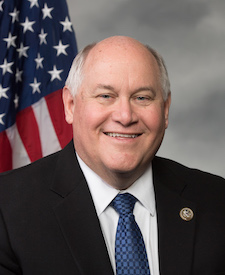
Rep. Ron Estes
Sponsored bills
Nationwide Consumer and Fuel Retailer Choice Act of 2025 This bill amends the Clean Air Act to address the limitations on Reid Vapor Pressure (a measure of gasoline's volatility) that are placed on gasoline during the summer ozone season. Specifically, the bill applies the waiver for Reid Vapor Pressure requirements that is applicable to gasoline blended with 10% ethanol (E10) to gasoline blended with up to 15% ethanol (E15). This change allows gasoline that is blended with 10% to 15% ethanol to be sold year-round. Currently, states may be excluded from the waiver for Reid Vapor Pressure requirements by submitting documentation supporting that the waiver would increase air pollution. The bill nullifies existing state exclusions, but states may submit documentation after enactment of the bill to be excluded going forward. The bill also modifies the Renewable Fuel Standard Program, which requires transportation fuel sold or introduced into commerce in the United States to contain minimum volumes of renewable fuel. Under the existing program, obligated parties, such as small refineries, must satisfy the volume obligations by either blending renewable fuels into their gasoline or diesel fuel products or by acquiring credits that represent the required renewable fuel volume. The bill directs the Environmental Protection Agency to return compliance credits to small refineries under certain circumstances.
Maddy summaryHR 8603, the Dismemberment Abortion Ban Act of 2026, prohibits physicians from performing abortions that involve dismembering an unborn child and extracting it piece by piece or crushed from the uterus. The law allows exceptions only when the procedure is necessary to save the mother's life, while explicitly permitting other abortion methods for reasons such as rape or incest. It imposes criminal penalties of up to two years in prison or fines on physicians who violate the ban and creates a civil lawsuit system where women or parents of minors can seek monetary damages and attorney fees against providers. The bill also defines an 'unborn child' as a human organism from fertilization until birth and clarifies that the woman undergoing the procedure cannot be prosecuted or held financially liable.
Clergy Act This bill establishes a two-year window for certain members of the clergy and Christian Science practitioners to revoke their exemption from Social Security and Medicare taxes on ministerial earnings. Under current law, such individuals who object to participation in public insurance programs on religious or conscientious grounds may apply to the Internal Revenue Service (IRS) for an irrevocable exemption and will not receive Social Security or Medicare benefits in retirement unless they have qualifying credits from other employment. The IRS must develop a plan to inform members of the clergy and Christian Science practitioners of their eligibility to revoke prior exemptions, pursuant to the bill's changes.
Equal Representation Act This bill requires that the statement sent by the President to Congress after the decennial census indicating the number of persons in each state exclude noncitizens. (This statement is the basis for reapportionment of U.S. Representatives.) The bill also requires any questionnaire used in the decennial census to include a checkbox or other similar option for respondents to indicate whether the respondent and each household member is (1) a U.S. citizen, (2) a U.S. national but not a citizen, (3) a non-U.S. national ( alien under federal law) lawfully residing in the United States, or (4) a non-U.S. national unlawfully residing in the United States. The Department of Commerce must make public the number of persons in each state, disaggregated by each of these four categories.
Maddy summaryThis resolution expresses appreciation for the contributions of American cowboys and historic cattle trails to the nation's history, particularly in celebrating the 250th anniversary of the Declaration of Independence. It recognizes the diverse roles of Mexican, Black, Native American, and White cowboys who drove cattle along trails like the Chisholm and Shawnee Trails across multiple states. The bill encourages local celebrations of this legacy as part of the national anniversary observances.
Maddy summaryThis bill, titled the Ensuring Better Interest Treatment and Deductibility Act, would change how businesses calculate the limit on interest expenses they can deduct on their taxes. It directly affects corporations and other businesses that pay interest on loans by modifying the rules for determining adjusted taxable income. The key provision removes a specific clause from the tax code that currently limits how much interest can be deducted based on a company's earnings, effectively allowing more interest to be treated as a deductible business expense. These changes would apply to tax years starting after December 31, 2025, meaning businesses would need to adjust their financial planning for future tax filings.
Maddy summaryThis bill modifies tax rules to provide financial incentives for small oil and gas producers operating in marginal or low-production areas. It changes how the percentage depletion tax deduction is calculated, allowing a higher deduction rate based on oil prices and adjusting that rate annually using an inflation measure called the Producer Price Index. The legislation also removes certain income limits that restrict how much of this tax benefit producers can claim and doubles the minimum oil production threshold from 1,000 to 2,000 barrels to qualify for the deduction. These tax changes would take effect for taxable years beginning after December 31, 2026, primarily affecting independent oil and gas companies and rural communities dependent on these industries.
Maddy summaryThis bill directs the U.S. Trade Representative to investigate whether Canada's Online Streaming Act unfairly targets American streaming companies by imposing discriminatory taxes and content requirements. It authorizes the Trade Representative to consult with affected U.S. businesses and trade partners, then potentially take retaliatory trade actions if Canada does not amend the measures. The legislation also requires regular reporting to Congress on Canada's implementation of these policies and extends similar investigative powers to other countries with comparable digital trade restrictions.
Maddy summaryHR 556, the Protecting Access for Hunters and Anglers Act, prevents federal agencies from banning lead ammunition or tackle on public lands and waters managed for hunting or fishing. It directly affects hunters and anglers using federal lands (like national wildlife refuges, public forests, and BLM lands) by blocking nationwide restrictions on lead products. The bill allows limited exceptions only for specific locations where wildlife decline is directly linked to lead use, and the restriction must align with state law or get approval from the state wildlife agency. This changes how federal land managers can regulate lead, requiring state coordination for any local restrictions.