

Maddy summaryHRES 727 is a symbolic resolution designating October 14, 2025, as a "National Day of Remembrance for Charlie Kirk." It does not create new law but formally honors Charlie Kirk, founder of Turning Point USA and a prominent advocate for free speech and civic education, who died by assassination on September 10, 2025. The resolution encourages educational institutions and citizens to observe the day with activities promoting civic engagement, liberty, and democracy. It directly affects no specific group through policy changes, as it is a commemorative gesture without binding requirements.
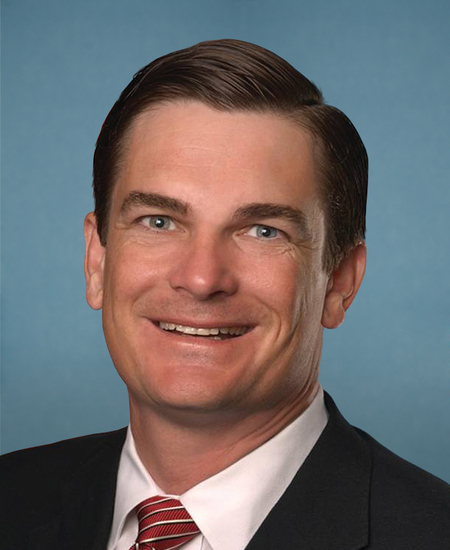
Rep. Austin Scott
Sponsored bills
Maddy summaryHRES 709 is a symbolic House resolution condemning the fictional September 10, 2025, assassination of Charlie Kirk, founder of Turning Point USA, and honoring his life and legacy. The resolution formally condemns the killing, expresses condolences to his family, praises first responders, and reaffirms the right to peaceful political assembly. It does not create new laws or policies but serves as a ceremonial statement by the House of Representatives. The resolution directly addresses the House's stance on this event and its commitment to protecting free speech, without affecting any specific individuals or groups through legislative action.
Maddy summaryHRES 702 is a symbolic resolution condemning the September 10, 2025, assassination of Charlie Kirk, founder of Turning Point USA and a conservative political activist. It expresses condolences to his family, praises first responders, and reaffirms the right to peaceful assembly. As a non-binding resolution, it does not create new laws or policies but serves as a formal statement of condemnation. The resolution directly addresses the House of Representatives' stance on this event, with no direct impact on constituents or legislation.
Maddy summaryThis bill directs the U.S. President to identify Pakistani officials responsible for undermining democracy and human rights within 180 days of enactment, then impose Global Magnitsky sanctions on them. It targets senior government, military, or security officials found to have committed gross human rights violations or interfered with democratic processes, such as during Pakistan’s 2024 elections or through constitutional changes. Sanctions would include asset freezes and travel bans, with exceptions for humanitarian aid, UN obligations, and national security activities. The bill expires on September 30, 2030, and aims to pressure Pakistan to uphold democratic norms, human rights, and judicial independence.
Maddy summaryHRES 682 is a procedural resolution that establishes rules for debating and voting on two separate bills in the U.S. House of Representatives. It sets time limits for debate (one hour for the defense bill, one hour for the immigration bill), waives points of order against consideration, and outlines specific amendment procedures for H.R. 3838 (military funding for fiscal year 2026) and H.R. 3486 (increased penalties for illegal reentry after removal). The resolution itself does not change policy but streamlines the legislative process for these bills. It directly affects House members by governing how they may debate and amend these specific measures.
Maddy summaryHRES 668 directs the House Committee on Oversight and Government Reform to continue its investigation into possible mismanagement of the federal government’s handling of the Jeffrey Epstein and Ghislaine Maxwell cases, including Epstein’s death and sex trafficking networks. The resolution requires the committee to publicly release unclassified documents related to the investigation - such as communications, travel records, and immunity deals - with limited exceptions for privacy, active cases, or classified national security information. It prohibits withholding documents due to embarrassment or political sensitivity and mandates written justifications for any redactions. This resolution affects the Oversight Committee, federal agencies (like the DOJ and Treasury), and the public seeking transparency. It is procedural, not a new law, focusing on directing an ongoing investigation and document disclosure.
Maddy summaryHRES 598 adopts House Resolution 589, which mandates the public release of specific documents, records, and communications related to the federal investigation into Jeffrey Epstein. This resolution directly affects the public by requiring the disclosure of previously restricted materials from that investigation. The key mechanism is a formal House directive to make these materials publicly available, streamlining access to information about the Epstein case. As a procedural resolution, it does not create new laws but establishes a process for document release.
Maddy summaryThis bill establishes "cottage family homes" as a new foster care placement option under federal law. It defines these homes to require trauma-informed care, prohibit seclusion/restraints (except brief physical restraint for safety), ensure children can participate in normal activities, and maintain family connections. The bill removes time limits on foster care payments for children in these homes and gives states flexibility to classify them as foster family homes if they serve children's best interests. It directly affects foster children placed in cottage homes and the agencies operating them.
Maddy summaryThis bill modernizes the process for seasonal agricultural workers who need commercial driver's licenses (CDLs). It requires the Transportation Secretary to create online systems for easy license renewal (Section 2(a)) and clarifies that farm equipment like tractors and harvesters ("implements of husbandry") are not subject to commercial vehicle weight calculations (Section 2(b)). It directly affects farm-related service industries and their seasonal employees who operate restricted CDL vehicles. The changes simplify administrative processes and remove regulatory barriers for agricultural operations.
Maddy summaryHR 4606, the Ally’s Act, requires private health insurance plans (including employer-sponsored plans and individual coverage) to cover hearing implants and related services. It directly affects people with hearing loss who need cochlear implants, bone conduction devices, or external sound processors, as determined by a physician or audiologist. The bill mandates coverage for devices, maintenance, repairs, upgrades every 5 years, hearing assessments, surgery, and rehabilitation - without separate cost-sharing or stricter limits than other medical services. Insurers cannot deny coverage if a provider deems the service medically necessary. The law applies to all applicable health plans and takes effect for plan years beginning January 1, 2026.