

Maddy summaryHR 7678, the Gun Owner Registration Information Protection Act, prohibits federal funding for state or local databases that track lawfully owned firearms or their owners. The bill allows federal funding for databases recording lost or stolen firearms but bans it for databases listing legal gun ownership. This means states cannot use federal money to create or maintain systems that compile information about legally owned guns. The bill directly affects state and local governments that rely on federal funds for firearm ownership databases.
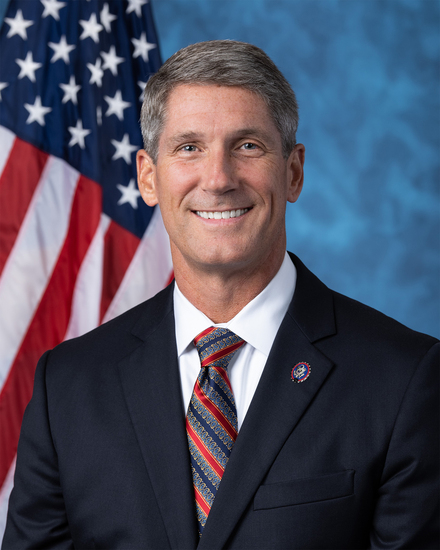
Rep. Scott Franklin
Sponsored bills
Respect State Housing Laws Act This bill eliminates a provision that requires a 30-day notice period before a landlord may begin eviction proceedings against a tenant in federally assisted or federally backed housing.
Maddy summaryHRES 1073 is a non-binding resolution designating February 21-28, 2026, as "National FFA Week" to recognize the National Future Farmers of America (FFA) Organization’s role in developing agricultural education leaders and to celebrate the 50th anniversary of Alaska’s State FFA Association. It does not create new laws or affect any specific groups or policies; instead, it formally expresses the House’s support for this commemorative week. The resolution highlights FFA’s mission to prepare students for leadership and careers in agriculture, food, and natural resources. As a symbolic gesture, it has no direct legislative or financial impact on constituents.
Maddy summaryThis bill directs U.S. agencies to support Iranian people's access to uncensored information and hold Iranian officials accountable for human rights abuses. It requires the State Department and FCC to report on technologies (like satellite networks and mesh systems) that could bypass internet restrictions in Iran, and authorizes $2 million annually to develop such tools. The bill also establishes a new "Iran Kleptocracy Initiative" at FinCEN to track corruption, freeze assets of Iranian regime officials and state-owned businesses, and coordinate with international partners. These measures apply to U.S. policy toward Iran but do not alter Iran's domestic laws; they focus on U.S. sanctions, technology development, and anti-corruption efforts targeting the Iranian regime.
Protection of Women in Olympic and Amateur Sports Act This bill requires certified national governing bodies (NGBs) of amateur sports (e.g., USA Gymnastics) to prohibit a person whose sex is male from participating in an amateur athletic competition that is designated for females, women, or girls. Under the bill, male means an individual who has, had, will have—or would have, but for a developmental or genetic anomaly or historical accident—the reproductive system that at some point produces, transports, and utilizes sperm for fertilization.
Maddy summaryThis bill establishes the United States-Israel Defense Technology Cooperation Initiative to accelerate joint development and integration of defense technologies between the two countries. It directs the U.S. Secretary of Defense, with Israel’s agreement, to identify Israeli-origin technologies for rapid adoption into U.S. military systems, focusing on areas like counter-drone systems, missile defense (including "Golden Dome for America"), AI, cyber defense, and directed energy. The initiative requires annual congressional reporting on progress, partnerships with industry, and technology transitions, while authorizing $150 million annually for fiscal years 2027-2029. It aims to strengthen bilateral defense innovation and streamline the use of Israeli technologies within U.S. military programs.
Maddy summaryHR 4671 establishes a Wildland Fire Management Casualty Assistance Program to support families of firefighters and wildland fire support personnel injured or killed in the line of duty. The program requires the Secretary of the Interior to develop procedures for notifying next-of-kin about critical injuries or deaths, reimbursing travel expenses for family visits, and providing centralized case management. It mandates a centralized website offering free, personalized information about federal benefits and complaint mechanisms for survivors. The bill also defines "next-of-kin" priority (spouse, children, parents, etc.) and requires data collection on casualty assistance quality, without affecting existing Line of Duty Death benefits.
Maddy summaryThis bill modifies tax credit rules to help businesses recover after disasters. It allows businesses operating in designated disaster areas to treat certain unused tax credits (carryforwards) as transferrable credits against current tax liability, rather than letting them expire. Specifically, it applies to taxpayers making eligible expenditures for business operations in areas with a major disaster declaration after December 31, 2023, or a state-declared disaster meeting specific criteria. The change affects businesses in affected zones by providing immediate tax relief for qualifying expenses incurred within two years of the disaster declaration. It does not involve energy policy or new funding, but adjusts existing tax credit rules for disaster recovery.
Maddy summaryThis bill prevents state or local governments from banning or restricting energy connections (like installation, modification, or access) based on the type or source of energy, such as electricity, natural gas, or renewable fuels. It directly affects consumers choosing energy providers and energy companies seeking to offer services. The key provision prohibits local laws, regulations, or policies that limit energy services sold in interstate commerce, covering all energy types listed in the bill’s definitions. It does not create new programs but limits regulatory authority at the state or local level. The law aims to ensure open access to diverse energy sources without source-based restrictions.
Maddy summaryThe Make Elections Great Again Act (HR 7300) would require voters to present photo identification to cast ballots in person or by mail for federal elections, with limited exceptions for religious objections or military voters. It would establish new requirements for proving U.S. citizenship during voter registration, including documentary proof of citizenship and proof of state residency. The bill would change mail-in ballot procedures by requiring voters to request mail-in ballots (rather than universal mail-in voting), implementing barcode tracking for mail-in ballots, and setting strict deadlines for ballot receipt. These provisions would apply to all states for federal elections held in 2027 or later, affecting how voters register, vote in person, and submit mail-in ballots for federal office elections.