

Born-Alive Abortion Survivors Protection Act This bill establishes requirements for the degree of care a health care practitioner must provide in the case of a child born alive following an abortion or attempted abortion. Specifically, a health care practitioner who is present must (1) exercise the same degree of care as would reasonably be provided to any other child born alive at the same gestational age, and (2) ensure the child is immediately admitted to a hospital. Additionally, a health care practitioner or other employee who has knowledge of a failure to comply with the degree-of-care requirements must immediately report such failure to law enforcement. A health care practitioner who fails to provide the required degree of care, or a health care practitioner or other employee who fails to report such failure, is subject to criminal penalties—a fine, up to five years in prison, or both. An individual who intentionally kills or attempts to kill a child born alive is subject to prosecution for murder. The bill bars the criminal prosecution of a mother of a child born alive under this bill and allows her to bring a civil action against a health care practitioner or other employee for violations.
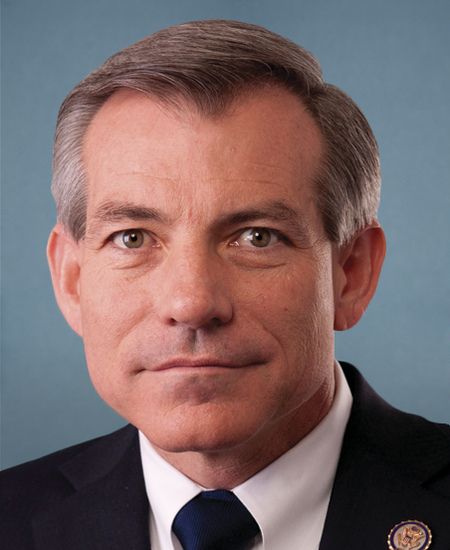
Rep. David Schweikert
Sponsored bills
Medicare Multi-Cancer Early Detection Screening Coverage Act of 2021 This bill provides for Medicare coverage and payment for multi-cancer early detection screening tests that are approved by the Food and Drug Administration and that are used to screen for cancer across many cancer types.
This bill directs the Speaker of the House and the President pro tempore of the Senate to arrange for the award of three Congressional Gold Medals to the U.S. Capitol Police (USCP) and other law enforcement agencies that protected the U.S. Capitol on January 6, 2021. Following the award of these medals, one medal shall be given to the USCP, one medal shall be given to the Metropolitan Police Department of the District of Columbia, and one medal shall be given to the Smithsonian Institution and displayed with a plaque listing all law enforcement agencies that participated in protecting the Capitol on January 6, 2021.
Developing Responsible Individuals for a Vibrant Economy Act or the DRIVE-SAFE Act This bill directs the Department of Transportation to promulgate regulations to implement an apprenticeship program for licensed commercial motor vehicle drivers under the age of 21. Under the program, an apprentice must complete two probationary periods that total 400 hours of on-duty time, of which at least 240 hours must be driving time in a commercial motor vehicle. Additionally, the apprentice must be accompanied in the cab of the commercial motor vehicle by an experienced driver. Further, the bill requires all commercial motor vehicles used in the program for training to be equipped with safety technology such as active braking collision mitigation systems and video event capturing systems. An employer shall not knowingly allow, require, permit, or authorize a driver under the age of 21 to operate a commercial motor vehicle unless the driver is participating in, or has completed, an apprenticeship program that meets the requirements set forth in this bill.
CCUS Innovation Act This bill revises a Department of Energy loan guarantee program for carbon capture, utilization, and storage projects. Specifically, the bill specifies categories of projects that are eligible for loan guarantees, such as projects for developing infrastructure (e.g., pipelines) to enable carbon capture, utilization, or storage.
Hong Kong Safe Harbor Act This bill designates certain Hong Kong residents with priority status for refugee consideration and contains other related provisions. An individual and certain family members shall have such priority status if the individual (1) is a Hong Kong resident who suffered persecution or has a well-founded fear of persecution as a result of peaceful political activity; or (2) has been formally charged, detained, or convicted for certain peaceful actions. An individual receiving refugee status under this bill shall not be counted against various numerical limitations. When determining whether an individual shall be admitted as a refugee under this bill, an individual whose citizenship, nationality, or residency was revoked for submitting a nonfrivolous application for a U.S. immigration benefit shall be considered to have suffered persecution on account of political opinion. The general presumption that an alien is seeking immigrant status shall not apply to certain Hong Kong residents seeking asylum into the United States. (Typically, an alien seeking admission as a nonimmigrant must establish that the alien does not intend to immigrate to the United States.) This exception to the presumption shall apply to certain individuals involved in the 2019 and 2020 protests against China's encroachment into Hong Kong's autonomy (Hong Kong is a part of China but has a separate legal and economic system). An individual from Hong Kong may not be denied admission into the United States if the primary reason for the denial is a politically motivated government action against the individual's involvement in protests.
This joint resolution proposes a constitutional amendment limiting Representatives to three terms and Senators to two terms. Terms beginning before the ratification of this amendment do not count towards these term limits.
This joint resolution proposes an amendment to the Constitution to require that the Supreme Court consist of nine Justices.
This resolution honors Officers Brian Sicknick and Howard Liebengood of the U.S. Capitol Police, and it commends the bravery and service demonstrated by officers of the U.S. Capitol Police, the Metropolitan Police Department of the District of Columbia, and the other law enforcement agencies and protective entities that assisted in responding to the January 6, 2021, attack on the U.S. Capitol.
Protecting the Right to Keep and Bear Arms Act of 2021 This bill prohibits (1) the President or the Department of Health and Human Services from declaring emergencies or disasters for the purpose of imposing gun control; and (2) a federal officer or employee, or person operating under color of federal law, from banning the manufacture, sale, or transfer of firearms or ammunition while acting in support of relief from a major disaster or emergency.