

Creates the Illinois Student Loan Investment Act. Provides for the establishment, operation, and administration of the Student Investment Account by the State Treasurer. Provides that the State Treasurer shall establish fees to cover the costs of administration, recordkeeping, marketing, and investment management related to the Student Investment Account. Provides that the State Treasurer may charge and collect insurance premiums and deduct wages under the Act. Requires the State Treasurer to develop, publish, and implement one or more investment policies covering the investment of moneys under the Act. Provides for the creation and use of specified Funds to be held outside of the State Treasury with the State Treasurer as custodian. Provides for the adoption of rules. Amends the Deposit of State Moneys Act. Allows the State Treasurer to invest or reinvest State money in, among other items or purposes, investments made in accordance with the Student Loan Investment Act. Amends the Student Loan Servicing Rights Act. Provides that the term "student loan servicer" shall not include, among other entities, the State Treasurer and its agents when the agents are acting on the State Treasurer's behalf. Defines terms. Effective immediately. Senate Floor Amendment No. 1 Replaces everything after the enacting clause. Reinserts the provisions of the introduced bill with changes. Creates the Student Investment Account Act (currently, the Student Loan Investment Act). Adds a provision concerning the use of earnings from the Student Investment Account. Modifies provisions concerning the establishment, operation, and administration of the Student Investment Account by the State Treasurer, and adds requirements concerning income share agreements and income share agreement providers. Allows the State Treasurer to enter into income share agreements with participants (currently, borrowers) and to facilitate such arrangements between participants and eligible income share agreement providers (currently, lenders). Provides that the State Treasurer or his or her designee (currently, only State Treasurer) may charge and collect insurance premiums under the Act. Provides for the creation and use of specified Funds as non-appropriated separate and apart trust funds in the State Treasury (currently, Funds to be held outside of the State Treasury with the State Treasurer as custodian). Amends the Student Loan Servicing Rights Act. Provides that the term "student loan servicer" does not include, among other entities, the State Treasurer (currently, the State Treasurer and its agents when the agents are acting on the State Treasurer's behalf). Modifies and defines terms. Makes other changes. Effective immediately. House Floor Amendment No. 1 Provides that "student loan servicer" or "servicer" includes persons or entities acting on behalf of the State Treasurer. Modifies findings and purpose provisions.
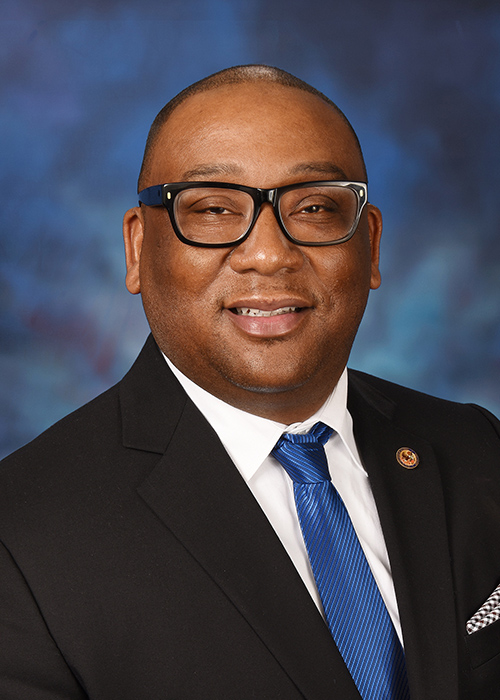
Sen. Christopher Belt
Sponsored bills
Amends the Children's Advocacy Center Act. Provides that consent is not required for a forensic interview to be electronically recorded and that failure to record does not render a forensic interview inadmissible. Provides that a forensic interview, an electronic recording, or a transcription of an interview or electronic recording is confidential and exempt from public inspection and copying and may only be viewed by a court, attorneys, investigators, or experts for the purpose of judicial and administrative hearings and shall not be disseminated except pursuant to a court's protective order. Provides that nothing in the Act shall be construed to limit or prohibit electronically recorded forensic interviewing in accordance with provisions concerning surveillance and investigations in the Criminal Code of 2012 and Code of Criminal Procedure of 1963. Adds a definition and modifies a definition. Amends the Freedom of Information Act making conforming changes. Effective January 1, 2020. Senate Committee Amendment No. 1 Defines a "forensic interview transcription" as a verbatim transcript of a forensic interview for the purpose of translating the interview into another language. Makes a conforming change. House Committee Amendment No. 2 Deletes reference to: 5 ILCS 140/7.5 55 ILCS 80/2.5 55 ILCS 80/4.5 new Adds reference to: 45 ILCS 105/2 from Ch. 127, par. 63s-2 Replaces everything after the enacting clause. Amends the Bi-State Development Agency Act. Provides that a county authorized to appoint commissioners that does not contract for light rail service with the Bi-State Development Agency and pay for that service in part with county-generated revenue shall be limited to one commissioner. Provides for appointment of commissioners from counties with a light rail service until a county without light rail service only has one commissioner left. House Floor Amendment No. 3 Adds reference to: 45 ILCS 105/10 new 45 ILCS 105/2 from Ch. 127, par. 63s-2 Further amends the Bi-State Development Agency Act. Provides that Bi-State Development Agency shall pass through 100% of specified Urbanized Area Formula Funding program assistance and funding to the Madison Mass Transit District. Provides that the Agency shall retain specified Urbanized Area Formula Funding program funds constituting the total commitment and payment in full for: (1) all claims, debts or obligations, rights, liabilities made or asserted by the Agency, arising out of any previous service agreements, issues, or relationship between the District and the Agency occurring on or before June 30, 2019; and (2) any capital or operating subsidy for the MetroLink Light Rail System.
Amends the Alzheimer's Disease Research Act. Changes the short title of the Act to the Alzheimer's Disease Research, Care, and Support Fund Act. Creates the full-time position of Dementia Coordinator within the Department of Public Health, who is responsible only for activities associated with and relevant to the successful implementation of the State of Illinois Alzheimer's Disease State Plan. Changes the name of the Alzheimer's Disease Research Fund to the Alzheimer's Disease Research, Care, and Support Fund and makes corresponding changes in the State Finance Act. Provides that moneys from the Fund shall be used to cover costs, including the Dementia Coordinator's salary and expenses. Provides that the Department shall be responsible for providing the Dementia Coordinator with administrative support through its existing resources and not from the Fund. Repeals provisions concerning a grant program administered by the Department. Amends the Alzheimer's Disease Assistance Act. Makes changes concerning the membership of the Alzheimer's Disease Advisory Committee. Requires the Department of Public Health to make reasonable efforts to promote the Alzheimer's Disease Research, Care, and Support Fund during relevant times, including, but not limited to, periods of time when tax returns are typically received, such as issuing press releases and posting on social media. Senate Committee Amendment No. 1 Replaces everything after the enacting clause with the provisions of the introduced bill with the following changes: provides that the Alzheimer's Disease Advisory Committee shall consist of 17 (rather than 16) voting members; provides that the additional voting member of the Committee shall be an individual with medical or academic experience with early onset Alzheimer's disease or related disorders; and provides that the Dementia Coordinator shall be funded out of the Alzheimer's Disease Research, Care, and Support Fund.
Creates the Uniform Partition of Heirs Property Act. Defines terms. Provides for: applicability; relation to other law; service; notice by posting; commissioners; determination of value; cotenant buyout; partition alternatives; considerations for partition in kind; open-market sale, sealed bids, or auction; and report of open-market sale. Makes conforming changes in the Code of Civil Procedure. Effective immediately. Senate Floor Amendment No. 1 Replaces everything after the enacting clause with the provisions of the introduced bill, and makes the following changes: Changes the definition of "heirs property" and "partition by sale". Defines "fair market value". Provides that if the court determines that the evidentiary value of an appraisal is outweighed by the cost of the appraisal, the court shall order the plaintiff to send notice (rather than the court shall send notice) to the parties of the fair market value of the property. Provides that if an appraisal is conducted, not later than 10 days after the appraisal is filed, the court shall order the plaintiff to send notice (rather than the court shall send notice) to each party with a known address. Provides that after a hearing to determine the fair market value of the property, the court shall order the plaintiff to send notice to all of the parties of the value and a cotenant's buyout rights (rather than the court shall send notice to the parties of the value). Provides that after the determination of the value, the court shall order the plaintiff to send notice (rather than the court shall send notice) to the parties that any cotenant may buy all the interests of the cotenants that requested partition by sale. Provides that after the expiration period, if no cotenant elects to buy all the interests of the cotenants that requested partition by sale, the court shall order the plaintiff to send notice (rather than the court shall send notice) to all the parties of that fact and resolve the partition. Provides that cotenants must pay their apportioned price to the clerk of court or as otherwise ordered by the court (rather than into the court). Provides that if one or more, but not all, of the electing cotenants fail to pay their apportioned price on time, the court shall order the plaintiff to give notice (rather than the court shall give notice) to the electing cotenants that paid their apportioned price of the interest remaining and the price for all that interest. Provides that the court, in determining whether partition in kind would result in manifest prejudice to the cotenants as a group, shall consider the tax consequences. Provides that if the court orders partition in kind, the court shall allocate to the cotenants that are unknown, unlocatable, or the subject of a default judgment, if their interests were not brought, a party of the property representing the combined interests of those cotenants as determined by the court. Provides that the court shall apportion the costs of the proceedings for the partition of heirs property among the parties in interest in the action, as the court deems just and equitable. Effective immediately. House Committee Amendment No. 1 Deletes reference to: New Act 735 ILCS 5/17-101 from Ch. 110, par. 17-101 735 ILCS 5/17-102 from Ch. 110, par. 17-102 735 ILCS 5/17-105 from Ch. 110, par. 17-105 735 ILCS 5/17-106 from Ch. 110, par. 17-106 Adds reference to: 775 ILCS 5/3-102.5 new Replaces everything after the enacting clause. Amends the Illinois Human Rights Act. Provides that it is a civil rights violation to refuse to, due to the fact of an arrest, juvenile record, or criminal history record information ordered expunged, sealed, or impounded: sell or rent or otherwise make unavailable or deny a housing accommodation or dwelling to any buyer or renter; or alter the terms, conditions, or privileges of the sale or rental of a housing accommodation or dwelling or the provision of services or facilities in connection with such housing accommodation. Provides that the prohibition against the use of an arrest record shall not preclude an owner or any other person engaging in a real estate transaction from prohibiting the tenant, a member of the tenant's household, or a guest of the tenant from engaging in unlawful activity on the premises. Effective immediately. House Floor Amendment No. 3 Adds reference to: 775 ILCS 5/1-103 from Ch. 68, par. 1-103 775 ILCS 5/2-103 from Ch. 68, par. 2-103 775 ILCS 5/3-102 from Ch. 68, par. 3-102 775 ILCS 5/3-106 from Ch. 68, par. 3-106 Replaces everything after the enacting clause. Amends the Illinois Human Rights Act. Provides that it is a civil rights violation for an owner or any other person engaging in a real estate transaction, because of an arrest record to: refuse to engage in a real estate transaction with a person or to discriminate in making available such a transaction; alter the terms, conditions, or privileges of a real estate transaction or in the furnishing of facilities or services in connection therewith; refuse to receive or to fail to transmit a bona fide offer to engage in a real estate transaction from a person; refuse to negotiate for a real estate transaction with a person; represent a person that real property is not available for inspection, sale, rental, or lease when in fact it is so available, or fail to bring a property listing to his or her attention, or to refuse to permit him or her to inspect real property; make, print, circulate, post, mail, publish, or cause to made, printed, circulated, posted, mailed, or published, any notice, statement, advertisement, or sign, or use a form of application for a real estate transaction, or make a record or inquiry in connection with a prospective real estate transaction, that indicates any preference, limitation, or discrimination based on an arrest record, or any intention to make any such preference, limitation, or discrimination; or offer, solicit, accept, use, or retain a listing of real property with knowledge that unlawful discrimination or discrimination on the basis of an arrest record in a real estate transaction is intended. Provides that the prohibition against the use of an arrest record shall not preclude an owner or any other person engaging in a real estate transaction from prohibiting the tenant, a member of the tenant's household, or a guest of the tenant from engaging in unlawful activity on the premises. Makes conforming changes. Effective January 1, 2020.
Amends the School Code. Provides that a school board shall require its schools to either connect at-risk students with anger management classes offered in the community or conduct their own anger management classes for at-risk students. Provides that if the school board requires a school to conduct these classes, the classes do not have to be implemented until the beginning of the 2021-2022 school year. Effective immediately. Senate Floor Amendment No. 1 Deletes reference to: 105 ILCS 5/10-20.69 new 105 ILCS 5/34-18.61 new Adds reference to: 105 ILCS 5/27-23.12 Replaces everything after the enacting clause. Amends the School Code. With regard to the Emotional Intelligence and Social and Emotional Learning Task Force, provides that the curriculum and assessment guidelines and best practices on emotional intelligence and social and emotional learning that the Task Force must develop must include strategies and instruction to address the needs of students with anger management issues. Provides that the Task Force must also make recommendations on the funding of appropriate services and the availability of sources of funding, including, but not limited to, federal funding, to address social and emotional learning. Requires the Task Force to complete the guidelines and recommendations on or before March 1, 2020 (rather than January 1, 2019).
Amends the Illinois Aeronautics Act. Provides that the Division of Aeronautics of the Department of Transportation shall require the display of an MIA flag at any airport in its jurisdiction, either upon the same flag-staff as the United States national flag or otherwise. Effective immediately. House Floor Amendment No. 1 Changes the reference to the "MIA flag" to "POW/MIA flag". Provides that, if the POW/MIA flag is displayed on the same flagstaff as the United States flag, the POW/MIA flag shall fly immediately below the United States flag. Provides that, if the United States flag and a State flag or other flag or pennant is flown along with the POW/MIA flag on the same flagstaff, the order from top to bottom shall be: the United States flag, the POW/MIA flag, then the State flag or other flags, unless otherwise stipulated by the Flag Display Act.
Amends the Property Tax Code. In a Section concerning the Senior Citizens Homestead Exemption, provides that in all counties (now, in counties with less than 3,000,000 inhabitants), the county board may by resolution provide that if a person has been granted a senior citizens homestead exemption, the person qualifying need not reapply for the exemption. Provides that the county recorder of deeds shall alert the assessor whenever the transfer of ownership of any property receiving a Senior Citizens Homestead Exemption has occurred. Provides that, if such a transfer occurs, the assessor shall remove the exemption and provide the new property owner with information concerning reapplication. Effective immediately. Senate Floor Amendment No. 1 Provides that the county assessor shall exchange information with the county recorder of deeds or the county clerk (in the introduced bill, the county recorder of deeds only) for the purpose of alerting the assessor whenever the transfer of ownership of any property receiving a Senior Citizens Homestead Exemption has occurred. Provides that changes in the introduced bill concerning reapplication for the Senior Citizens Homestead Exemption apply for taxable year 2019 and thereafter. House Committee Amendment No. 1 Deletes reference to: 35 ILCS 200/15-170 Adds reference to: 35 ILCS 5/205 from Ch. 120, par. 2-205 Replaces everything after the enacting clause. Amends the Illinois Income Tax Act. Makes changes concerning the calculation of base income for an organization that is exempt from the federal income tax by reason of the Internal Revenue Code. Effective immediately.
Amends the Abused and Neglected Child Reporting Act. Removes the list of mandated reports under the Act and instead lists several categories of professionals required to report suspected child abuse and neglect to the Department of Children and Family Services, including: (1) medical personnel; (2) social services and mental health personnel; and (3) crisis intervention personnel. Provides that when 2 or more persons who work within the same workplace and are required to report under the Act share a reasonable cause to believe that a child may be an abused or neglected child, a single report may be made by a designated reporter. Provides that nothing in the Act requires a child to come before the mandated reporter in order for the reporter to make a report of suspected child abuse or child neglect. Provides that persons required to report under the Act must complete mandated reporter training provided through or approved by the Department and that the training must be completed within a specified timeframe. Requires the Department to adopt rules by January 1, 2020 on its process for approving mandated reporter training. Provides that, by January 1, 2021, continuing education requirements for persons licensed by the Department of Financial and Professional Regulation must include mandated reporter training. Requires the Department, by January 1, 2020, to adopt rules and procedures for educating members of the public about their right to report child abuse or neglect. Requires the Department to seek assistance from businesses and organizations on raising awareness about child abuse and child neglect and the Department's statewide toll-free child abuse hotline. Senate Committee Amendment No. 1 Replaces everything after the enacting clause. Amends the Abused and Neglected Child Reporting Act. Organizes the list of mandated reporters under the Act into the following categories of professionals: (i) medical personnel; (ii) social services and mental health personnel; (iii) crisis intervention personnel; (iv) education personnel; (v) recreation or athletic program or facility personnel; (vi) child care personnel; (vii) law enforcement personnel; (viii) funeral home directors; (ix) clergy members; and (x) physicians and other specified medical personnel who provide abortions, abortion referrals, or contraceptives. Provides that when 2 or more persons who work within the same workplace and are required to report under the Act share a reasonable cause to believe that a child may be an abused or neglected child, a single report may be made by a designated reporter. Provides that nothing in the Act requires a child to come before the mandated reporter in order for the reporter to make a report of suspected child abuse or child neglect. Provides that persons required to report under the Act must complete mandated reporter training within 3 months of their date of engagement in a professional or official capacity as a mandated reporter, and at least every 3 years thereafter. Provides that the trainings shall be in-person or web-based, and shall include, at a minimum, information on certain topics, including: (a) indicators for recognizing child abuse and child neglect, as defined under the Act; and (b) responding to a child in a trauma-informed manner. Provides that the mandated reporter training shall be provided through the Department of Children and Family Services, through an entity authorized to provide continuing education for professionals licensed through the Department of Financial and Professional Regulation, the State Board of Education, the Illinois Law Enforcement Training Standards Board, or the Department of State Police, or through an organization approved by the Department to provide mandated reporter training. Requires the Department of Children and Family Services to make available a free web-based training for reporters. Requires each mandated reporter to report to his or her employer and, when applicable, to his or her licensing or certification board that he or she received the mandated reporter training. Provides that beginning January 1, 2021, if a mandated reporter receives licensure from the Department of Financial and Professional Regulation or the State Board of Education, and his or her profession has continuing education requirements, the training mandated under the Act shall count toward meeting the licensee's required continuing education hours. Requires the Department of Children and Family Services to develop culturally sensitive materials on child abuse and child neglect, the statewide toll-free telephone number established under the Act, and the process for reporting any reasonable suspicion of child abuse or child neglect. Senate Floor Amendment No. 2 Replaces everything after the enacting clause. Reinserts the provisions of Senate Amendment No. 1, but with the following changes: Provides that educational personnel required to report under the Abused and Neglected Child Reporting Act must do so only to the extent required under a specified provision of the Act (rather than only to the extent required in accordance with other provisions expressly concerning the duty of school board members to report suspected child abuse). Provides that when 2 or more persons who work within the same workplace and are required to report under the Act share a reasonable cause to believe that a child may be an abused or neglected child, one of those reporters may be designated to make a single report (rather than a single report may be made by a designated reporter). In a provision requiring mandated reporters to complete reporter training within 3 months of their date of engagement in a professional or official capacity as a mandated reporter, provides that the 3-month requirement may be extended to 6 months pursuant to any other applicable State law that governs training requirements for a specific profession. Requires certain medical personnel who work with children in their professional or official capacity to complete mandated reporter training at least every 6 years. Requires such medical personnel to attest at each time of licensure renewal on their renewal form that they understand they are a mandated reporter of child abuse and neglect, that they are aware of the process for making a report, that they know how to respond to a child in a trauma-informed manner, and that they are aware of the role of child protective services and the role of a reporter after a call has been made. Requires medical personnel who do not work with children in their professional or official capacity to make similar affirmations in lieu of repeated training. House Committee Amendment No. 1 Adds reference to: 50 ILCS 705/7 from Ch. 85, par. 507 Amends the Illinois Police Training Act. Provides that the curriculum for probationary police officers at all certified police training schools shall include a block of instruction addressing the mandatory reporting requirements under the Abused and Neglected Child Reporting Act. Provides that minimum in-service training requirements, which a police officer must complete every 3 years, shall include training on reporting child abuse and neglect. Further amends the Abused and Neglected Child Reporting Act. Provides that persons required to report under the Act must complete an initial mandated reporter training (rather than must complete mandated reporter training) within 3 months of their date of engagement in a professional or official capacity as a mandated reporter, or within the time frame of any other applicable State law that governs training requirements for a specific profession, and at least every 3 years thereafter. Provides that the initial requirement (rather than the initial 3-month requirement) only applies to the first time they engage in their professional or official capacity (rather than only applies to the first time they engage in their professional or official capacity and may be extended to 6 months pursuant to any other applicable State law that governs training requirements for a specific profession).
Amends the Department of Commerce and Economic Opportunity Law of the Civil Administrative Code of Illinois. Requires the Department of Commerce and Economic Opportunity to create a Clean Water Workforce Pipeline Program to provide grants and other financial assistance to individuals for careers in water infrastructure. Provides requirements for funding, grants, and other financial assistance from the Program on a competitive and annual basis for specified activities. Provides that the Program shall have an annual goal of training and placing 2,500 specified individuals in water sector jobs annually. Directs the Department to coordinate with the Environmental Protection Agency, Illinois Finance Authority, and other State agencies that provide financial support for water infrastructure projects in order to encourage the employment of individuals trained through the Program onto projects receiving State financial assistance. Provides that the Department may select a Program Administrator to oversee the allocation of funds and select organizations that receive funding. Requires recipients under the Program to report annually to the Department on the success of their efforts and their contribution to reaching the goals of the Program. Requires the Department to compile the information and report specified information to the General Assembly annually. Within 90 days after the amendatory Act's effective date, requires the Department to propose a draft plan to implement amendatory Act's provisions for public comment and to finalize the plan within 180 days after the amendatory Act's effective date. Grants rulemaking authority to the Department to implement the Program and ensure compliance with the amendatory Act's provisions. Provides that moneys in the Water Workforce Development Fund shall only be used to fund the Program and to assist and enable implementation of clean water infrastructure capital investments. Amends the State Finance Act. Creates the Water Workforce Development Fund. Senate Floor Amendment No. 1 Replaces everything after the enacting clause with the provisions of the introduced bill with the following changes: Provides that the Program shall be funded by appropriations from the Build Illinois Bond Fund, Capital Development Fund, or General Revenue Fund or other funds as identified by the Department of Commerce and Economic Opportunity. Provides that grants may be made, among other entities, to multi-craft labor organizations (currently, labor unions). Removes language providing that the continuing education for individuals to prepare for and build on workforce training and the training of individuals in various skill and trades necessary to build and maintain clean water infrastructure are activities for which grants and other financial assistance may be awarded. Provides that an annual goal of the Program is to train and place at least 300, or 25% of the number of annual jobs created by State financed water infrastructure projects, whichever is greater (currently, 2,500), specified persons in water sector-related apprenticeships (currently, jobs) annually. Provides that the Environmental Protection Agency, the Illinois Finance Authority, and other State agencies that provide financial support for water infrastructure projects shall support the Program in attaining the goal of employing specified individuals. Provides that the Water Workforce Development Fund shall receive moneys from the Build Illinois Bond, the Capital Development Fund, the General Revenue Fund, and any other funds. House Committee Amendment No. 1 Provides that "multi-craft labor organization" includes a labor-management apprenticeship program that is registered with and approved by a labor organization that has an accredited training program through the Higher Learning Commission or the Illinois Community College Board.
Amends the Downstate Firefighter Article of the Illinois Pension Code. Requires a unit of local government of 5,000 or more inhabitants that employs a firefighter who is a full-time firefighter in a different downstate firefighter pension fund to make specified contributions to that downstate firefighter pension fund. Establishes reporting requirements. Authorizes the State comptroller to intercept State funds in the event the unit of local government does not make its required contribution to the primary employer's downstate pension fund. Amends the State Mandates Act to require implementation without reimbursement. Effective immediately. Senate Committee Amendment No. 1 Provides that the required contributions by secondary employers are for the purposes of compensating the primary employer's pension fund for additional liabilities and risks to which firefighters are exposed when performing work as firefighters for secondary employers. Provides that the provisions shall not be construed to allow a secondary employee to qualify for benefits or creditable service for employment as firefighters for secondary employers. House Floor Amendment No. 2 Adds reference to: 40 ILCS 5/4-110.2 new Replaces everything after the enacting clause. Reinserts the provisions of the engrossed bill with the following changes. Provides that the fire chief of a secondary employer shall report any injury, illness, or exposure incurred by a secondary employee during his or her employment to the primary employer's pension fund within 96 hours from the time of the occurrence. Provides that a municipality (instead of a unit of local government) that has established a pension fund under the Downstate Firefighter Article and who employs a full-time firefighter shall be deemed a primary employer with respect to that full-time firefighter. Provides that any municipality (instead of any unit of local government) of 5,000 or more inhabitants that employs or enrolls a firefighter (instead of employs a firefighter) and meets other criteria shall be deemed a secondary employer. Requires a secondary employer to annually prepare a report a report accounting for all hours worked by and wages and salaries (instead of wages and salaries) paid to secondary employee firefighters. Requires a certified copy of the report to be transmitted to the primary employer's pension fund (instead of the primary employer). Removes provisions requiring a secondary employer to make specified contributions to the primary employer's firefighters' pension fund. Makes conforming changes. Effective immediately.