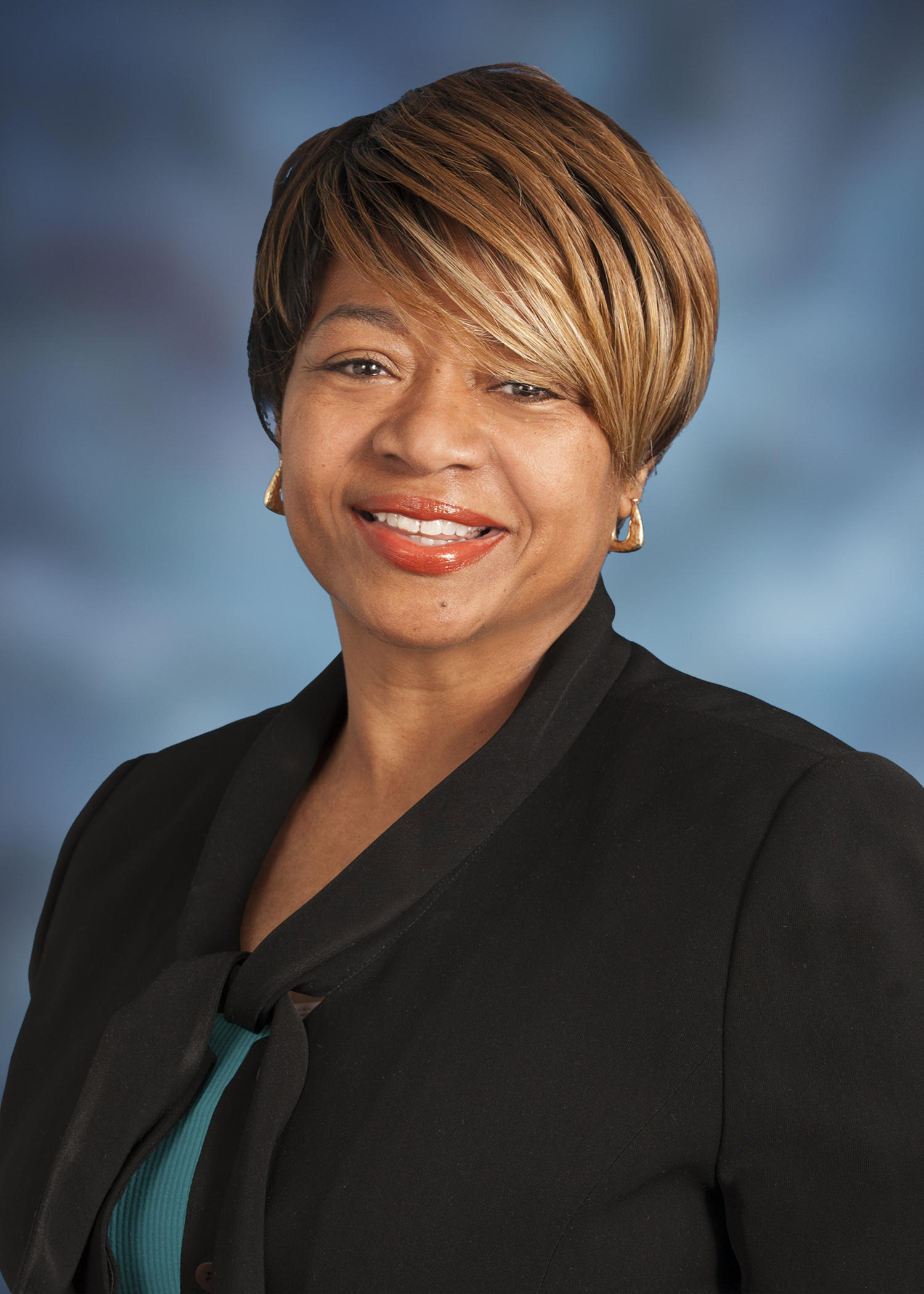
Photo of Patricia Van Pelt
D Illinois Senate · District 5

Sen. Patricia Van Pelt

Compare
Total votes
9,818
all sessions
Attendance
79%
1,987 missed
Among the lowest in the chamber
With party
99%
of cast votes
Higher than 90% of chamber peers
Bipartisan score
0%
crosses aisle rarely
Lower than 92% of chamber peers
Sponsored
606
bills & resolutions
Among the lowest in the chamber
Committees
0
assignments
606 bills and resolutions

Sponsored bills

Total
606
Primary
30
Co-sponsor
576
This page
606
matching current filters
Co-sponsor SB 1598
In committee · Illinois Senate · Co-sponsor
INS CD-ZIP CODE DISCRIMINATION

Amends the Illinois Insurance Code. Provides that an insurer may not use a person's ZIP code in underwriting or rating automobile insurance, including the determination of premium rates.

In committee Mar 28, 2019 1 co-sponsor
Co-sponsor SB 77
In committee · Illinois Senate · Co-sponsor
CIV PRO-EVICTION CASE SEALING

Amends the Eviction Article of the Code of Civil Procedure. Provides that eviction proceedings shall be sealed and remain so unless a final order of eviction in favor of the plaintiff is entered. Provides that unsealed records shall remain unsealed for a period of 7 years. Provides that after 7 years, access to the court records may be obtained only by specified parties. Provides that if a case is filed by a board of managers of a condominium association and names or joins a tenant of a condominium unit to the proceedings, the tenant's name shall be permanently suppressed by order of the court. Effective 90 days after becoming law.

In committee Mar 28, 2019 1 co-sponsor
Co-sponsor SR 193
Passed · Illinois Senate · Co-sponsor
AME DAY

Declares the African Methodist Episcopal (AME) Day at the Capitol on March 27, 2019.

Passed Mar 27, 2019 1 co-sponsor
Co-sponsor SB 1593
In committee · Illinois Senate · Co-sponsor
DHS-BUILDING TRADES PROGRAM

Amends the Department of Human Services Act. Requires the Department of Human Services to establish a Youth Training and Education in the Building Trades Program to award grants to community-based organizations for the purpose of establishing training programs for youth with an interest in the building trades. Provides that under the training programs, each youth shall receive: (1) formal training and education in the fundamentals and core competencies in the youth's chosen trade; and (2) hands-on experience in the building trades by participating in community improvement projects involving the rehabilitation of vacant and abandoned residential property. Requires selected organizations to use the grant money to establish an entrepreneurship program to provide eligible youth with the capital and business management skills necessary to launch their own businesses. Contains provisions concerning residential property that is eligible for acquisition under the Program; the selection criteria for community-based organizations; and the Youth Training and Education in the Building Trades Fund. Amends the Illinois Housing Development Act. Requires the Illinois Housing Development Authority to establish a Training Youth in the Building Trades Program that is substantially similar to the Youth Training and Education in the Building Trades Program. Contains provisions concerning residential property that is eligible for acquisition under the Program; the selection criteria for community-based organizations; and the Training Youth in the Building Trades Fund. Amends the State Finance Act to create the Youth Training and Education in the Building Trades Fund and the Training Youth in the Building Trades Fund. Effective January 1, 2020.

In committee Mar 22, 2019 1 co-sponsor
Co-sponsor SB 250
In committee · Illinois Senate · Co-sponsor
SAFE ACT

Creates the SAFE Act. Provides that on and after January 1, 2020, funding formulas based on population shall include prisoners as residents based on the place where they resided before incarceration or the place they intend to return. Amends the Illinois Criminal Justice Information Act. Provides that within 60 days after the effective date of the amendatory Act, the Illinois Criminal Justice Information Authority shall identify geographic areas eligible to be designated by the Safe and Full Coordinating Board as a Safe and Full Employment Zone (SAFE Zone) and shall send to the Legislative Audit Commission and make publicly available its analysis and development of the SAFE Zones. Provides that the criteria for these SAFE Zones shall be used to prioritize State funding and provide various services throughout the State. Creates the Safe and Full Employment Coordinating Board to develop and implement a plan for designating SAFE Zones. Provides that the design of programs and budget requirements in SAFE Zones shall be developed by Local Economic Growth Councils. Amends the State Revenue Sharing Act. Provides that for purposes of the amount of funds allocable to each municipality and county in the State, the number of individual residents of a municipality or county shall include the number of persons incarcerated in a penal institution who resided in the municipality or county before incarceration, or, if known, the municipality or county the prisoner intends to return after release from the penal institution. Amends the Unified Code of Corrections. Provides that the First Time Weapon Offender Program shall be implemented by the Safe and Full Employment Coordinating Board. Makes other changes. Effective immediately.

In committee Mar 21, 2019 1 co-sponsor
Co-sponsor SB 1
Signed into law · Illinois Senate · Co-sponsor
MINIMUM WAGE/INCOME TAX CREDIT

Amends the Minimum Wage Law. Makes a technical change in a Section concerning the short title. Senate Floor Amendment No. 1 Deletes reference to: 820 ILCS 105/1 Adds reference to: 5 ILCS 100/5-45 from Ch. 127, par. 1005-45 35 ILCS 5/704A 820 ILCS 105/4 from Ch. 48, par. 1004 820 ILCS 105/7 from Ch. 48, par. 1007 820 ILCS 105/10 from Ch. 48, par. 1010 820 ILCS 105/11 from Ch. 48, par. 1011 820 ILCS 105/12 from Ch. 48, par. 1012 Replaces everything after the enacting clause. Amends the Illinois Income Tax Act and the Minimum Wage Law. Provides for an increase in the minimum wage and for a credit against withholding payments in relation to the increase. Increases the minimum wage to $9.25 per hour beginning January 1, 2020. Provides for annual increases in the minimum wage culminating in a minimum wage of $15 per hour beginning on January 1, 2025. Provides to employers with 50 or fewer full-time equivalent employees a credit against tax withheld beginning January 1, 2020. Reduces the credit beginning January 1, 2021. Provides employers may claim the credit amount in effect on January 1, 2025 until December 31, 2026 and that employers with no more than 5 employees may claim that credit until December 31, 2027. Authorizes the Department of Labor to perform random audits of employer to ascertain compliance with the Minimum Wage Law. Authorizes a penalty of $100 per employee for failure to maintain required records. Effective immediately. Pension Note (Government Forecasting & Accountability) There is no readily discernible fiscal impact associated with SB1, as engrossed. To the extent minimum wage workers participate in pension funds governed by the Pension Code, there could be an increase in accrued liability, but it would presumably be very small and likely actuarially insignificant. State Debt Impact Note (Government Forecasting & Accountability) This bill would not change the amount of authorization for any type of State-issued or State-supported bond, and, therefore, would not affect the level of State indebtedness. Fiscal Note (Dept of Revenue) Increasing the minimum wage to $15 per hour over 6 years increases state revenues. The positive effect on tax revenue, in the form of income and sales taxes, is only slightly offset by the negative effect on income tax revenues of the tax credit extended to eligible businesses. Overall, the net impact of this proposed legislation is an increase in state revenues of nearly $390 million by fiscal year 2027. The positive effect on tax revenue is produced by the additional income tax collection and sales tax collection given by higher wages and personal consumption expenditure in the state economy. We estimate Individual Income tax (IIT) revenue at the current individual income tax rate of 4.95 percent. The estimate for Sales Tax revenue values were decreased to account for the fact that the state does not tax services and receives no share of revenue on food for consumption off site, prescription drugs or certain medical devices. The negative effect on Income tax revenue is due to the tax credit against withholdings. The tax credit for eligible employers is a declining percentage of the wage increment defined as the differential between the employee's hourly wage from the final quarter of the previous calendar year and the State's minimum wage of the present year). The credit, applied on a calendar year basis, is set to scale down over the course of the ramp (to year 2025) at which point the calculation of the credit shifts to a flat, fixed dollar amount. The schedule of credits is as follows: 25% credit in 2020; 21% credit in 2021; 17% credit in 2022; 13% credit in 2023; 9% credit in 2024, and 5% credit in 2025. In calendar year 2026, the credit for businesses is fixed to match the credit taken in 2025; in calendar year 2027, the credit for those businesses with 5 or fewer employees is fixed to match the credit taken in 2025. In calculating the cost of the tax credit, we considered the number of minimum wage jobs increasing from $8.25 in 2019 to $10.00 in 2020, from $10.00 to $11.00 in 2021 and so on until 2027. We discounted those jobs in firms with more than 50 employees using Census bureau data on small firms in Illinois. We considered 1750 hours of work as full time in accordance with prior studies on the subject. All estimates above are static estimates, meaning that they do not account for changes in the labor supply and demand associated to the increase in labor cost. Home Rule Note (Dept. of Commerce & Economic Opportunity) This bill does not pre-empt home rule authority. State Mandates Fiscal Note (Dept. of Commerce & Economic Opportunity) This bill does create a State mandate. Balanced Budget Note (Office of Management and Budget) Please be advised that the Balanced Budget Note Act does not apply to SB 1, as it is not a supplemental appropriation that increases or decreases appropriations. Under the Act, a balanced budget note must be prepared only for bills that change a general funds appropriation for the fiscal year in which the new bill is enacted. Correctional Note (Dept of Corrections) There is no fiscal or population impact on the Department of Corrections. Judicial Note (Admin Office of the Illinois Courts) This bill would neither increase nor decrease the number of judges needed in the State of Illinois. Housing Affordability Impact Note (Housing Development Authority) This bill will have no effect on the cost of constructing, purchasing, owning, or selling a single-family residence.


Signed into law Feb 19, 2019 1 co-sponsor
Co-sponsor SR 8
Passed · Illinois Senate · Co-sponsor
GANG DATABASE REVIEW-EXTEND

Extends the date that the Illinois Criminal Justice Information Authority has to complete its review of the shared gang database to June 30, 2019.

Passed Feb 7, 2019 1 co-sponsor
Co-sponsor SB 64
In committee · Illinois Senate · Co-sponsor
CD CORR-PATHWAY TO COMMUNITY

Amends the Unified Code of Corrections. Provides that a committed person who: (1) is at least 60 years of age; (2) has served at least 25 consecutive years of imprisonment in a facility or institution of the Department of Corrections; and (3) is not serving a sentence for a crime of violence as defined in the Crime Victims Compensation Act may petition the Department for participation in the Pathway to Community Program. Provides that before a participant is selected for the Program, the petitioner shall successfully complete an atonement and restorative justice program prepared by the Department. Following completion of this program of atonement and restorative justice, the Department shall make an exhaustive effort to find and notify family members of the victim of the petitioner's offense and to afford them the opportunity to participate in the Department's final selection process for the Pathway to Community Program. Provides that the Department shall select 50 participants for the Program from petitions submitted to it by the Department. Provides that up to $1,000 of trauma-informed victim services or trauma-certified professional therapy shall be provided by the Department to family members of the victim of the petitioner's offense. Insurance policies of the family members of the victim of the petitioner's offense or family members financial resources shall first be used to pay the costs of these services or therapy. Optional participation by family members of the victim of petitioner's offense shall be provided by the Department at no cost to the family members of the victim. Makes other changes.

In committee Feb 7, 2019 1 co-sponsor
Showing 431 to 440 of 606 bills
Previous 1 … 43 44 45 … 61 Next