Amends the Counties Code. Provides that the county boards of Kane County, Kendall County, and Will County (currently, Kane County and Will County) may by ordinance impose a judicial facilities fee to be used for the building of new judicial facilities. Provides that in setting a judicial facilities fee and in the design and construction of the facilities, the county board shall set the fee and design and construct the facilities with the concurrence of the Chief Judge of the applicable judicial circuit or the presiding judge of the county in a multi-county judicial circuit (currently, the concurrence of the Chief Judge of the applicable judicial circuit). Effective July 1, 2022.
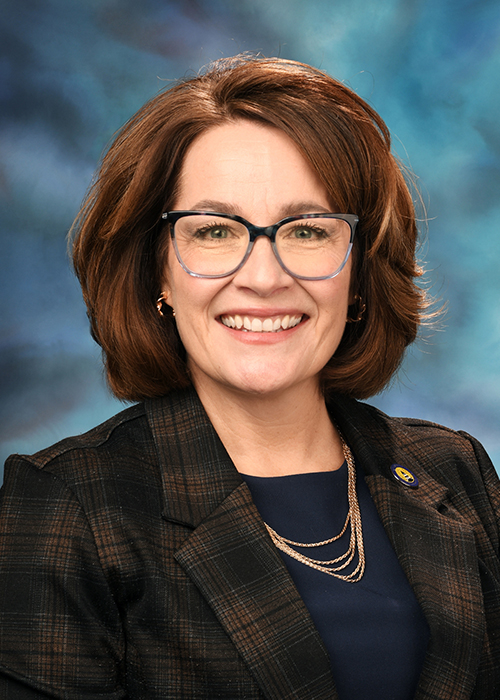
Sen. Meg Loughran Cappel
Sponsored bills
Amends the Children and Family Services Act. Provides that beginning January 1, 2023, the Department of Children and Family Services shall implement a 3-year pilot program of additional resources for families receiving Extended Family Support Program services from the Department for the purpose of supporting relative caregivers. Provides that these resources may include, but are not limited to: (i) wraparound case management services, (ii) home visiting services for caregivers with children under the age of 5, and (iii) parent mentors for caregivers with children over the age of 3. Provides that the resources provided by the pilot program are voluntary and refusing such resources shall not be used as evidence of neglect of a child. Requires the Department to arrange for an independent evaluation of the pilot program to determine whether the pilot program is successfully supporting families receiving Extended Family Support Program services and preventing entrance into the foster care system. Provides that the evaluation will support determining whether there is a long-term cost benefit to continuing the pilot program. Provides that at the end of the 3-year pilot program, the Department shall submit a report to the General Assembly with its findings of the evaluation. Requires the report to state whether the Department intends to continue the pilot program and the rationale for its decision. Grants the Department rulemaking authority. Effective immediately. House Committee Amendment No. 1 Replaces everything after the enacting clause. Reinserts the provisions of the engrossed bill with the following changes: Permits the Department of Children and Family Services to consult with independent partners to review Extended Family Support Program services and advise if additional services are needed prior to the start of the 3-year pilot program scheduled to be implemented on January 1, 2023. Provides that the services for the Extended Family Support Program are expanded given the program's inclusion in the Family First Prevention Services Act's targeted populations. Sets forth other targeted populations. Provides that funding through Title IV-E of the Social Security Act shall be spent on services to prevent children and youth who are candidates for foster care from coming into care and allow them to remain with their families. Provides that the Department shall arrange for an independent evaluation of the pilot program to determine whether the pilot program is successfully supporting families receiving Extended Family Support Program services or Family First Prevention Program services. Effective immediately.
Amends the Abraham Lincoln Presidential Library and Museum Act. Provides that the Abraham Lincoln Presidential Library and Museum Act, to the extent that there is a conflict between the provisions of Executive Order 2017-1 and the Act, supersedes the Executive Order, and shall be controlling. Provides that the position of State Historian is now an honorary position, and specifies new duties of the honorary State Historian. Transfers previously held duties and requirements of the State Historian under the Act to the Abraham Lincoln Presidential Library and Museum and its Executive Director. Removes provision requiring the Abraham Lincoln Presidential Library and Museum and the Abraham Lincoln Presidential Library Foundation to mutually cooperate to establish a working group for specified purposes. Removes provision allowing the Executive Director of the Abraham Lincoln Presidential Library and Museum to have hiring and appointing power over specified personnel. Repeals the State Historical Library Act. Repeals the Illinois Sesquicentennial of the American Civil War Commission Act. Makes conforming changes concerning the State Historian. Senate Committee Amendment No. 1 Adds reference to: 20 ILCS 3475/20 Replaces everything after the enacting clause. Amends the Abraham Lincoln Presidential Library and Museum Act. Provides that the Abraham Lincoln Presidential Library and Museum Act, to the extent that there is a conflict between the provisions of Executive Order 2017-1 and the Act, supersedes the Executive Order, and shall be controlling. Provides that the Governor in consultation with the Board of Trustees of the Abraham Lincoln Presidential Library and Museum and the Illinois Historical Society shall appoint the Illinois State Historian (currently, appointed by the Executive Director of the Abraham Lincoln Presidential Library and Museum). Provides for qualifications and term requirements of the Illinois State Historian. Transfers previously held duties and requirements of the State Historian under the Act to the Abraham Lincoln Presidential Library and Museum and its Executive Director. Removes provision requiring the Abraham Lincoln Presidential Library and Museum and the Abraham Lincoln Presidential Library Foundation to mutually cooperate to establish a working group for specified purposes. Removes provision allowing the Executive Director of the Abraham Lincoln Presidential Library and Museum to have hiring and appointing power over specified personnel. Repeals the State Historical Library Act. Repeals the Illinois Sesquicentennial of the American Civil War Commission Act. Makes conforming changes.
Amends the Children and Family Services Act. Provides that upon receiving custody or guardianship of a youth in care, and at least annually thereafter, the Department of Children and Family Services shall determine whether the youth may be eligible for Social Security benefits, Supplemental Security Income, or Veterans benefits. Provides that if it is determined that the youth may be eligible for benefits, the Department shall ensure that an application is filed on behalf of the youth. Requires the Department to ensure that any youth in care eligible for benefits beyond the age of 18 has a timely application filed. Requires the Department to immediately notify a youth over the age of 16, the youth's attorney and guardian ad litem, and the youth's parent or legal guardian or another responsible adult of: (1) any application for or any application to become representative payee for benefits on behalf of a youth in care; (2) any decisions or communications from the Social Security Administration or the U.S. Department of Veterans Affairs regarding an application for benefits or for representative payee status; and (3) any appeal or other action requested by the Department regarding an application for benefits. Requires the Department to ensure that when the youth attains the age of 14 years and until the Department no longer serves as the representative payee or fiduciary, a minimum percentage of the youth's benefits are conserved in a way that avoids violating any federal asset or resource limits that would affect the youth's eligibility to receive the benefits, including, but not limited to, establishing for the youth a Plan to Achieve Self-Support (PASS) Account; an ABLE account, a Social Security Plan to Achieve Self-Support account, or other specified savings accounts. Contains provisions concerning annual accounting reports to a youth's attorney and guardian ad litem of how a youth's benefits have been used and conserved; financial literacy training and support for youth in care; the adoption of rules; reporting requirements for the Department; and other matters. Effective immediately. House Committee Amendment No. 1 Replaces everything after the enacting clause. Amends the Children and Family Services Act. Provides that upon receiving temporary custody or guardianship of a youth in care, the Department of Children and Family Services shall assess the youth to determine whether the youth may be eligible for Social Security benefits, Supplemental Security Income, Veterans benefits, or Railroad Retirement benefits. Provides that if, after the assessment, the Department determines that the youth may be eligible for such benefits, the Department shall ensure that an application is filed on behalf of the youth. Requires the Department to prescribe by rule how it will review cases of youth in care at regular intervals to determine whether the youth may have become eligible for benefits after the initial assessment. Provides that the Department shall make reasonable efforts to encourage youth in care over the age of 18 who are likely eligible for benefits to cooperate with the application process and to assist youth with the application process. Provides that when applying for benefits, the Department shall identify a representative payee in accordance with specified federal requirements. Requires the Department to immediately notify a youth over the age of 16, the youth's attorney and guardian ad litem, and the youth's parent or legal guardian or another responsible adult of: (1) any application for or any application to become representative payee for benefits on behalf of a youth in care; (2) any communications from the Social Security Administration, the U.S. Department of Veterans Affairs, or the Railroad Retirement Board pertaining to the acceptance or denial of benefits or the selection of a representative payee; and (3) any appeal or other action requested by the Department regarding an application for benefits. Provides that when the Department serves as the representative payee for a youth receiving benefits, the Department shall: (i) beginning January 1, 2023, ensure that when the youth attains the age of 14 years and until the Department no longer serves as the representative payee, a minimum percentage of the youth's Supplemental Security Income benefits are conserved as specified under the amendatory Act; (2) beginning January 1, 2024, ensure that when the youth attains the age of 14 years and until the Department no longer serves as the representative payee a minimum percentage of the youth's Social Security benefits, Veterans benefits, or Railroad Retirement benefits are conserved as specified under the amendatory Act; (3) appropriately monitor any federal asset or resource limits for the benefits and ensure that the youth's best interest is served by using or conserving the benefits in a way that avoids violating any federal asset or resource limits that would affect the youth's eligibility to receive the benefits; and other matters. Contains provisions concerning annual accounting reports to a youth's attorney and guardian ad litem on how a youth's benefits have been used and conserved; financial literacy training and support for youth in care; the adoption of rules; reporting requirements for the Department; and other matters. Effective immediately.
Amends the Environmental Protection Act. Requires public water supply operators to notify specified health care facilities at least 30 days prior to any known, planned, or anticipated disruption event and within one hour after being aware of an unplanned disruption event. Provides that any planned or unplanned disruption event notification sent to a health care facility shall be sent to the Environmental Protection Agency and the Department of Public Health and shall be posted on the public water supply operator's website. Contains notification requirements. Contains other provisions. Effective immediately. House Floor Amendment No. 1 Replaces everything after the enacting clause with the provisions of the introduced bill with the following changes. Defines "disruption event" and "water supply operator". Requires public water supply operators to notify specified health care facilities and their water supply operator not more than 30 days, but no fewer than 15 days (rather than at least 30 days) before any known, planned, or anticipated disruption event and within 2 hours (rather than one hour) after being aware of an unplanned disruption event. Requires any planned or unplanned disruption event notification sent to a health care facility to be sent to State agencies within 5 business days. Makes other changes. Effective immediately. Senate Committee Amendment No. 1 Replaces everything after the enacting clause with the provisions of the engrossed bill with the following changes. Requires public water supply operators' designated employees or contractors (rather than public water supply operators) to notify specified health care facilities at least 30 days prior to any known, planned, or anticipated disruption event and within 2 hours after being aware of an unplanned disruption event. Provides that a health care facility shall designate an email address accessible to the health care facility's designated water management plan administrator and other responsible administrative personnel (rather than to the health care facility's designated management and other personnel) to receive electronic notifications from the public water supply operator. Removes language requiring notice to include any action undertaken to correct a disruption event. Provides that, beginning one year after the amendatory Act's effective date (rather than each month), the State agencies shall make available upon request a list of disruption events, in an electronic format, sorted by the year and month of each occurrence (rather than publish on their websites a list of disruptions events that have occurred in the preceding month). Senate Floor Amendment No. 2 Replaces everything after the enacting clause. Reinserts the provisions of the bill, as amended by Senate Amendment No.1, with the following changes. In provisions containing definitions, provides that the meaning of a disruption event includes any change to a disinfection technique, practice, or technology that could change disinfectant levels in the water within a public water supply that results in a residual disinfectant level 20% above or below normal operating levels (rather than any change to a disinfection technique, practice, or technology that could change disinfectant levels in the water within a public water supply). Removes language providing that a disruption event includes any water main break, system failure or disruption, equipment failure, chemical or disinfectant treatment interruption, or flooding of a public water supply operator's facilities. Changes references from a public water supply operator to a public water distribution entity. In provisions concerning notification, requires a public water distribution entity to notify its water supply operator and all affected health care facilities on the public water supply's health care facility list not less than 14 days before any known, planned, or anticipated disruption event (rather than requiring a public water supply operator to notify its public water supply operator and all health care facilities on the public water supply's health care facility list not more than 30 days or fewer than 15 days before any known, planned, or anticipated disruption event). In the provision requiring that any planned or unplanned disruption event notification sent to a health care facility also be sent to the State agencies within 5 business days, provides that notification shall be sent to the State agencies via email to the email addresses designated by the State agencies. Removes the provisions requiring notification to be posted on the public water supply operator's website or on a social media website. Makes other changes. Effective immediately. Senate Floor Amendment No. 3 Provides that "disruption event" means, among other things, any change to a disinfection technique, practice, or technology, including each instance of any change in the concentration of any disinfectant in the water of a public water supply that results in residual concentrations of the disinfectant in the water either exceeding 50% or falling below 20% of the monthly average concentration of disinfectant reported to the Agency in a public water distribution entity's most recent monthly submission of Daily Operating Reports (rather than any change to a disinfection technique, practice, or technology that could change disinfectant levels in the water within a public water supply that results in a residual disinfectant level 20% above or below normal operating levels).
Creates the Illinois America 250 Commission Act for the purpose of planning, promoting, and implementing appropriate commemoration of the 250th Anniversary of the founding of the United States of America. Requires the Illinois America 250 Commission to develop, encourage, and execute an inclusive commemoration and observance of the founding of the United States of America and Illinois' imperative role in the nation's history. Provides that the Illinois America 250 Commission shall consist of specified voting members. Authorizes the Illinois America 250 Commission to cooperate with the United States Semiquincentennial Commission and various State agencies, other states, tribal nations, and national, State, and local organizations. Provides that the Commission shall be housed within the Illinois State Museum. Authorizes fundraising. Provides reporting requirements. Provides that the Commission and its advisory committees shall be dissolved on June 1, 2027, and repeals the Act on January 1, 2028. Effective immediately. Senate Floor Amendment No. 2 Replaces everything after the enacting clause. Reinserts the provisions of the engrossed bill with the following changes. Provides that the membership of the Illinois America 250 Commission shall include one member representing a statewide organization of municipalities. Makes grammatical and typographical corrections. Senate Floor Amendment No. 3 Replaces everything after the enacting clause with the provisions of the engrossed bill, and makes the following changes. Makes changes to the specified members of the Illinois America 250 Commission. Provides that the Governor shall appoint the Chair of the Commission (rather than requiring the Director of the Illinois State Museum to serve as Chair). Requires the Governor's office, with the assistance of the Chair of the Commission and the Illinois State Museum, to ensure that 60% of the appointed members of the Commission consist of people who represent historically excluded and marginalized communities. Creates the Illinois America 250 Commission Trust Fund as a non-appropriated trust fund to be held outside of the State treasury, with the State Treasurer as custodian, and authorizes the Commission to accept monetary gifts and grants from any public or private source, which shall be held in the Illinois America 250 Commission Trust Fund, and to accept in-kind gifts (rather than authorizing the Commission to solicit, accept, use, and dispose of donations, funds, and gifts, in conformance with public ethics laws, to support the purposes and goals of the Commission). Provides that upon dissolution of the Commission, any assets remaining in the Illinois America 250 Commission Trust Fund shall be deposited into the General Revenue Fund. Makes grammatical and typographical corrections. Effective immediately.
Amends the Illinois Vehicle Code. Repeals a Section concerning the licensing of manufactured home dealers. Creates a new Article concerning the regulation of manufactured home dealers within the Chapter of the Code concerning the licensing of dealers, transporters, wreckers, and rebuilders. Defines terms and provides that no person shall engage in the business of selling or dealing in manufactured homes of any make unless licensed to do so by the Secretary of State. Adds provisions governing: applications; fees; fees; bonding; insurance; business requirements; term of license; cancellation or revocation of licenses; and other matters. Effective July 1, 2023. House Floor Amendment No. 1 Adds reference to: 35 ILCS 5/917 from Ch. 120, par. 9-917 35 ILCS 120/11 from Ch. 120, par. 450 Amends the Illinois Income Tax Act and the Retailer's Occupation Tax Act. Provides that the Director of Revenue may make information available to the Secretary of State for the purpose of administering provisions of the Illinois Vehicle Code concerning the regulation of manufactured home dealers.
Amends the School Code. Provides that all school boards shall waive fees assessed by the district for each student with a parent who is a veteran with an income at or below 200% of the federal poverty level. Effective immediately. Senate Committee Amendment No. 1 Provides that all school boards shall waive fees assessed by the district for each student with a parent who is a veteran or active duty military personnel (only veteran in the introduced bill) with an income at or below 200% of the federal poverty level.
Creates the Music Therapy Licensing and Practice Act. Provides for licensure of professional music therapists and clinical music therapists by the Department of Financial and Professional Regulation. Establishes the Music Therapy Advisory Committee. Establishes the powers and duties of the advisory committee, including advising the Department on all matters pertaining to licensure, education, and continuing education requirements for licensees. Establishes the powers and duties of the Department, including prescribing rules defining what constitutes an appropriate curriculum for music therapy, reviewing the qualifications of applicants for licenses, investigating alleged violations of the Act, conducting hearings on disciplinary and other matters, and establishing a schedule of fees for the administration and enforcement of the Act. Establishes qualifications for licensure as a professional music therapist and clinical music therapist. Establishes grounds for discipline of a license. Provides for civil and criminal penalties for violations of the Act. Creates provisions concerning formal hearings, including transcripts of proceedings, appointment of hearing officers, subpoenas and depositions, and rehearings. Provides for judicial review of all final administrative decisions of the Department. Preempts home rule. Effective immediately. Senate Committee Amendment No. 2 Replaces everything after the enacting clause. Reinserts the provisions of the introduced bill with the following changes: Removes all references to licensed clinical music therapists. Changes references to the "Music Therapy Advisory Committee" and "Advisory Committee" to "Music Therapy Advisory Board" and "Advisory Board". Changes the definition of "music therapy". Adds provisions concerning applicants' and licensees' addresses of record and email addresses of record. Makes changes concerning composition and powers and duties of the Music Therapy Advisory Board. Makes changes in provisions concerning exemptions from the Act, collaboration with audiologists and speech-language pathologists, the practice of psychotherapy by licensed music therapists, the powers and duties of the Department of Financial and Professional Regulation, qualifications for licensure, license renewal, grounds for discipline, violations, investigations, hearings, and findings. Removes provisions concerning restrictions and limitations. Makes other changes. Effective immediately. Senate Floor Amendment No. 3 Replaces everything after the enacting clause. Reinserts the provisions of Senate Amendment No. 2 with the following changes. Provides that "music therapy intervention" as defined occurs during a therapist-client relationship and includes collaborating with and educating the client and the family, caregiver of the client, or any other appropriate person regarding the needs of the client that are being addressed in music therapy and the manner in which the music therapy treatment addresses those needs in compliance with state and federal law. Provides that the Music Therapy Advisory Board shall advise the Department of Financial and Professional Regulation on all matters pertaining to disciplinary actions for practice of music therapy in the State. Removes a provision that provides that nothing in the Act may be construed to prohibit the practice of a person whose training and national certification attests to the individual's preparation and ability to practice the individual's certified profession or occupation. Provides that the Secretary of Financial and Professional Regulation shall issue a license to an applicant for a professional music therapist license if the applicant is of good moral character. Provides that in determining moral character under the provisions of qualifications for licensure, the Department may take into consideration whether the applicant has engaged in conduct which would constitute grounds for discipline under the Act. Removes as a ground for discipline the failure to file a return, or to pay the tax, penalty, or interest shown in a filed return, or to pay any final assessment of tax, penalty, or interest, as required by a tax Act administered by the Department of Revenue. Adds that whenever the Secretary believes substantial justice (rather than only justice) has not been done in the revocation, suspension, or refusal to issue or renew a license or the discipline of a licensee, the Secretary may order a rehearing. Removes provisions concerning: the suspension of a license for failure to pay restitution; the surrender of a license; and any conflict with the Act and any other law. Makes other and conforming changes. House Floor Amendment No. 1 Adds reference to: 5 ILCS 80/4.38 Repeals the Music Therapy Licensing and Practice Act on January 1, 2028.

Amends the State Treasurer Act. Makes a technical change in a Section concerning bond. House Floor Amendment No. 1 Deletes reference to: 15 ILCS 505/1 Adds reference to: 20 ILCS 1305/1-75 new 30 ILCS 105/5.970 new Replaces everything after the enacting clause. Amends the Department of Human Services Act. Provides that the amendatory Act may be referred to as the First Responders Child Care Act. Provides that subject to appropriation, the Department of Human Services shall establish and administer an Off-Hours Child Care Grant Program to provide grants to licensed child care facilities to expand their program of services to include off hours, night, or sleep time child care for first responders and third shift workers who, on account of their work schedule, need child care outside of the hours when licensed child care facilities typically operate. Provides that services funded under the grant program must address the child care needs of first responders. Provides that grants provided under the program may also be used to cover any capital and operating expenses related to the provision of off-hours, night, or sleep time child care for first responders. Requires child care facilities seeking funding under the grant program to apply to the Department in a form and manner prescribed by the Department. Requires the Department to implement the grant program by the date the Child Care Advisory Council submits its final report to the General Assembly as provided under Senate Resolution 862 of the 102nd General Assembly or by December 31, 2022, whichever is earlier. Permits the Department to adopt any rules necessary to implement the program. Defines "first responders" to mean emergency medical services personnel as defined in the Emergency Medical Services (EMS) Systems Act, firefighters, law enforcement officers, and, as determined by the Department, any other workers who, on account of their work schedule, need child care outside of the hours when licensed child care facilities typically operate. Amends the State Finance Act. Creates the Off-Hours Child Care Grant Program Fund as a special fund in the State treasury. Effective immediately. House Floor Amendment No. 2 Deletes reference to: 15 ILCS 505/1 Adds reference to: 20 ILCS 1305/1-75 new 30 ILCS 105/5.970 new Replaces everything after the enacting clause. Amends the Department of Human Services Act. Provides that the amendatory Act may be referred to as the First Responders Child Care Act. Provides that subject to appropriation, the Department of Human Services shall establish and administer an Off-Hours Child Care Program to help first responders and other workers identify and access off-hours, night, or sleep time child care. Provides that services funded under the program must address the child care needs of first responders. Provides that funding provided under the program may also be used to cover any capital and operating expenses related to the provision of off-hours, night, or sleep time child care for first responders. Requires the Department to implement the program by July 1, 2023. Permits the Department to adopt any rules necessary to implement the program. Defines "first responders" to mean emergency medical services personnel as defined in the Emergency Medical Services (EMS) Systems Act, firefighters, law enforcement officers, and, as determined by the Department, any other workers who, on account of their work schedule, need child care outside of the hours when licensed child care facilities typically operate. Amends the State Finance Act. Creates the Off-Hours Child Care Program Fund as a special fund in the State treasury. Effective immediately. House Floor Amendment No. 3 Provides that that amendatory Act shall be referred to as the Off-Hours Child Care Act (rather than the First Responders Child Care Act). In a provision concerning legislative intent, provides that only 435 of the State's group day care homes (rather than group home care programs) provide night care.