

Amends the Illinois Underground Utility Facilities Damage Prevention Act. Removes references to the State-Wide One-Call Notice System and replaces it with JULIE, Inc. Sets forth additional definitions. Provides that owners or operators of underground utility facilities are required to be members of JULIE. Sets forth requirements for excavators engaging in nonemergency excavation or demolition. Sets forth notice requirements prior to engaging in the excavation or demolition. Provides that underground utility facility owners or operators may request to be present when excavation occurs when there is a critical facility within a proposed excavation area and excavators shall comply with a request to be present during excavation. Creates the positive response system to be implemented by January 1, 2026. Provides that excavators and facility owners or operators shall use the positive response system to send and respond to required notices. Sets forth required response times in various circumstances. Provides that facility owners or operators shall respond to a valid planning design request and the requirements for the response. Provides for joint meet notifications and sets forth responsibilities of excavators and facility owners or operators for a joint meet. Provides that any county or the State that has shared geographic information system data with any other not-for-profit or agency shall share the information with JULIE. Sets forth requirements for emergency excavation or demolition circumstances. Sets forth liability for damage or dislocation of a facility. Makes other changes. Makes conforming changes. Effective immediately.
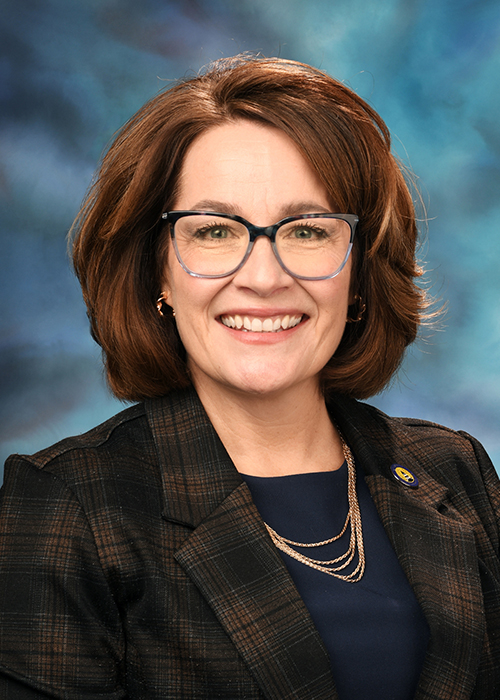
Sen. Meg Loughran Cappel
Sponsored bills
Amends the Courses of Study Article of the School Code. Instead of requiring consumer education to be taught and studied, provides that beginning with pupils entering the 9th grade in the 2024-2025 school year, pupils in the public schools in grade 11 or 12 shall be taught and be required to complete a stand-alone, one-semester or equivalent course covering personal finance, which shall include, but is not limited to, instruction covering behavioral economics; banking and bill payment; investing; types of credit; managing credit; including credit scores; paying for college; insurance; taxes; budgeting; consumer skills; retirement planning, including tax-advantaged retirement plans; home ownership and financing; and personal transportation, including car ownership and leasing. Provides that the State Board of Education shall devise or approve the personal finance education standards for the course. Provides that the school board shall oversee implementation of the personal finance course for each high school student prior to graduation. Specifies the oversight duties of the school board. In provisions regarding required high school courses, provides that the personal finance education course may be counted toward the fulfillment of other graduation requirements. Makes other changes.
Amends the State Treasurer Act. In provisions concerning the College Savings Pool, provides that an account may be rolled over into a Roth IRA account, to the extent permitted by Section 529 of the Internal Revenue Code. In provisions concerning the Illinois Higher Education Savings Program, provides that the definition of "eligible child" includes a child born or adopted after December 31, 2022, to a parent who is a resident of Illinois at the time of the birth or adoption, as evidenced by documentation received by the Treasurer from a parent or legal guardian of the child. Makes conforming changes. Effective immediately.
Maddy summaryThis bill amends the Illinois School Code to transfer authority over charter schools from the State Charter School Commission to the State Board of Education, effective July 1, 2020. It allows the State Board to charge charter schools a fee of up to 3% of their revenue to cover the costs of authorizing and overseeing these schools. Additionally, the legislation requires charter schools whose terms expire on or after July 1, 2025, to reapply to local school boards for authorization before seeking renewal from the State Board. The bill also outlines a specific process for local school boards to review these reapplication proposals through public meetings and voting.
Amends the Illinois Banking Act. Provides that a financial institution shall investigate promptly and determine whether fraud has occurred within 10 business days after receiving a notice of fraud. Provides that the financial institution shall report the results of the investigation to the consumer within 3 business days after completing its investigation. Provides that if the financial institution determines that fraud has occurred, the financial institution shall credit the customer with the amount of the fraud within one business day. Provides that if the financial institution is unable to complete its investigation within 10 business days, the financial institution may take up to 45 days after receipt of a notice of fraud to investigate and determine whether fraud has occurred so long as the financial institution provisionally credits the consumer's account in the amount of the alleged fraud, including interest if applicable, within 10 business days after receiving the fraud notice. Provides that if the financial institution has a reasonable basis for believing that fraud has occurred and if the consumer notifies the financial institution within 2 business days after learning of the alleged fraud, then the financial institution may withhold a maximum of $50 from the amount credited.
Amends the Abused and Neglected Child Reporting Act. Sets forth certain protections that must be provided to the parent or guardian of a child at the center of an abuse or neglect investigation whenever the Department of Children and Family Services refers a child to a board-certified child abuse pediatrician for a medical opinion. Provides that the board-certified child abuse pediatrician must explain to the parent or guardian of the child, whenever the pediatrician has direct contact with the child or the family of the child, that the pediatrician is completing the examination of the child at the request of the Department for the purpose of providing an opinion to the Department regarding whether the mechanism of injury is suspicious for child maltreatment. Provides that the parent or guardian of the child of the center of an investigation shall: (i) be informed of the referral and his or her right to request and receive a copy of the opinion; (ii) be notified that the parent or guardian of the child has the right to obtain, at his or her own expense, and submit to the Department a second medical opinion at any time; (iii) be informed that any second medical opinion submitted to the Department prior to the Department rendering a final determination in the investigation will be considered as inculpatory or exculpatory evidence; and (iv) be notified of the Department's time frames for the investigative process. Requires the Department to annually prepare and make available on the Department's Reports and Statistics webpage a report on the number of children or families referred by the Department to a board-certified child abuse pediatrician as part of an investigation of abuse or neglect by the Department. Sets forth the information that must be contained in the annual reports. Provides that the first report must be posted within 9 months after the effective date of the amendatory Act.
Maddy summaryThis bill creates the Early Childhood Education Act to establish a framework for early childhood education in Illinois. A specific provision within the legislation ensures that the rights, benefits, and employment status of state employees and their agencies remain unchanged by the new act. It explicitly states that the law does not affect existing personnel codes, labor relations, collective bargaining agreements, or pension plans. The bill was signed into law and became effective on June 25, 2024, with some provisions taking effect on July 1, 2026.
Amends the Department of Labor Law of the Civil Administrative Code of Illinois. Creates the Manufacturing Mentorship Program to be administered by the Department of Labor for the purpose of exposing minors who are 17 years of age to manufacturing occupations in the State through temporary employment with an employer. Provides for educational and training requirements that an employer must satisfy to ensure the safety of minors. Provides that the Director of Labor, in consultation with employers, shall adopt rules specifying a list of the tools that a minor who is employed under the program may operate during the minor's employment in a manufacturing occupation. Amends the Child Labor Law. Provides that nothing in the Act applies to the employment of a minor, 17 years of age, in a manufacturing occupation under the Manufacturing Mentorship Program. Effective July 1, 2024.
Maddy summarySB 914 updates the definition of who qualifies for free hunting licenses in Illinois by clarifying rules for landowners, tenants, and business owners. The bill establishes specific criteria for "bona fide equity" members of corporations, limited liability companies, and partnerships, requiring them to hold their interest for at least five years and hunt only on the business's land. It also expands eligibility to include family members who collectively own at least 40 acres but do not all live on the property. These changes aim to streamline the process for issuing free permits to eligible individuals while maintaining restrictions on non-resident fees and hunting outside the specified land.
Amends the Property Tax Code. Provides that the interest penalty for the delinquent payment of taxes shall be waived if the property owner does not receive a property tax bill for the applicable tax year because the bill was mailed to an incorrect address. Effective immediately.