Amends the State Employees Group Insurance Act of 1971, the Illinois Public Aid Code, and the Problem Pregnancy Health Services and Care Act. Restores the provisions that were amended by Public Act 100-538 to the form in which they existed before their amendment by Public Act 100-538.
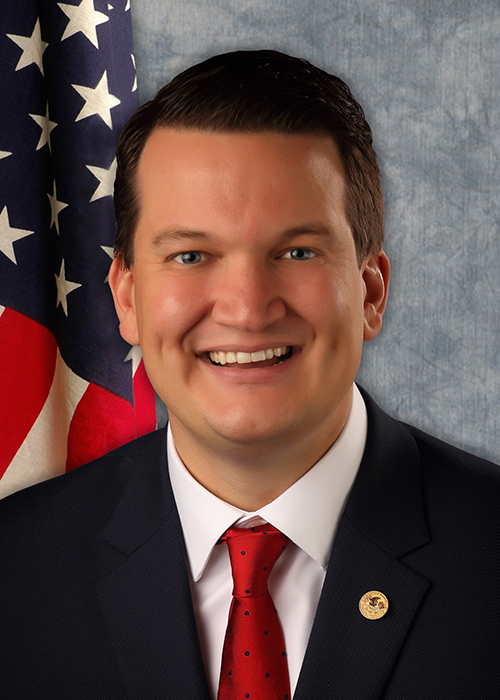
Sen. Andrew Chesney
Sponsored bills
Amends the School Code. Provides that a school board or the governing board of a nonpublic school has the authority to determine, in consultation with the local health department, whether to implement mask-wearing requirements for school staff, students, and visitors when the Governor has declared a disaster due to a public health emergency related to COVID-19. Effective immediately.
Amends the Illinois Municipal Code. Provides that the corporate authorities of each municipality may require the owner or occupant of a parcel to remove nuisance greenery or maintain the property abutting the parcel between the sidewalk and the roadway. Provides that the owner or occupant of the parcel shall be liable for injuries sustained by a person due to lack of removal of nuisance greenery or lack of maintenance. Provides that, if the owner or occupant of a parcel fails to remove nuisance greenery or maintain the property abutting the parcel between the sidewalk and the roadway, the corporate authorities may provide for the removal of nuisance.
Repeals the Statewide Use of Force Standardization Act, the No Representation Without Population Act, the Reporting of Deaths in Custody Act, and the Task Force on Constitutional Rights and Remedies Act. Restores various provisions of specified Acts to the form in which they existed before their amendment by Public Acts 101-652 and 102-28, except for changes made to the Crime Victims Compensation Act. Effective immediately.
Urges the United States Congress and President Joe Biden to pass the "Fauci's Incompetence Requires Early Dismissal" or "FIRED" Act to relieve Dr. Fauci of his role.
Makes application to Congress under the provisions of Article V of the Constitution of the United States for the calling of a convention of the states limited to proposing amendments to the Constitution of the United States that impose fiscal restraints on the federal government, limit the power and jurisdiction of the federal government, and limit the terms of office for its officials and for members of Congress.
Amends the Illinois Municipal Code. Provides that, except for the powers to tax, impose fees, and to incur debt, non-home rule municipalities shall exercise all of the powers provided to home rule units under Section 6 of Article VII of the Illinois Constitution, subject to the limitations set forth in that Section. Effective immediately.
Amends the Election Code. Prohibits a political committee from making expenditures for payments to attorneys, expert witnesses, investigators, or others to provide a defense in a criminal case.
Amends the Illinois Vehicle Code. Provides that the Secretary of State shall not issue any license plate or digital license plate that has installed or attached thereto a global positioning system.
Amends the Unemployment Insurance Act to provide that if an individual's benefit year begins on or after March 8, 2020, but before the week following the last week of a disaster period established by the gubernatorial disaster proclamations in response to COVID-19, recovery by suit in the name of the People of the State of Illinois or recoupment from benefits payable to an individual for any week shall be permanently waived if the sum was received by the individual without fault on his or her part. Provides that, in cases of such permanent waiver of recovery or recoupment, the Director of Employment Security may not request the Comptroller or the Secretary of the Treasury to withhold a sum of benefits for which an individual is found to be ineligible. Effective immediately. Fiscal Note (Dept. of Employment Security) The legislation may have a fiscal impact on the Illinois Unemployment Insurance Trust Fund. The reported data indicates that for the programs payable under Illinois state law: (1) Fiscal Year 2019, non-fraudulent recovery totaled approximately $14,303,046.00; (2) Fiscal Year 2020, non-fraudulent recovery totaled approximately $16,552,059.00; and (3) First and Second Quarter Fiscal Year 2021, non-fraudulent recovery totaled approximately $10,147,378.00. Based on the above data, it appears the legislation could forgive $3.5 million to $5.1 million for each quarter the waiver provision remained in effect. While the system is generally designed to replenish the states Unemployment Trust Fund account by charging employers for benefits paid from the account, employers would not be directly charged for the forgiven overpayments as the bill is currently written.