

Amends the Juvenile Court Act of 1987. Provides that any minor 15 years of age or older arrested or taken into custody under the Act for aggravated vehicular hijacking shall be detained in an authorized detention facility until a detention or shelter care hearing is held to determine if there is probable cause to believe that the minor is a delinquent minor and: (1) secure custody is a matter of immediate and urgent necessity for the protection of the minor or of the person or property of another; (2) the minor is likely to flee the jurisdiction of the court; or (3) the minor was taken into custody under a warrant. Provides that if the court makes that determination, the minor shall continue to be held until the disposition of an adjudicatory hearing under the Delinquent Minors Article of the Act.
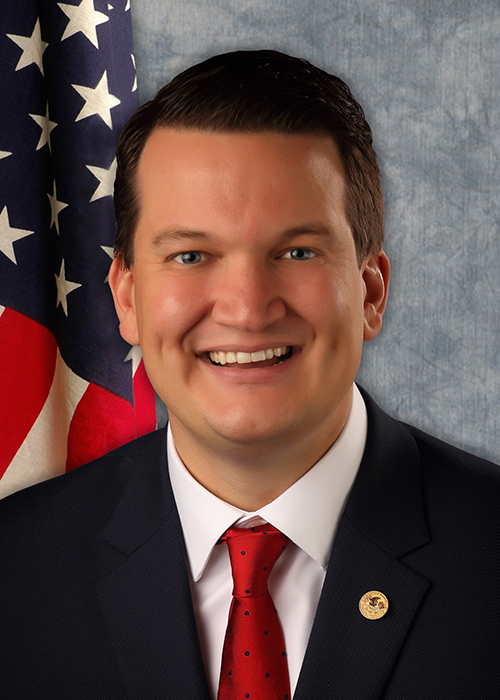
Sen. Andrew Chesney
Sponsored bills
Appropriates the sum of $10,000,000 from the Asylum Travel Expenses Fund to the Department of Human Services for the Asylum Travel Expense Program. Effective July 1, 2024.
Maddy summaryThis bill proposes amending the Illinois Criminal Code to update the definitions and regulations regarding assault weapons, .50 caliber rifles, and specific ammunition types. It directly affects firearm manufacturers, sellers, purchasers, and owners by clarifying which semiautomatic rifles, pistols, and shotguns are classified as assault weapons based on features like detachable magazines, pistol grips, and barrel modifications. The legislation includes a detailed list of specific firearm models, such as various AK and AR types, that are explicitly included in the assault weapon definition. By revising these legal definitions, the bill aims to ensure that current firearms and their components are accurately covered under existing state laws prohibiting their manufacture, possession, sale, and purchase.
Maddy summarySB 914 updates the definition of who qualifies for free hunting licenses in Illinois by clarifying rules for landowners, tenants, and business owners. The bill establishes specific criteria for "bona fide equity" members of corporations, limited liability companies, and partnerships, requiring them to hold their interest for at least five years and hunt only on the business's land. It also expands eligibility to include family members who collectively own at least 40 acres but do not all live on the property. These changes aim to streamline the process for issuing free permits to eligible individuals while maintaining restrictions on non-resident fees and hunting outside the specified land.
Amends the Property Tax Code. Provides that, if a veteran with a surviving spouse dies while an application for a veteran's homestead exemption is being reviewed, the review of that application shall continue, and any subsequent approval granted to the veteran shall carry over to the surviving spouse as long as the spouse meets specified requirements. Effective immediately.
Amends the Electric Vehicle Charging Act. Exempts new single-family residences and tiny homes specifically constructed for veterans from the Act's electric vehicle charging system requirements. Limits the concurrent exercise of home rule powers. Effective immediately.
Amends the Property Tax Code. Provides that no interest or penalties shall be imposed with respect to property that is included in a decedent's probate estate at the time of a delinquency if the representative of the decedent's estate applies with the county treasurer for a waiver of those amounts and is granted that waiver. Provides that the waiver shall apply beginning on the date of the decedent's death until the earlier of either: (i) the date on which the property is sold, transferred, or conveyed or (ii) the date on which the estate is closed.
Amends the Mental Health and Developmental Disabilities Administrative Act. Provides that, for community-based providers serving persons with intellectual/developmental disabilities, subject to federal approval of any relevant Waiver Amendment, the rates taking effect for services delivered on or after January 1, 2025 shall include an increase in the rate methodology sufficient to provide a $3 per hour wage rate increase for all direct support personnel and all other frontline personnel who are not subject to the Bureau of Labor Statistics' average wage increases and who work in residential and community day services settings, with at least $1.50 of those funds to be provided as a direct increase to base wages and the remaining $1.50 to be used flexibly for base wage increases. Provides that the rates taking effect for services delivered on or after January 1, 2025 shall include an increase sufficient to provide wages for all residential non-executive direct care staff, excluding direct support personnel, at the federal Department of Labor, Bureau of Labor Statistics' average wage as defined by rule by the Department of Human Services. Provides that for facilities licensed by the Department of Public Health under the ID/DD Community Care Act as ID/DD facilities and under the MC/DD Act as MC/DD facilities, subject to federal approval of a State Plan Amendment, the rates taking effect for services delivered on or after January 1, 2025, shall include a $3 per hour wage rate increase for all direct support personnel and all other frontline personnel who are not subject to the Bureau of Labor Statistics' average wage increases and who work in residential and community day services settings, with at least $1.50 of those funds to be provided as a direct increase to all aide base wages and the remaining $1.50 to be used flexibly for base wage increases to the rate methodology for aides. Provides that for residential services delivered on or after January 1, 2025, the rates shall include an increase sufficient to provide wages for all residential non-executive direct care staff, excluding aides, at the federal Department of Labor, Bureau of Labor Statistics' average wage as determined by the Department. Requires the Department to adopt rules, including emergency rules, to implement the amendatory Act.
Reaffirms a commitment to oversight and accountability in the management of the State's investments and urges the Illinois Office of the Treasurer to prioritize the well-being and prosperity of all residents above political, partisan, or ESG considerations in all investment decisions. Demands full transparency from the Illinois Office of the Treasurer regarding the rationale behind investment choices to ensure that they are based solely on sound financial principles and the best interests of the people of Illinois. Pledges to diligently investigate any instances where investment decisions appear to have been influenced by political motives and to take appropriate action to safeguard the integrity of the State's financial management practices.
Amends the Dual Credit Quality Act. Makes changes concerning high school and community college partnership agreements, the Dual Credit Committee, instructor and other standards for dual credit courses, and the data in reports made by institutions of higher learning. Provides that a Dual Credit Instructor Endorsement Framework shall be developed through a committee involving collaboration between the Illinois Community College Board and the State Board of Education by December 31, 2024. Sets forth the membership of the committee. Provides that the Framework shall establish criteria for evaluating instructors on the basis of academic credentials, progress toward academic credentials, equivalent experience, or some combination of these. Sets forth what the criteria shall include and what the Framework may do. Effective immediately.