Amends the Campground Licensing and Recreational Area Act. Changes the definition of "campground" so that the number of camping days increases to 10 or more (instead of 6 or more) during a calendar year.
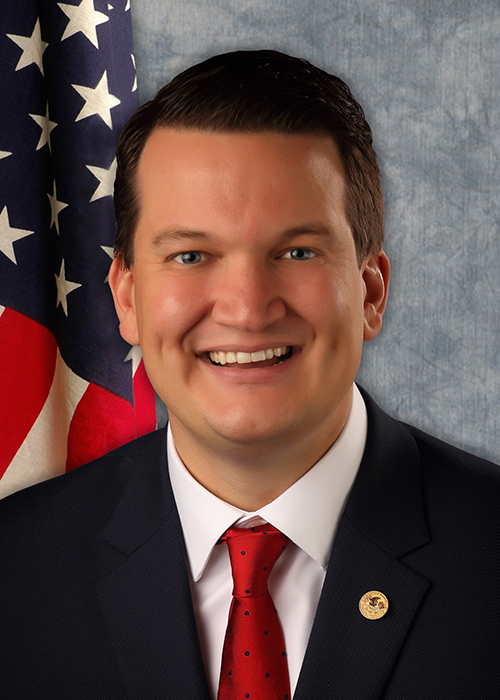
Sen. Andrew Chesney
Sponsored bills
Amends the Illinois Vehicle Code. Provides that a motor vehicle dealer in the State shall not sell a motor vehicle that requires a front registration plate without installing a mounted plate holder on the front of the motor vehicle. Defines "motor vehicle dealer".
Amends the Counties Code and the Illinois Municipal Code. Provides that county medical examiners and coroners are first responders for the purposes of provisions requiring a county to provide health insurance coverage for its employees who are first responders without imposing a deductible, coinsurance, copayment, or any other cost-sharing requirement.
Amends the Illinois Notary Public Act. Provides that a fee of $25 for a commission as an electronic notary public shall be waived for a period of 2 years. Provides that a bond of $25,000 for a commission as an electronic notary shall be waived for a period of 2 years, except that a bond of $5,000 shall still be required. Effective immediately.
Amends the Abused and Neglected Child Reporting Act. Sets forth certain protections that must be provided to the parent or guardian of a child at the center of an abuse or neglect investigation whenever the Department of Children and Family Services refers a child to a medical professional. Defines "medical professional". Provides that the medical professional must explain to the parent or guardian of the child, whenever the medical professional has direct contact with the child or the family of the child, that the medical professional is involved for the purpose of providing an opinion to the Department regarding whether the child's injury or condition is suspicious for child maltreatment. Provides that, in any investigation where a medical professional is providing a medical opinion to the Department, the Department shall inform the parent or guardian of the child at the center of an investigation: (i) of the right to request and receive a copy of the medical professional's opinion, including the basis for the opinion, and a copy of any written report the medical professional has provided to the Department; (ii) of the right to obtain, at the parent's or guardian's own expense, and submit to the Department a second medical opinion for consideration in the investigation at any time prior to the conclusion of the investigation; (iii) that any second medical opinion submitted to the Department prior to the Department rendering a final determination in the investigation will be considered as inculpatory or exculpatory evidence; and (iv) of the Department's time frames for the investigative process. Requires the Department to annually prepare and make available on the Department's Reports and Statistics webpage a report on the number of children or families referred by the Department to a medical professional as part of an investigation of abuse or neglect by the Department. Sets forth the information that must be contained in the annual reports. Provides that the first report must be posted within 9 months after the effective date of the amendatory Act.
Creates the Illinois Public Corruption Transparency Act. Establishes an electronic database within the Illinois State Police to be known as the Illinois Public Corruption Registry. Provides that the Registry shall be published online on a publicly available website, and shall be freely searchable by the public without registration or fee. Provides that the clerk of each circuit court, with respect to criminal and civil cases, the Executive Ethics Commission, Office of the Executive Inspector General, Legislative Inspector General, local government ethics commissions or boards where established; and the Attorney General and each State's Attorney, with respect to corruption-related settlements, consent decrees, and deferred or no-prosecution agreements, shall report any final disposition involving a public corruption offense. Provides that the Registry shall not publish Social Security numbers, full dates of birth, home addresses, personal phone numbers, or bank or account numbers or the identities of minor victims or protected persons as defined by law. Provides that an entry in the Registry shall be created when a reportable final disposition occurs in Illinois and the Illinois State Police receives a certified report. Provides that entries in the Registry shall remain publicly accessible for 10 years from final disposition for misdemeanor level public corruption offenses, 20 years from final disposition for felony level public corruption offenses, and the duration of any court ordered or statutory disqualification from public office, public employment, or public contracting, if longer. Provides that any person who knowingly and willfully submits materially false information to the Registry commits a Class A misdemeanor for a first offense and a Class 4 felony for a subsequent offense, in addition to any other penalties under Illinois law. Effective January 1, 2027.

Amends the State Officials and Employees Ethics Act. Provides that an employer shall not knowingly offer employment, compensation, or fees for services to a person if that person is prohibited by the Act's revolving door prohibitions from accepting employment, compensation, or fees for services from that employer. Grants the Executive Ethics Commission and the Legislative Ethics Commission jurisdiction over employers who make offers of employment, compensation, or fees for services in violation of this prohibition. Authorizes an ethics commission to impose a penalty of up to 3 times the total annual compensation that was offered in violation of this prohibition.
Amends the Lobbyist Registration Act. Provides that a lobbyist or lobbying entity may not promise anything of value to an official, State employee, or a candidate for a State executive or State legislative office for the person's support, action, or inaction for a specific legislative action or executive action, including, but not limited to, campaign contributions, endorsement of candidacy, or any in-kind contributions supporting an official, State employee, or candidate for a State executive or State legislative office. Prohibits a lobbyist or lobbying entity from soliciting an official or State employee to violate similar provisions of the State Officials and Employees Ethics Act. Provides that nothing in the provisions prevents the making or accepting of voluntary contributions otherwise in accordance with law.
Creates the Transparency in Downcoding Act. Provides that the Act applies to certain policies of health insurance amended, delivered, issued, or renewed on or after the effective date of the Act, except for employee or employer self-insured health benefit plans under the federal Employee Retirement Income Security Act of 1974 and health care provided pursuant to the Workers' Compensation Act or the Workers' Occupational Diseases Act. Prohibits a health insurance issuer from using an automated process, system, or tool to downcode a claim; from downcoding a claim based solely on the reported diagnosis codes; and from using downcoding practices in a targeted or discriminatory manner against physicians who routinely treat patients with complex or chronic conditions. Requires downcoding decisions to be made by a physician licensed to practice medicine in all its branches in any United States jurisdiction and of the same or similar specialty as a physician who typically manages the medical condition or disease. Sets forth provisions concerning notification requirements for downcoded claims; the appeal process for downcoded claims; enforcement by the Department of Insurance; and penalties. Provides that any pattern or practice of discriminatory downcoding identified by the Director of Insurance or another regulatory authority shall be subject to enforcement actions, including fines, restitution, or suspension of the health insurance issuer's license in this State. Effective immediately.
Amends the Environmental Protection Act. Reverts provisions regarding greenhouse gases to the language existing before changes made by amendment under P.A. 102-662. Repeals a provision defining "clean energy". Effective immediately.