Amends the Illinois Lottery Law. Provides that the Illinois Veterans Assistance Fund shall make grants, fund additional services, or conduct additional research projects relating to veterans' behavioral health services (rather than veterans' post traumatic stress disorder) and veterans' emergency financial assistance, including, but not limited to, past due utilities, housing, and transportation costs.
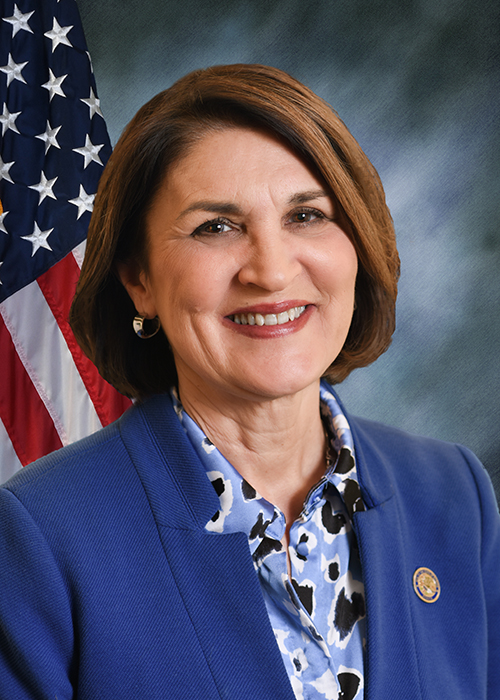
Sen. Sally Turner
Sponsored bills
Amends the Illinois Insurance Code. Provides that a group or individual policy of accident and health insurance that is amended, delivered, issued, or renewed on or after January 1, 2024 shall provide coverage for the cost of the genetic testing of the BRCA1 and BRCA2 genes to detect an increased risk for breast and ovarian cancer if recommended by a health care provider in accordance with the United States Preventive Services Task Force's recommendations for testing.
Creates the Illinois Industrial Biotechnology Partnership Act. Establishes the Industrial Biotechnology Public-Private Partnership as a State-sponsored board consisting of specified members to promote and market Illinois as a destination for research, development, and commercialization for industrial biotechnology. Provides for the appointment of members to the Partnership. Provides requirements concerning meetings and compensation. Provides for administrative and other support to the Partnership. Provides for duties and funding of the Partnership. Provides reporting requirements. Provides for the adoption of rules. Defines terms. Amends the Department of Commerce and Economic Opportunity Law. Creates the Industrial Biotechnology Workforce Development Grant Program. Provides that the Program shall provide grants for the purpose of fostering a well-trained and well-skilled industrial biotechnology workforce. Provides funding and eligibility requirements. Provides reporting requirements. Provides for the adoption of rules. Amends the State Finance Act. Creates the Industrial Biotechnology Human Capital Fund and Industrial Biotechnology Capital Maintenance Fund as special funds in the State treasury for specified purposes. Provides for funding of each Fund. Allows the use of Fund moneys for specified grants. Provides reporting requirements. Provides for the adoption of rules. Amends the Economic Development for a Growing Economy Tax Credit Act. Requires the Department of Commerce and Economic Opportunity to evaluate the tax credit program regarding employment and investment criteria to ensure that the program is applicable to both small startup firms as well as existing companies in the industrial biotechnology field. House Committee Amendment No. 2 Deletes reference to: 20 ILCS 605/605-1055 new 30 ILCS 105/6z-124 new 30 ILCS 105/6z-125 new 35 ILCS 10/5-75 Adds reference to: 20 ILCS 605/605-1095 new 30 ILCS 105/6z-130 new 30 ILCS 105/6z-131 new Replaces everything after the enacting clause. Reinserts the provisions of the engrossed bill with changes. Makes changes to the membership of the Industrial Biotechnology Public-Private Partnership. Provides that members shall be appointed within 90 days (instead of 30 days) after the effective date of the Act. Provides that the Partnership shall develop and direct efforts to attract companies to use existing Illinois facilities for research, development, and pre-commercialization activities. Provides that the Department of Commerce and Economic Opportunity, or a non-profit organization designated by the Department of Commerce and Economic Opportunity, shall provide administrative and other support to the Partnership (instead of the Department of Commerce and Economic Opportunity alone). Provides that the Partnership is dissolved on December 31, 2025. Provides that certain grant programs created in the engrossed bill are subject to appropriation. Contains provisions concerning private matching funds necessary for the expenditure of funds appropriated to the Department of Commerce and Economic Opportunity for the use of the Industrial Biotechnology Public-Private Partnership. Provides that reports concerning the grant programs established in the bill are due on or before January 31 of the year following the fiscal year in which the moneys are allocated. Removes amendatory provisions requiring the Department of Revenue to evaluate the Economic Development for a Growing Economy Tax Credit Program. Makes conforming and other changes.
Amends the Department of Natural Resources Act, the Historic Preservation Act, and the Illinois State Agency Historic Resources Preservation Act. Requires the Illinois State Museum and Division of Historic Preservation of the Department of Natural Resources to collaborate and assist the Department of Resources exercise its duties under the Acts. Removes the authority of the Board of the Illinois State Museum to approve budget requests of the Illinois State Museum. Replaces references to the Historic Sites and Preservation Division of the Department with the Department of Natural Resources. Makes other changes. Effective Immediately.
Amends the Code of Criminal Procedure of 1963. Provides that in a prosecution for a criminal offense defined in the Sex Offense Article of the Criminal Code of 1961 or the Criminal Code of 2012 or for criminal sexual assault, aggravated criminal sexual assault, predatory criminal sexual assault of a child, criminal sexual abuse, or aggravated criminal sexual abuse when the alleged victim of the offense was under 18 years of age at the time of the offense, the court may exclude from the proceedings while the victim is testifying, regardless of the alleged victim's age at the time of the victim's courtroom testimony, all persons, who, in the opinion of the court, do not have a direct interest in the case, except the media. Effective immediately. Senate Committee Amendment No. 1 Provides that for the purposes of excluding disinterested parties, the court shall enter its finding that parties are disinterested and the basis for that finding into the record. House Floor Amendment No. 3 Provides that when the court publishes to the trier of fact videos, photographs, or any depiction of a minor under 18 years of age engaged in a sex act, the court may exclude from the proceedings all persons, who in the opinion of the court, do not have a direct interest in the case, except the media.
Amends the Department of Human Services Act. Requires the Department of Human Services' Bureau of Homeless Services and Supportive Housing within the Office of Family Support Services to annually review and collect data on the number of military veterans receiving services or benefits under the Emergency and Transitional Housing Program, the Emergency Food Program, the Homeless Prevention Program, and the Supporting Housing Program. Provides that the Department may request and receive the cooperation of any other State agency that is relevant to the collection of the required data. Requires the Bureau to annually submit to the General Assembly a written report that details the number of military veterans served under each program no later than December 31, 2023 and every December 31 thereafter. Senate Committee Amendment No. 1 Replaces everything after the enacting clause. Amends the Department of Human Services Act. Requires the Department of Human Services' Bureau of Homeless Services and Supportive Housing within the Office of Family Support Services to annually review and collect data on the number of military veterans receiving services or benefits under the Emergency and Transitional Housing Program, the Emergency Food Program, the Homeless Prevention Program, the Supporting Housing Program, and the Prince Home at Manteno administered by the Department of Veterans' Affairs. Provides that the Bureau may request and receive the cooperation of the Department of Veterans' Affairs and any other State agency that is relevant to the collection of the required data. Requires the Bureau to annually submit to the General Assembly a written report that details the number of military veterans served under each program no later than December 31, 2023 and every December 31 thereafter.
Amends the Criminal Code of 2012. Deletes provision that it is an affirmative defense to a charge of solicitation of a sexual act with a person who is under the age of 18 or who is a person with a severe or profound intellectual disability that the accused reasonably believed the person was of the age of 18 years or over or was not a person with a severe or profound intellectual disability at the time of the act giving rise to the charge. Provides that solicitation of a sexual act from a person who is under the age of 18 or whom the solicitor of the sexual act reasonably believes to be under the age of 18 is a Class 4 felony. House Committee Amendment No. 1 Replaces everything after the enacting clause. Reinserts the provisions of the bill as introduced but deletes provision that solicitation of a sexual act from a person whom the solicitor of the sexual act reasonably believes to be under the age of 18 is a Class 4 felony.
Amends the Community Mental Health Act. Makes a technical change in a Section concerning the short title. Senate Floor Amendment No. 1 Deletes reference to: 405 ILCS 20/0.1 from Ch. 91 1/2, par. 300.1 Adds reference to: 410 ILCS 50/3.2 from Ch. 111 1/2, par. 5403.2 Replaces everything after the enacting clause. Amends the Medical Patient Rights Act. Removes language providing that nothing in the Act shall restrict the ability of a health care facility to regulate the hours of visitation, the number of visitors per patient or the movement of visitors within the facility. Provides that, during a period for which the Governor has issued a proclamation declaring that a disaster exists or in the event of an outbreak or epidemic of a communicable disease in the community in which the health care facility is located, a health care facility shall ensure an opportunity for at least one visitor, not counting a clergy person, to visit a resident or patient of the health care facility. Requires visitation to be subject to the guidelines, conditions, and limitations of the health care facility's visitation policy and any rules or guidelines established by the U.S. Centers for Medicare and Medicaid Services and the Centers for Disease Control and Prevention. Provides that visitors may be required by the health care facility to submit to health screenings necessary to prevent the spread of infectious disease. Provides that a health care facility may restrict a visitor who does not pass its health screening requirement and require a visitor to adhere to infection control procedures. Provides that a health care facility may deny visitation under the Act if the situation demands. Makes other changes. Effective immediately. House Floor Amendment No. 2 Replaces everything after the enacting clause. Reinserts the provisions of the engrossed bill with the following changes. Authorizes a skilled nursing home, extended care facility, or intermediate care facility to prohibit an individual from visiting a resident or patient of the nursing home or facility if specific facts demonstrate that the individual would endanger his or her physical health or safety or the health or safety of a resident, patient, or health care worker of the nursing home or facility. Requires such a denial to be in writing and provided to the individual and the resident or patient with whom the individual was denied visitation. Requires each skilled nursing home, extended care facility, and intermediate care facility to inform each resident of the nursing home or facility (or that individual's representative) of the resident's visitation rights and the facility's visitation-related policies and procedures. Specifies that these nursing homes and facilities must not restrict, limit, or otherwise deny visitation privileges on the basis of race, color, national origin, religion, sex, gender identity, sexual orientation, or disability. Requires the nursing homes and facilities to ensure that all visitors enjoy full and equal visitation privileges, consistent with the residents' preferences.
Amends the Technology Advancement and Development Act. Makes a technical change in a Section concerning the short title. Senate Floor Amendment No. 1 Deletes reference to: 20 ILCS 700/1001 Adds reference to: 20 ILCS 505/21.6 new Replaces everything after the enacting clause. Amends the Children and Family Services Act. Provides that a child protective investigator is authorized to carry and use personal protection spray devices, such as mace, pepper mace, or pepper gas, for self-defense purposes while investigating a report of child abuse or neglect if the child protective investigator has been trained on the proper use of such personal protection spray devices by the Illinois State Police. Requires the Illinois State Police to establish a training program for child protective investigators on the proper use of personal protection spray devices for self-defense purposes. Requires the Department of Children and Family Services to provide funding for the training program. Effective immediately. House Floor Amendment No. 3 Replaces everything after the enacting clause. Amends the Children and Family Services Act. Provides that a front-line staff member is authorized to carry and use personal protection spray devices, as defined, for self-defense purposes while investigating a report of child abuse or neglect if the front-line staff member has been trained on the proper use of such personal protection spray devices by the Department of Children and Family Services, in consultation with the Illinois State Police. Provides that by January 1, 2023, the Department, in consultation with the Illinois State Police, shall (i) identify a list of approved personal protection spray devices and (ii) jointly develop and approve a training curriculum and program for front-line staff members on the proper use of such personal protection spray devices for self-defense purposes. Requires the Department to provide funding for the training program. Sets forth specific circumstances under which a front-line staff member may use a personal protection spray device including if the front-line staff member: (i) reasonably believes that use is necessary to protect the staff member from an imminent physical assault posed by another person; (ii) uses the device to incapacitate a person attempting a physical assault in order to avoid imminent physical harm and to facilitate escape from danger when there is no other alternative available to the front-line staff member; and (iii) except in exigent circumstances, has issued a verbal warning to persons in close proximity to the spray area. Provides that a front-line staff member's use of personal protection spray devices during the performance of his or her professional duties in any manner other than as expressly authorized under the amendatory Act shall be prohibited by Department policy. Provides that whenever a front-line staff member discharges a personal protection spray device, the front-line staff member shall complete an incident report. Provides that, following the discharge of a personal protection spray device that results in exposure, the front-line staff member shall notify his or her supervisor and, if appropriate, call 9-1-1 for emergency response or responders as soon as reasonably practical and when safe to do so. Requires the Department to annually report and publish on its website, beginning January 1, 2024, the number of front-line staff members trained to carry personal protection spray devices, the number of front-line staff members reporting personal protection spray devices and the make or model of the devices, and the number of reported uses of personal protection spray devices by service region. Provides that, in addition, the Department shall report each incident involving the deployment of a personal protection spray device that occurred during the preceding calendar year, including: (1) the estimated age, gender, and race of the intended target of the personal protection spray device; (2) whether there were injuries to the intended target resulting from the deployment of the personal protection spray device; (3) the age, gender, and race of the front-line staff member who utilized the personal protection spray device; and (4) whether there were injuries to the front-line staff member resulting from the incident. Requires the Department to also report yearly data on the number of personal protection spray device deployments found to be against Department policy. Effective immediately.
Amends the Loan Repayment Assistance for Physicians Act. To address the shortage of obstetrical services in rural communities, provides that a physician who provides obstetrical care and works at a privately owned rural health clinic in this State may qualify for assistance under the Act if all other established criteria are met. Effective immediately. Senate Committee Amendment No. 1 Deletes reference to: 110 ILCS 949/27 new Adds reference to: 20 ILCS 2310/2310-220 was 20 ILCS 2310/55.73 110 ILCS 935/1 from Ch. 144, par. 1451 110 ILCS 935/3.04 from Ch. 144, par. 1453.04 110 ILCS 935/3.09 110 ILCS 970/1-20 from Ch. 144, par. 2781-20 110 ILCS 980/3 from Ch. 144, par. 2703 305 ILCS 5/12-4.24a from Ch. 23, par. 12-4.24a Replaces everything after the enacting clause. Amends the Underserved Physician Workforce Act. Provides that the Act may be cited as the Underserved Health Care Provider Workforce Act (rather than the Underserved Physician Workforce Act). Adds a government-owned, privately owned, independent, or provider-based Rural Health Clinic or hospital that accepts Medicaid patients and assists patients who are uninsured to qualify for Medicaid or develop a discount payment plan to the definition of "designated shortage area". Makes changes to the definition of "eligible health care provider". Amends the Department of Public Health Powers and Duties Law of the Civil Administrative Code of Illinois, the Nurses in Advancement Law, the Private Medical Scholarship Agreement Act, and the Illinois Public Aid Code to make related changes. Effective immediately. Senate Floor Amendment No. 3 Replaces everything after the enacting clause. Reinserts the contents of the bill as amended by Senate Amendment No. 1, with the following changes. With respect to the definition of "Designated Shortage Area" in the Underserved Physician Workforce Act, adds a government-owned, privately owned, independent, or provider-based Rural Health Clinic or hospital that accepts Medicaid, Medicare, the State's Children's Health Insurance Program, private insurance, and self-pay (rather than a government-owned, privately owned, independent, or provider-based Rural Health Clinic or hospital that accepts Medicaid patients and assists patients who are uninsured to qualify for Medicaid or develop a discount payment plan, or both, according to financial need). Changes the definition of "eligible health care provider" to mean a primary care physician, general surgeon, emergency medicine physician, obstetrician, advanced practice registered nurse, or physician assistant who accepts Medicaid, Medicare, the State's Children's Health Insurance Program, private insurance, and self-pay (rather than a primary care physician, general surgeon, emergency medicine physician, obstetrician, advanced practice registered nurse, or physician assistant who accepts Medicaid patients or develops a discount payment plan, or both, for patients according to financial need). Effective immediately.