Amends the Illinois Income Tax Act. Creates an income tax deduction for gratuities that are included in the taxpayer's federal adjusted gross income. Effective immediately.
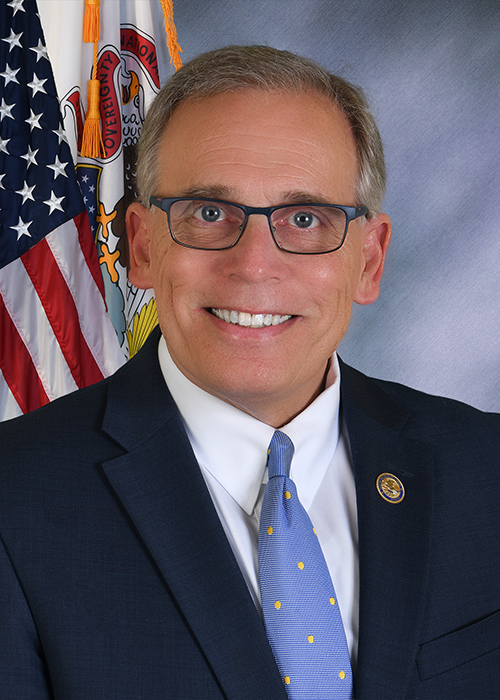
Sen. Dave Syverson
Sponsored bills
Amends the Illinois Income Tax Act. Creates a deduction in an amount equal to any overtime wages paid to the taxpayer during the taxable year. Effective immediately.
Amends the Illinois Income Tax Act. Increases the tax credit for residential real property taxes from 5% of the real property taxes paid by the taxpayer during the taxable year on the principal residence of the taxpayer to 10% of the real property taxes paid by the taxpayer during the taxable year on the principal residence of the taxpayer. Provides that the credit is exempt from the Act's automatic sunset provision. Effective immediately.
Amends the Illinois Income Tax Act. Creates the Welcome Home Illinois tax credit. Provides that each taxpayer who is a first-time homebuyer of a principal residence in the State during the taxable year is entitled to an income tax credit in an amount equal to $500. Effective immediately.
Amends the Property Tax Code. Provides that, for taxable years 2027 and thereafter, the maximum reduction for the general homestead exemption in all counties shall be the maximum reduction for the immediately preceding taxable year, increased by the percentage increase, if any, in the Consumer Price Index during the 12-month period ending on September 30 of the immediately preceding taxable year. Effective immediately.
Amends the Use Tax Act, the Service Use Tax Act, the Service Occupation Tax Act, and the Retailers' Occupation Tax Act. Provides that prescription medicines and products classified as Class III medical devices by the United States Food and Drug Administration that are used for cancer treatment pursuant to a prescription are exempt from the tax under the Acts. Amends the Illinois Income Tax Act. Increases the amount deposited into the Local Government Distributive Fund to: (i) 7.47% of the net revenue realized from the tax imposed upon individuals, trusts, estates, and pass-through entities; and (ii) 7.85% of the net revenue realized from the tax imposed upon corporations. Effective July 1, 2026.
Creates the Home Utility Relief Act. Requires the Department of Commerce and Economic Opportunity to create, as soon as practicable, a Home Utility Rebate Program to provide rebates to households that use electricity and that have a median household income between 100% and 500% of the poverty guidelines updated periodically in the Federal Register by the U.S. Department of Health and Human Services. Provides that eligible households shall receive the rebates as soon as practicable after implementation of the program. Requires the Department to, by rule, establish qualifications for program participation which may include requirements that apply under the Energy Assistance Act and other requirements. Provides that rebates provided under the program shall be funded through appropriations made from the Home Utility Rebate Relief Fund created under the Act. Requires the State Comptroller to direct and the State Treasurer to transfer $500,000,000 from the General Revenue Fund to the Home Utility Rebate Relief Fund to provide rebates to qualifying households for State fiscal years 2026 and 2027. Provides that any funds left over at the end of the second month following the conclusion of payments to households in a fiscal year may be awarded to certain qualifying first-time small business owners as determined by the Department. Requires the Department to adopt emergency rules in accordance with the Illinois Administrative Procedure Act to implement the program. Amends the State Finance Act to include the Home Utility Rebate Relief Fund as a special fund. Effective immediately.
Amends the Use Tax Act, the Service Use Tax Act, the Service Occupation Tax Act, and the Retailers' Occupation Tax Act. Provides that, from July 1, 2026 through December 31, 2026, use and occupation taxes on motor fuel and gasohol are imposed at the rate of 1.25%. Makes corresponding changes concerning the distribution of proceeds. Effective immediately.
Amends the Medical Assistance Article of the Illinois Public Aid Code. In a provision requiring the Department of Healthcare and Family Services to administer and regulate an All Kids Dental School Program, requires the Department to include certain program requirements, including, but not limited to, the following: (1) all participating dentists must be enrolled in the Department's provider enrollment system within the Illinois Medicaid Program Advanced Cloud Technology System; (2) each dental entity must complete the All Kids School-Based Dental Program Provider Registration Application; (3) all dental providers approved must be able to render the full scope of preventative school-based services for an out-of-office setting, including a Caries Risk Assessment; and (4) each dental entity approved must obtain a signed consent form from each student's parent or guardian prior to providing services. Removes language prohibiting the preemption of a home rule unit's or school district's authority to establish, change, or administer a school-based dental program in addition to, or independent of, the school-based dental program administered by the Department. Requires the Department to coordinate with the Chicago Public Schools on which schools will participate in the school-based dental program and then oversee the allocation of schools in the metropolitan Chicago area to dental providers. Requires schools to be assigned to dental providers on a first-come, first-served basis or put on a wait list if no schools are available at that time. Provides that no more than 80 schools per provider shall be allowed; and that providers may subcontract with other approved providers to render services. Effective immediately.

Maddy summarySB 1050 amends the Economic Development Project Area Tax Increment Allocation Act of 1995 to correct a reference to the law's short title. It makes a technical change to a specific section of the statute, updating how the law is formally named within its own text. This bill does not change any substantive policy or create new requirements for local governments or taxpayers. It solely addresses a clerical error in the law's designation. (1 sentence, as it is a purely procedural amendment.)