Amends the Use Tax Act, the Service Use Tax Act, the Service Occupation Tax Act, and the Retailers' Occupation Tax Act. Reinstates the exemption for the use or sale of tangible personal property purchased from an Illinois retailer by a taxpayer engaged in centralized purchasing activities in Illinois. Provides that the exemption sunsets on June 30, 2022 (currently, June 30, 2016). Effective immediately.
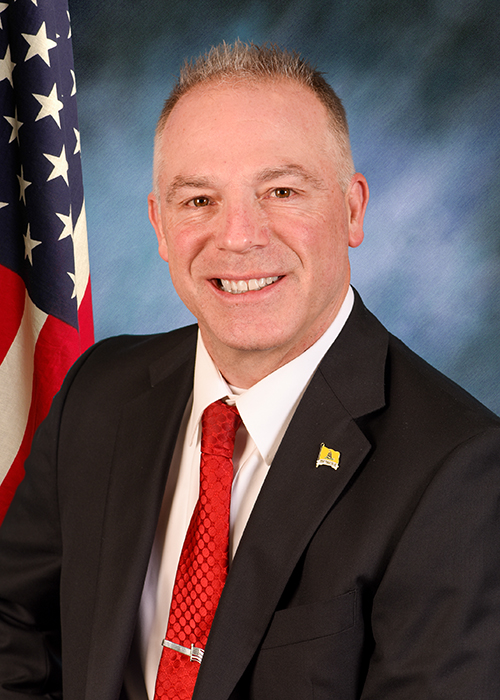
Sen. Craig Wilcox
Sponsored bills
Amends the Criminal Code of 2012, the Unified Code of Corrections, and the County Jail Act. Permits currently employed and retired State correctional officers and county correctional officers to carry their own firearms off duty without being in violation of the unlawful use of weapons and aggravated unlawful use of a weapon statutes if they meet certain training requirements. Deletes language regarding the use of firearms by athletes at the 2016 Olympic and Paralympic Games.
Amends the Illinois Income Tax Act. Increases the research and development credit by providing that the increase in research and development activities shall be based on an increase over 50% of the average of the qualifying expenditures for each year in the base period (instead of 100% of the average of the qualifying expenditures for each year in the base period). Provides that the research and development credit applies on a permanent basis. Effective immediately.
Amends the Firearm Concealed Carry Act. Provides that notwithstanding whether the laws of the state or territory where the non-resident resides related to firearm ownership, possession, and carrying are substantially similar to the requirements to obtain a license under this Act, the Department of State Police shall allow for a non-resident license application if the applicant is employed by the United States Military permanently assigned in Illinois on Permanent Change of Station or Permanent Change of Assignment orders and who is not a resident of Illinois but maintains an address in Illinois. Provides that a non-resident applicant shall submit with his or her application a photocopy of Permanent Change of Station or Permanent Change of Assignment orders to an assignment in this State and an affirmation that the applicant possesses a currently valid Firearm Owner's Identification Card with the Firearm Owner's Identification Card number or notice that the applicant is applying for a Firearm Owner's Identification Card in conjunction with the license application. Provides that a non-resident licensee shall notify the Department of State Police within 30 days of moving to an address outside of this State, a Permanent Change of Station or Permanent Change of Assignment to a duty station outside this State, or a separation or retirement from the United States Military in addition to the notification requirements of the Act. Makes other changes.

Amends the Hospital Licensing Act. Requires a hospital to provide a plan of correction to the Department of Public Health within 60 days if the hospital demonstrates a pattern or practice of failing to substantially comply with specified requirements or with the hospital's written staffing plan. Allows the Department to impose specified fines on a hospital for failing to comply with written staffing plans for nursing services or plans of correction. Requires money from fines to be deposited into the Hospital Licensure Fund (instead of the Long Term Care Provider Fund). Contains provisions concerning staffing plans. Amends the Nursing Education Scholarship Law. Provides that the Department of Public Health may award a total of $500,000 annually in nursing education scholarships. Amends the Illinois Income Tax Act. Creates an income tax credit for taxpayers who are employed during the taxable year as nurse educators. Provides that the credit shall be equal to 2.5% of the taxpayer's federal adjusted gross income for the taxable year. Effective immediately, except that provisions amending the Hospital Licensing Act take effect on the first day of the first full calendar month that begins 6 months after the Act becomes law.
Amends the Tobacco Products Tax Act of 1995. Provides that, beginning January 1, 2021, the tax per cigar or other rolled tobacco product sold or otherwise disposed of shall not exceed $0.50 per cigar or roll. Effective January 1, 2021.
Declares May 2020 as Foster Care Month in Illinois.
Amends the Humane Care for Animals Act. Makes changes to the penalties for persons convicted of aggravated cruelty to a companion animal. Provides that a person convicted of causing the death of a companion animal is guilty of a Class 2 felony (rather than a Class 4 felony). Provides that a second or subsequent conviction for an act that causes the death of a companion animal is a Class 1 felony (rather than a Class 3 felony).
Amends the Minimum Wage Law. Provides that units of local government may enact ordinances to opt into a reduced minimum wage that is less than the wage otherwise required under the Law. Provides for minimum wages based upon a percentage of the otherwise required minimum wage depending upon the region of the State. Establishes 6 regions for purposes of determining the minimum wage. Provides that in regions where the minimum wage is reduced, the unit of local government must establish a procedure to increase the local minimum wage by at least 5% per year beginning January 1, 2026 and continuing until the local minimum wage is established at $15 per hour. Provides for reduced minimum wages for employees who have not worked 650 hours during a calendar year for an employer. Effective immediately.
Proposes to amend the Legislature Article of the Illinois Constitution. Removes the requirement for each Legislative District to be divided into 2 Representative Districts. Modifies provisions concerning legislative redistricting. Provides specified requirements for each Legislative District, Representative District, and Congressional District for redistricting purposes. Replaces the current method of legislative redistricting with a 17-member Commission, appointed by the Chief Justice of the Supreme Court and the most senior Supreme Court Justice of a different political party in accordance with specified criteria. Specifies requirements for the Commission concerning redistricting plans. Adds provisions concerning the membership of the Commission and budgetary matters related to the Commission. Provides the Supreme Court with original and exclusive jurisdiction over redistricting matters. Defines terms. Makes conforming and other changes. Effective upon being declared adopted and applicable to redistricting beginning in 2021 and to the election of General Assembly members beginning in 2022.