

Creates the Hydrogen Economy Act. Creates the Hydrogen Economy Task Force. Provides for membership of the Task Force. Provides that members of the Task Force shall serve without compensation. Provides for meetings of the Task Force. Provides that the Department of Commerce and Economic Opportunity shall provide administrative support to the Task Force. Provides for duties of the Task Force. Provides that the Task Force shall report to the Governor and the General Assembly by December 1 of each year on its activities, findings, and recommendations. Effective immediately. Senate Committee Amendment No. 1 Adds members to the Hydrogen Economy Task Force. Modifies the duties of the Task Force to specify that the duties include identifying barriers to the widespread development of hydrogen, including within environmental justice communities. Senate Floor Amendment No. 2 Provides for the appointment of an additional member to the Hydrogen Economy Task Force. House Committee Amendment No. 2 Replaces everything after the enacting clause. Reinserts the provisions of the engrossed bill with the following changes. Adds three members to the Hydrogen Economy Task Force: one member representing a non-profit energy research organization, appointed by the Governor; one representative of a trade association representing the investor-owned electric and natural gas utilities and power generation companies in the State of Illinois, appointed by the Speaker of the House of Representatives; and one representative of a trade association representing wind and solar electric generators, renewable transmission companies, appointed by the President of the Senate.
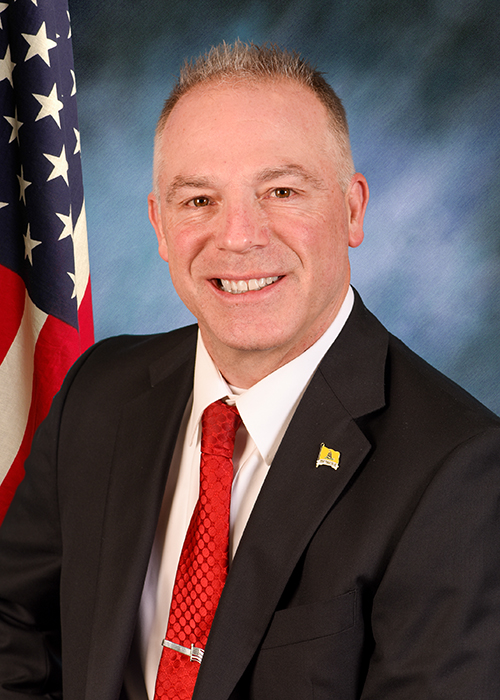
Sen. Craig Wilcox
Sponsored bills
Amends the Illinois Lottery Law. Provides that the Illinois Veterans Assistance Fund shall make grants, fund additional services, or conduct additional research projects relating to veterans' behavioral health services (rather than veterans' post traumatic stress disorder) and veterans' emergency financial assistance, including, but not limited to, past due utilities, housing, and transportation costs.
Amends the Illinois Insurance Code. Provides that an insured or any other person who may be the owner of rights under a policy of life insurance may make an irrevocable assignment of all or a part of his or her rights under the policy to a funeral home in accordance with a specified provision of the Illinois Funeral or Burial Funds Act. Provides that a policy owner who executes a designation beneficiary form irrevocably waives and cannot exercise certain rights. Amends the Illinois Funeral or Burial Funds Act. In a provision concerning pre-need contracts funded through the purchase of a life insurance policy or tax-deferred annuity contract, provides that nothing shall prohibit the purchaser from irrevocably assigning ownership of the policy or annuity to a person or trust or from irrevocably assigning the benefits of the policy or annuity to a funeral home for the purpose of obtaining favorable consideration for Medicaid, Supplemental Security Income, or another public assistance program. Requires the insured or any other person who may be the owner of rights under the policy of whole life insurance to sign a guaranteed pre-need contract with the provider that describes the cost of the goods and services to be provided upon the person's death, up to $6,774, except that any portion of a contract that clearly represents the purchase of burial space is exempt regardless of value. Amends the Aid to the Aged, Blind or Disabled Article of the Illinois Public Aid Code. In a provision requiring the Department of Human Services to exempt certain prepaid funeral or burial contracts from consideration when making an eligibility determination for medical assistance, provides that at any time after submitting an application for medical assistance and before the Department makes a final determination of eligibility, an applicant may use available resources to purchase one of the exempted prepaid funeral or burial contracts. Exempts up to $6,774 (rather than $5,874) in funds under an irrevocable prepaid funeral or burial contract when determining an individual's resources and eligibility for medical assistance. Contains provisions concerning exemptions; irrevocable designation of beneficiary forms; and other matters. House Committee Amendment No. 1 Deletes reference to: 215 ILCS 5/245.3 new 225 ILCS 45/2a 225 ILCS 45/2b new Replaces everything after the enacting clause. Amends the Illinois Public Aid Code. In a provision requiring the Department of Human Services to exempt certain prepaid funeral or burial contracts from consideration when making an eligibility determination for medical assistance, provides that at any time after submitting an application for medical assistance and before a final determination of eligibility has been made by the Department, an applicant may use available resources to purchase one of the exempted prepaid funeral or burial contracts. Senate Committee Amendment No. 1 Adds reference to: 215 ILCS 5/245.3 new 225 ILCS 45/2a 225 ILCS 45/2b new Replaces everything after the enacting clause. Amends the Illinois Insurance Code. Provides that an insured or any other person who may be the owner of rights under a policy of life insurance may make an irrevocable assignment of all or a part of his or her rights under the policy to a funeral home in accordance with a specified provision of the Illinois Funeral or Burial Funds Act. Provides that a policy owner who executes a designation beneficiary form irrevocably waives and cannot exercise certain rights. Amends the Illinois Funeral or Burial Funds Act. In a provision concerning pre-need contracts funded through the purchase of a life insurance policy or tax-deferred annuity contract, provides that nothing shall prohibit the purchaser from irrevocably assigning ownership of the policy or annuity to a person or trust or from irrevocably assigning the benefits of the policy or annuity to a funeral home for the purpose of obtaining favorable consideration for Medicaid, Supplemental Security Income, or another public assistance program. Requires the insured or any other person who may be the owner of rights under an existing policy of life insurance to sign a guaranteed pre-need contract with the provider that describes the cost of the funeral goods and services to be provided upon the person's death, up to $7,248, except that any portion of a contract that clearly represents the purchase of burial space, as that term is defined for purposes of the Supplemental Security Income program, is exempt regardless of value. Provides that the form to effectuate the irrevocable assignment and thereby provide for the irrevocable designation of beneficiary of one or more life insurance policies shall be prepared by the Department of Healthcare and Family Services or such form, approved by the Department of Healthcare and Family Services, that has been prepared by an insurance company licensed to operate in the State of Illinois. Contains provisions concerning disclosure statements under pre-need contracts with cash advances; the distribution of proceeds under a life insurance policy upon the death of the insured; and other matters. Amends the Aid to the Aged, Blind or Disabled Article of the Illinois Public Aid Code. Provides that at any time prior to or after submitting an application for medical assistance and before a final determination of eligibility has been made, an applicant may use available resources to purchase one of the prepaid funeral or burial contracts exempted under the Article. Provides that existing life insurance policies are exempt if there has been an irrevocable assignment in compliance with a specified provision under the Illinois Funeral or Burial Funds Act. Requires a person to sign a contract with a funeral home, which is licensed under the Illinois Funeral or Burial Funds Act, that describes the cost of the funeral goods and services to be provided upon the person's death, up to $7,248, except that any portion of a contract that clearly represents the purchase of burial space, as that term is defined for purposes of the Supplemental Security Income program, is exempt regardless of value. Provides that the amount shall be adjusted annually for any increase in the Consumer Price Index. Requires the licensed funeral home to which the life insurance policy benefits have been irrevocably assigned to retain copies for inspection by the Comptroller and to report annually to the Comptroller certain information. Provides that certain provisions under the amendatory Act shall be subject to federal approval. Requires the Department of Healthcare and Family Services to apply for any necessary federal waivers or approvals to implement certain changes made under the amendatory Act. Effective immediately.
Creates the Renewable Energy Component Recycling Task Force Act. Creates the Renewable Energy Component Recycling Task Force to investigate options for recycling and other end of life management methods for renewable energy generation components and energy storage devices in accordance with State and federal requirements, to identify preferred methods to safely and responsibly manage end of life renewable energy generating components and energy storage devices, including the reuse or refurbishment, and other specified duties. Provides for the membership and duties of the Task Force. Directs the Task Force to report its findings and recommendations to the Governor and the General Assembly by March 1, 2023. Provides legislative findings. Repeals the Act on December 31, 2023. Effective immediately. Senate Floor Amendment No. 1 Requires the Environmental Protection Agency to coordinate meetings for and provide other logistical assistance to the Task Force. Provides that the Agency may arrange to have outside experts provide research assistance, technical support, and assistance in the preparation of reports for the Task Force. Permits the Agency to use moneys from the Solid Waste Management Fund to fulfill its obligations. Requires the Task Force's final report to be submitted no later than July 1, 2025 (rather than March 1, 2023). Provides that the Act is repealed on December 31, 2025 (rather than December 31, 2023).
Amends the Criminal Code of 2012. Deletes provision that it is an affirmative defense to a charge of solicitation of a sexual act with a person who is under the age of 18 or who is a person with a severe or profound intellectual disability that the accused reasonably believed the person was of the age of 18 years or over or was not a person with a severe or profound intellectual disability at the time of the act giving rise to the charge. Provides that solicitation of a sexual act from a person who is under the age of 18 or whom the solicitor of the sexual act reasonably believes to be under the age of 18 is a Class 4 felony. House Committee Amendment No. 1 Replaces everything after the enacting clause. Reinserts the provisions of the bill as introduced but deletes provision that solicitation of a sexual act from a person whom the solicitor of the sexual act reasonably believes to be under the age of 18 is a Class 4 felony.
Amends various Acts by replacing the term "accident", in relation to automobiles, motor vehicles, and traffic accidents, with the term "crash". Provides that a State agency may exhaust any forms or documents using "accident" prior to printing copies of a new version using "crash". Effective immediately. House Floor Amendment No. 1 Provides that the amendatory Act is effective July 1, 2023 (rather than immediately). Senate Committee Amendment No. 1 Provides that the intent of the amendatory Act is to clarify that not all crashes are accidental, as crash encompasses all types of motor vehicle impacts and collisions, including, but not limited to, an impact or collision caused by negligence, willful and wanton conduct, or an intentional act. Provides that the amendatory Act is not intended to alter the legal rights and obligations under current law of insurers, applicants, and policy holders.
Amends the Community Mental Health Act. Makes a technical change in a Section concerning the short title. Senate Floor Amendment No. 1 Deletes reference to: 405 ILCS 20/0.1 from Ch. 91 1/2, par. 300.1 Adds reference to: 410 ILCS 50/3.2 from Ch. 111 1/2, par. 5403.2 Replaces everything after the enacting clause. Amends the Medical Patient Rights Act. Removes language providing that nothing in the Act shall restrict the ability of a health care facility to regulate the hours of visitation, the number of visitors per patient or the movement of visitors within the facility. Provides that, during a period for which the Governor has issued a proclamation declaring that a disaster exists or in the event of an outbreak or epidemic of a communicable disease in the community in which the health care facility is located, a health care facility shall ensure an opportunity for at least one visitor, not counting a clergy person, to visit a resident or patient of the health care facility. Requires visitation to be subject to the guidelines, conditions, and limitations of the health care facility's visitation policy and any rules or guidelines established by the U.S. Centers for Medicare and Medicaid Services and the Centers for Disease Control and Prevention. Provides that visitors may be required by the health care facility to submit to health screenings necessary to prevent the spread of infectious disease. Provides that a health care facility may restrict a visitor who does not pass its health screening requirement and require a visitor to adhere to infection control procedures. Provides that a health care facility may deny visitation under the Act if the situation demands. Makes other changes. Effective immediately. House Floor Amendment No. 2 Replaces everything after the enacting clause. Reinserts the provisions of the engrossed bill with the following changes. Authorizes a skilled nursing home, extended care facility, or intermediate care facility to prohibit an individual from visiting a resident or patient of the nursing home or facility if specific facts demonstrate that the individual would endanger his or her physical health or safety or the health or safety of a resident, patient, or health care worker of the nursing home or facility. Requires such a denial to be in writing and provided to the individual and the resident or patient with whom the individual was denied visitation. Requires each skilled nursing home, extended care facility, and intermediate care facility to inform each resident of the nursing home or facility (or that individual's representative) of the resident's visitation rights and the facility's visitation-related policies and procedures. Specifies that these nursing homes and facilities must not restrict, limit, or otherwise deny visitation privileges on the basis of race, color, national origin, religion, sex, gender identity, sexual orientation, or disability. Requires the nursing homes and facilities to ensure that all visitors enjoy full and equal visitation privileges, consistent with the residents' preferences.
Amends the Technology Advancement and Development Act. Makes a technical change in a Section concerning the short title. Senate Floor Amendment No. 1 Deletes reference to: 20 ILCS 700/1001 Adds reference to: 20 ILCS 505/21.6 new Replaces everything after the enacting clause. Amends the Children and Family Services Act. Provides that a child protective investigator is authorized to carry and use personal protection spray devices, such as mace, pepper mace, or pepper gas, for self-defense purposes while investigating a report of child abuse or neglect if the child protective investigator has been trained on the proper use of such personal protection spray devices by the Illinois State Police. Requires the Illinois State Police to establish a training program for child protective investigators on the proper use of personal protection spray devices for self-defense purposes. Requires the Department of Children and Family Services to provide funding for the training program. Effective immediately. House Floor Amendment No. 3 Replaces everything after the enacting clause. Amends the Children and Family Services Act. Provides that a front-line staff member is authorized to carry and use personal protection spray devices, as defined, for self-defense purposes while investigating a report of child abuse or neglect if the front-line staff member has been trained on the proper use of such personal protection spray devices by the Department of Children and Family Services, in consultation with the Illinois State Police. Provides that by January 1, 2023, the Department, in consultation with the Illinois State Police, shall (i) identify a list of approved personal protection spray devices and (ii) jointly develop and approve a training curriculum and program for front-line staff members on the proper use of such personal protection spray devices for self-defense purposes. Requires the Department to provide funding for the training program. Sets forth specific circumstances under which a front-line staff member may use a personal protection spray device including if the front-line staff member: (i) reasonably believes that use is necessary to protect the staff member from an imminent physical assault posed by another person; (ii) uses the device to incapacitate a person attempting a physical assault in order to avoid imminent physical harm and to facilitate escape from danger when there is no other alternative available to the front-line staff member; and (iii) except in exigent circumstances, has issued a verbal warning to persons in close proximity to the spray area. Provides that a front-line staff member's use of personal protection spray devices during the performance of his or her professional duties in any manner other than as expressly authorized under the amendatory Act shall be prohibited by Department policy. Provides that whenever a front-line staff member discharges a personal protection spray device, the front-line staff member shall complete an incident report. Provides that, following the discharge of a personal protection spray device that results in exposure, the front-line staff member shall notify his or her supervisor and, if appropriate, call 9-1-1 for emergency response or responders as soon as reasonably practical and when safe to do so. Requires the Department to annually report and publish on its website, beginning January 1, 2024, the number of front-line staff members trained to carry personal protection spray devices, the number of front-line staff members reporting personal protection spray devices and the make or model of the devices, and the number of reported uses of personal protection spray devices by service region. Provides that, in addition, the Department shall report each incident involving the deployment of a personal protection spray device that occurred during the preceding calendar year, including: (1) the estimated age, gender, and race of the intended target of the personal protection spray device; (2) whether there were injuries to the intended target resulting from the deployment of the personal protection spray device; (3) the age, gender, and race of the front-line staff member who utilized the personal protection spray device; and (4) whether there were injuries to the front-line staff member resulting from the incident. Requires the Department to also report yearly data on the number of personal protection spray device deployments found to be against Department policy. Effective immediately.
Amends the School Code. Provides that any spouse, natural child, legally adopted child under the age of 18 at the time of adoption, minor child younger than 18 who is under a court-ordered guardianship for at least 2 continuous years prior to application, or step-child under the age of 18 at the time of marriage of an eligible veteran or serviceperson shall, upon application and proper proof, be awarded a MIA/POW Scholarship. Provides that the holder of a MIA/POW Scholarship shall not be required to pay any tuition or mandatory fees while attending a State-controlled university or public community college in this State for a period equivalent to 4 years of enrollment, including summer terms. Amends the Children of Deceased Veterans Act. Changes the name of the Act to the Deceased, Disabled, and MIA/POW Veterans' Dependents Educational Opportunity Grant Act. Requires the Illinois Department of Veterans' Affairs to provide, subject to appropriation, for matriculation and tuition fees, board, room rent, books and supplies for the use and benefit of any natural child, adopted child, minor child who is under a court-ordered guardianship for at least 2 continuous years prior to application, or step-child of an eligible veteran or serviceperson, if the child is not under 10 and not over 18 years of age. Requires the child to provide proof of compliance with Illinois compulsory attendance requirements as provided under the School Code. Defines "eligible veteran or service person". Requires the Department to adopt rules on how to render payments to eligible minor children of deceased veterans or servicepersons. Effective immediately.
Amends the Fish and Aquatic Life Code. Removes provisions requiring a veteran who has served as an active duty member of the United States Armed Forces, the Illinois National Guard, or reserves of the United States Armed Forces to apply in person for a fishing license at a regional office of the Department of Natural Resources. Provides that the Department of Natural Resources shall establish by administrative rule the documentation that qualifies as acceptable verification of service; defines "acceptable verification" of service. Makes related changes to the Wildlife Code. Effective immediately.