

Amends the School Code. Provides that, subject to appropriation, the State Board of Education, in consultation with the Department of Public Health, shall develop an educational document explaining, at a minimum, the values of good indoor air quality and shall supply the document to school districts within one year after an appropriation is made for this purpose. Provides that a school district shall supply all active classroom instructors, school staff, school administrators, and district leadership with the educational document developed by the State Board. Provides that, subject to funding, a school district shall ensure that all active classrooms that are not mechanically ventilated have at least 2 properly functioning windows, or one window in situations where only one is present, that can open and can safely stay open. Provides that a school district must be in compliance within 2 years after funding is made available for this purpose. Provides that, subject to funding, a school district shall ensure that all active classrooms are equipped with an air quality monitor or sensor and an in-room air cleaner that is installed and operating. Provides that each school shall record all incidents in which the recommended parts-per-million level was breached in a classroom and maintain those records for at least 5 years. Provides that an air quality monitor or sensor and an in-room air cleaner may not be shared between active classrooms. Sets forth further provisions concerning in-room air cleaners and air quality monitors or sensors. Provides that, subject to funding, a regional office of education, an intermediate service center, or the State Board (with respect to the Chicago school district) shall undertake a ventilation verification assessment of all mechanical ventilation systems in a school district. Provides that the ventilation verification assessment shall verify whether the existing mechanical ventilation system is operating in accordance with design parameters and meets the requirements of any applicable building codes.
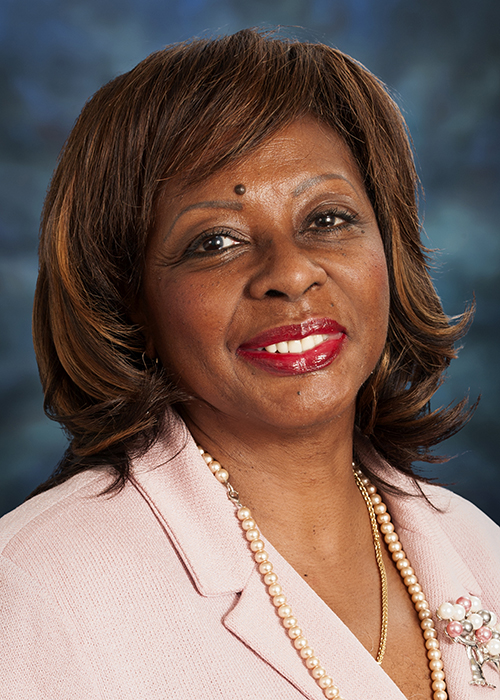
Sen. Mattie Hunter
Sponsored bills
Amends the Senior Citizens and Persons with Disabilities Property Tax Relief Act. Changes the income eligibility levels used to determine eligibility for reduced vehicle registration fees for seniors and persons with disabilities.
Amends the School Code. Beginning with the 2025-2026 school year, requires a school district maintaining any of grades 9 through 12 to provide all eligible students graduating from high school with the opportunity to register to vote. Effective immediately.
Creates the Fuel Gas Detector and Alarm Act. Requires the installation of a fuel gas detector and alarm in certain buildings. Sets forth fuel gas detector and alarm standards and requirements for residential rental units. Details fuel gas detector and alarm requirements in the event of a sale or exchange of a building. Provides for a civil penalty, set by local ordinance. Limits liability. Requires noninterference with fuel gas detectors and alarms. Effective January 1, 2026.
Creates the Responsibility in Firearm Legislation (RIFL) Act. Establishes a firearms manufacturer licensing program in the Department of Financial and Professional Regulation, with certain requirements, including that the sum of all fees for firearms manufacturer licenses shall be equal to the public health costs and financial burdens from firearm injuries and deaths. Provides that, beginning January 1, 2028, a manufacturer of firearms may not operate in this State without a license from the Department and that a manufacturer who violates this provision is subject to a civil penalty of up to $1,000,000 per month. Provides that, beginning January 1, 2028, a retailer may not sell a firearm to a consumer in this State from a manufacturer who does not have a license from the Department and that a retailer who violates this provision is subject to a civil penalty of up to $10,000 per violation, with certain requirements. Establishes the RIFL Fund as a special fund in the State treasury, with certain limitations. Provides that the proceeds from fees under the licensing program shall be deposited into the RIFL Fund. Establishes a financial assistance program in the Department with moneys from the RIFL Fund for financial assistance to victims of firearms and for other purposes. Provides that the Department shall contract with a program administrator to administer the financial assistance program, with certain requirements. Provides that the Department shall adopt rules for financial assistance to victims of firearms, with certain requirements, including regarding exemption from certain State taxes. Provides that the Department may contract with a program administrator to implement or administer any part of the Act, with certain requirements. Provides that the Illinois State Police shall report certain information to the Department. Provides that the Department may provide for other civil penalties of no more than $1,000 per violation. Provides that the Attorney General may enforce the Act. Makes other provisions. Amends the State Finance Act to make conforming changes. Amends the Illinois Income Tax Act to make conforming changes.
Acknowledges the accomplishments and implementation progress of the Kinship in Demand (KIND) Act. Urges the Illinois Department of Children and Family Services (DCFS) to aggressively continue implementation of the KIND Act to deliver permanency to more children and to keep families together even when reunification is not possible. Urges DCFS to execute needed revisions to Rule 415 one year after all statutory provisions went into effect. Urges DCFS to actively pursue the recently announced federal funding opportunities by the U.S. Department of Health and Human Services Administration for Children & Families to support kinship navigator services and to bolster the implementation of the KIND Act. Urges DCFS to provide continual, updated training opportunities and resource materials for staff. Urges the Administrative Office of the Illinois Courts to provide effective statewide judicial education on the KIND Act. Supports the judiciary's efforts to diligently implement the components of the KIND Act.
Amends the Illinois Insurance Code. Provides that no company may impose renewal premium increases of more than 10% for specified lines of business unless the company mails or delivers by electronic means to the named insured and by electronic means to the Department of Insurance notice of the increase in renewal premium at least 60 days prior to the renewal or anniversary date. Provides that the rates and premium charges for every policy of automobile liability insurance shall include appropriate reductions as determined by the insurer for any insured over age 55 upon successful completion of the National Safety Council's Defensive Driving Course or a motor vehicle crash prevention course, including an eLearning course, that is found by the Secretary of State to meet or exceed the standards of the National Safety Council's Defensive Driving Course's 4-hour (rather than 8-hour) classroom safety instruction program or eLearning course. Creates the Rates for Automobile Insurance Article. Provides that rates shall not be excessive, inadequate, or unfairly discriminatory. Provides that a rate is reasonable and not excessive, inadequate, or unfairly discriminatory if it is an actuarially sound estimate of the expected value of all future costs associated with an individual risk transfer. Prohibits insurance providers from using an insured's zip code; credit score, credit-based insurance score, or any insurance score that uses or relies upon an insured's credit score; or age, if the insured is over 65 years of age, in any manner that increases an insured's premium, results in a nonrenewal of an insurance policy, or leads to the cancellation of an insurance policy. Requires credible State-specific loss experience to be used in the development of rates whenever such data is available and statistically reliable, and, to meet actuarial standards of credibility, insurers may supplement State-specific loss experience with countrywide or regional loss experience. Makes other changes. Effective January 1, 2027.
Maddy summarySB 4074 appropriates $15 million from the General Revenue Fund to the Illinois Department of Human Services (DHS) for the Pretrial Success Program, effective July 1, 2026. This bill provides funding for an existing program focused on pretrial services, though the bill text does not detail specific program activities or direct beneficiaries. It is a straightforward funding measure with no new policy requirements or eligibility criteria described. The appropriation is scheduled to begin in fiscal year 2027.
Appropriates $5,000,000 to the Department of Agriculture for grants to Illinois public institutions of higher education for research and development focused on alternative protein research. Effective July 1, 2026.
Maddy summaryHB 598 makes a technical amendment to the Salaries Act. Specifically, it revises a section concerning the short title of the Act. This bill primarily affects the formal naming convention within the existing law rather than substantive salary provisions.