

Amends the Department of Human Services Act. Requires the Department of Human Services to establish a Youth Training and Education in the Building Trades Program to award grants to community-based organizations for the purpose of establishing training programs for youth with an interest in the building trades. Provides that under the training programs, each youth shall receive: (1) formal training and education in the fundamentals and core competencies in the youth's chosen trade; and (2) hands-on experience in the building trades by participating in community improvement projects involving the rehabilitation of vacant and abandoned residential property. Requires selected organizations to use the grant money to establish an entrepreneurship program to provide eligible youth with the capital and business management skills necessary to launch their own businesses. Contains provisions concerning residential property that is eligible for acquisition under the Program; the selection criteria for community-based organizations; and the Youth Training and Education in the Building Trades Fund. Amends the Illinois Housing Development Act. Requires the Illinois Housing Development Authority to establish a Training Youth in the Building Trades Program that is substantially similar to the Youth Training and Education in the Building Trades Program. Contains provisions concerning residential property that is eligible for acquisition under the Program; the selection criteria for community-based organizations; and the Training Youth in the Building Trades Fund. Amends the State Finance Act to create the Youth Training and Education in the Building Trades Fund and the Training Youth in the Building Trades Fund. Effective January 1, 2020. Senate Floor Amendment No. 1 Deletes reference to: 20 ILCS 1305/10-48 new 20 ILCS 3805/7.32 new 30 ILCS 105/5.892 new Adds reference to: 20 ILCS 605/605-1025 new Replaces everything after the enacting clause. Amends the Department of Commerce and Economic Opportunity Law of the Civil Administrative Code of Illinois. Provides that subject to appropriation, the Department of Commerce and Economic Opportunity may establish a Training in the Building Trades Program (Program) to award grants to community-based organizations for the purpose of establishing training programs for persons who are 18 through 35 years of age and have an interest in the building trades. Provides that persons eligible to participate in the Program shall include youth who have aged out of foster care and have an interest in the building trades. Provides that under the training programs, participating persons shall receive: (i) formal training and education in the fundamentals and core competencies in the person's chosen trade; and (ii) hands-on experience to further develop the person's building trade skills by participating in community improvement projects involving the rehabilitation of vacant and abandoned residential property in economically depressed areas of the State. Requires selected organizations to also use the grant money to establish an entrepreneurship program to provide eligible persons with the capital and business management skills necessary to successfully launch their own businesses as contractors, subcontractors, real estate agents, or property managers or as any other entrepreneurs in the building trades. Contains provisions concerning residential property that is eligible for acquisition and rehabilitation under the Program; the selection criteria for community-based organizations; and the Training in the Building Trades Fund. Amends the State Finance Act to create the Training in the Building Trades Fund. Effective January 1, 2020.
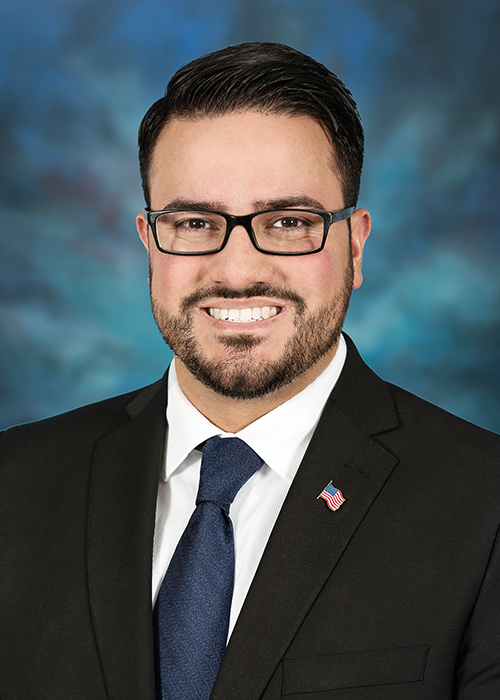
Sen. Omar Aquino
Sponsored bills
Amends the Abused and Neglected Child Reporting Act. Removes the list of mandated reports under the Act and instead lists several categories of professionals required to report suspected child abuse and neglect to the Department of Children and Family Services, including: (1) medical personnel; (2) social services and mental health personnel; and (3) crisis intervention personnel. Provides that when 2 or more persons who work within the same workplace and are required to report under the Act share a reasonable cause to believe that a child may be an abused or neglected child, a single report may be made by a designated reporter. Provides that nothing in the Act requires a child to come before the mandated reporter in order for the reporter to make a report of suspected child abuse or child neglect. Provides that persons required to report under the Act must complete mandated reporter training provided through or approved by the Department and that the training must be completed within a specified timeframe. Requires the Department to adopt rules by January 1, 2020 on its process for approving mandated reporter training. Provides that, by January 1, 2021, continuing education requirements for persons licensed by the Department of Financial and Professional Regulation must include mandated reporter training. Requires the Department, by January 1, 2020, to adopt rules and procedures for educating members of the public about their right to report child abuse or neglect. Requires the Department to seek assistance from businesses and organizations on raising awareness about child abuse and child neglect and the Department's statewide toll-free child abuse hotline. Senate Committee Amendment No. 1 Replaces everything after the enacting clause. Amends the Abused and Neglected Child Reporting Act. Organizes the list of mandated reporters under the Act into the following categories of professionals: (i) medical personnel; (ii) social services and mental health personnel; (iii) crisis intervention personnel; (iv) education personnel; (v) recreation or athletic program or facility personnel; (vi) child care personnel; (vii) law enforcement personnel; (viii) funeral home directors; (ix) clergy members; and (x) physicians and other specified medical personnel who provide abortions, abortion referrals, or contraceptives. Provides that when 2 or more persons who work within the same workplace and are required to report under the Act share a reasonable cause to believe that a child may be an abused or neglected child, a single report may be made by a designated reporter. Provides that nothing in the Act requires a child to come before the mandated reporter in order for the reporter to make a report of suspected child abuse or child neglect. Provides that persons required to report under the Act must complete mandated reporter training within 3 months of their date of engagement in a professional or official capacity as a mandated reporter, and at least every 3 years thereafter. Provides that the trainings shall be in-person or web-based, and shall include, at a minimum, information on certain topics, including: (a) indicators for recognizing child abuse and child neglect, as defined under the Act; and (b) responding to a child in a trauma-informed manner. Provides that the mandated reporter training shall be provided through the Department of Children and Family Services, through an entity authorized to provide continuing education for professionals licensed through the Department of Financial and Professional Regulation, the State Board of Education, the Illinois Law Enforcement Training Standards Board, or the Department of State Police, or through an organization approved by the Department to provide mandated reporter training. Requires the Department of Children and Family Services to make available a free web-based training for reporters. Requires each mandated reporter to report to his or her employer and, when applicable, to his or her licensing or certification board that he or she received the mandated reporter training. Provides that beginning January 1, 2021, if a mandated reporter receives licensure from the Department of Financial and Professional Regulation or the State Board of Education, and his or her profession has continuing education requirements, the training mandated under the Act shall count toward meeting the licensee's required continuing education hours. Requires the Department of Children and Family Services to develop culturally sensitive materials on child abuse and child neglect, the statewide toll-free telephone number established under the Act, and the process for reporting any reasonable suspicion of child abuse or child neglect. Senate Floor Amendment No. 2 Replaces everything after the enacting clause. Reinserts the provisions of Senate Amendment No. 1, but with the following changes: Provides that educational personnel required to report under the Abused and Neglected Child Reporting Act must do so only to the extent required under a specified provision of the Act (rather than only to the extent required in accordance with other provisions expressly concerning the duty of school board members to report suspected child abuse). Provides that when 2 or more persons who work within the same workplace and are required to report under the Act share a reasonable cause to believe that a child may be an abused or neglected child, one of those reporters may be designated to make a single report (rather than a single report may be made by a designated reporter). In a provision requiring mandated reporters to complete reporter training within 3 months of their date of engagement in a professional or official capacity as a mandated reporter, provides that the 3-month requirement may be extended to 6 months pursuant to any other applicable State law that governs training requirements for a specific profession. Requires certain medical personnel who work with children in their professional or official capacity to complete mandated reporter training at least every 6 years. Requires such medical personnel to attest at each time of licensure renewal on their renewal form that they understand they are a mandated reporter of child abuse and neglect, that they are aware of the process for making a report, that they know how to respond to a child in a trauma-informed manner, and that they are aware of the role of child protective services and the role of a reporter after a call has been made. Requires medical personnel who do not work with children in their professional or official capacity to make similar affirmations in lieu of repeated training. House Committee Amendment No. 1 Adds reference to: 50 ILCS 705/7 from Ch. 85, par. 507 Amends the Illinois Police Training Act. Provides that the curriculum for probationary police officers at all certified police training schools shall include a block of instruction addressing the mandatory reporting requirements under the Abused and Neglected Child Reporting Act. Provides that minimum in-service training requirements, which a police officer must complete every 3 years, shall include training on reporting child abuse and neglect. Further amends the Abused and Neglected Child Reporting Act. Provides that persons required to report under the Act must complete an initial mandated reporter training (rather than must complete mandated reporter training) within 3 months of their date of engagement in a professional or official capacity as a mandated reporter, or within the time frame of any other applicable State law that governs training requirements for a specific profession, and at least every 3 years thereafter. Provides that the initial requirement (rather than the initial 3-month requirement) only applies to the first time they engage in their professional or official capacity (rather than only applies to the first time they engage in their professional or official capacity and may be extended to 6 months pursuant to any other applicable State law that governs training requirements for a specific profession).
Amends the Civil Administrative Code of Illinois. Provides that, except as otherwise provided by law, no department shall deny an occupational or professional license based solely on the applicant's citizenship status or immigration status. Amends the Illinois Explosives Act to allow a person admitted for permanent residence to qualify for licensure. Amends the Illinois Plumbing License Law, the Water Well and Pump Installation Contractor's License Act, the Illinois Horse Meat Act, the Liquor Control Act of 1934, and the Safety Deposit License Act to remove references to United States citizenship as a prerequisite for licensure. Amends the Coal Mining Act to remove references to United States citizenship as a prerequisite and references to the ability to speak and understand the American Language. Makes other changes. Senate Committee Amendment No. 1 Replaces everything after the enacting clause with the provisions of the introduced bill with the following changes. In the Illinois Explosives Act, allows a person lawfully admitted for permanent residence (rather than a person admitted for permanent residence) to qualify for licensure. In the Coal Mining Act, restores references to United States citizenship and adds references to persons lawfully admitted for permanent residence. Adds an immediate effective date.
Amends the Illinois Public Aid Code. Requires the Illinois Student Assistance Commission (ISAC) to identify and flag college students who are potentially eligible to receive Supplemental Nutrition Assistance Program (SNAP) benefits. Provides that the factors to be used to determine potential SNAP eligibility shall be prescribed by ISAC in consultation with the Department of Human Services, but at a minimum shall include income information reported on a college student's Free Application for Federal Student Aid. Requires ISAC, in consultation with the Department of Human Services, to develop a notice that ISAC shall make available electronically to institutions of higher education that includes, at a minimum, college student SNAP eligibility criteria, the Application for Benefits Eligibility's website address, and the Illinois Hunger Coalition's Hunger Hotline. Requires Illinois institutions of higher education that participate in the Monetary Award Program to provide the notice in writing to all students who are enrolled or accepted for enrollment and are identified by ISAC as potentially SNAP eligible. Requires ISAC to adopt rules. Effective immediately. Senate Committee Amendment No. 1 Adds reference to: 305 ILCS 5/12-4.13b Replaces everything after the enacting clause. Reinserts the provisions of the introduced bill, but with the following changes and additions: Provides that the Department of Human Services shall consult with the Illinois Workforce Innovation Board (rather than with the Illinois Workforce Investment Board) to establish a protocol to identify and verify all potential exemptions to certain federal eligibility rules under the Supplemental Nutrition Assistance Program (SNAP). Provides that a career and technical educational program approved by the Illinois Community College Board that could be a component of a SNAP Employment and Training (E&T) program, as identified by the Department of Human Services, shall be considered an employment and training program under a specified provision of the Code of Federal Regulations, unless prohibited by federal law. In provisions requiring the Illinois Student Assistance Commission (ISAC) to adopt rules concerning SNAP eligibility notifications to college students, requires ISAC to adopt the rules on or before October 1, 2020 (rather than on or before October 1, 2019). Effective immediately. House Committee Amendment No. 1 Requires the Illinois Student Assistance Commission (ISAC) to annually include information about the Supplemental Nutrition Assistance Program (SNAP) in the language that schools are required to provide to students eligible for the Monetary Award Program grant (rather than requiring ISAC to identify and flag college students who are potentially eligible to receive SNAP benefits). Provides that the language shall, at a minimum, direct students to information about college student eligibility criteria for SNAP, and direct students to the Department of Human Services and to the Illinois Hunger Coalition's Hunger Hotline for additional information. Requires Illinois institutions of higher education that participate in the Monetary Award Program (MAP) to provide the notice to all students who are enrolled, or who are accepted for enrollment and intending to enroll, and who have been identified by ISAC as MAP-eligible at the institution (rather than requiring ISAC to develop, in consultation with the Department of Human Services, an electronic notice for institutions of higher education that includes, at a minimum, college student SNAP eligibility criteria, the Application for Benefits Eligibility's website address, and the Illinois Hunger Coalition's Hunger Hotline).
Amends the Evidence Article of the Code of Civil Procedure. Provides that evidence of a person's immigration status is not admissible in any civil proceeding unless: it is essential to prove an element of a claim or an affirmative defense; or a person or his or her attorney voluntarily reveals his or her immigration status to the court. Provides that a party intending to offer evidence regarding a person's immigration status shall file a written motion at least 14 days before trial. Provides that the court shall conduct an in camera hearing to review the probative value of the person's immigration status. Provides that if the court finds that the probative value of the person's immigration status outweighs its prejudicial nature, the court shall make findings of fact and conclusions of law regarding the permitted use of the evidence. Provides that the motion, related papers, and the record of the hearing shall be sealed and remain under seal unless the court orders otherwise. Provides that a party who communicates to a person or witness any threat to or actually disclose a person's or witness's immigration status to any entity or immigration or law enforcement agency with the intent to deter the person from testifying commits a Class C misdemeanor. Senate Floor Amendment No. 1 Replaces everything after the enacting clause with the provisions of the introduced bill and makes the following changes: Provides that evidence is also admissible if it is offered to prove an interest or bias of a witness, if it does not cause confusion of the issues or mislead the trier of fact, and the probative value of the evidence outweighs its prejudicial nature. Provides that a party intending to offer evidence related to a person's immigration status shall file a written motion that also explains why it is essential to a claim or affirmative defense or is probative of an interest or bias of a witness, it does not cause confusion of the issues or mislead the trier of fact, and the probative value of the evidence outweighs its prejudicial nature. Makes a corresponding change regarding findings of fact and conclusions of law the court must make regarding the permitted use of the evidence. Senate Floor Amendment No. 2 Deletes language providing that a written motion shall explain why it is essential to a claim or affirmative defense or is probative of an interest or bias of a witness.
Creates the Student Online Personal Protection Act of 2019. Provides for legislative intent and definitions. Provides for operator prohibitions, operator duties, school authority prohibitions, school authority duties, State Board of Education duties, and parent rights. Creates the Student Data Protection Oversight Committee and provides for the Committee's membership and support. Requires the Committee to submit an annual report to the General Assembly and the State Board of Education with recommendations, if any, for policy revisions and legislative amendments that would carry out the intent of the Act. Amends the Illinois School Student Records Act. Adds a definition of record. Requires written consent of a student's parent to publish student directories that list student names, addresses, and other identifying information and similar publications. Amends the Consumer Fraud and Deceptive Business Practices Act to make a conforming change. Repeals the Student Online Personal Protection Act. Effective immediately. House Floor Amendment No. 3 Deletes reference to: New Act 105 ILCS 10/2 105 ILCS 10/6 105 ILCS 85/Act rep. 815 ILCS 505/2Z Adds reference to: 105 ILCS 85/5 105 ILCS 85/10 105 ILCS 85/15 105 ILCS 85/26 new 105 ILCS 85/27 new 105 ILCS 85/28 new 105 ILCS 85/33 new Replaces everything after the enacting clause. Amends the Student Online Personal Protection Act. Defines "breach", "longitudinal data system", "parent", and "student". Adds to an operator's duties. Provides for school prohibitions and duties and the State Board of Education's duties. Provides for parent and student rights. Makes other changes. Effective July 1, 2021. Senate Committee Amendment No. 1 Adds reference to: 105 ILCS 85/30 Replaces everything after the enacting clause. Reinserts the provisions of the engrossed bill with the following changes. Changes the definition of "breach". Adds and makes changes to an operator's duties and a school's duties. Provides that at least once (rather than twice) annually, the State Board of Education must publish and maintain on its website a list of all of the entities or individuals that the State Board contracts with or has agreements with and that hold covered information and a copy of each contract or agreement. Provides that the Student Online Personal Protection Act does not prohibit an operator or school from producing and distributing, free or for consideration, student class photos and yearbooks to the school, students, parents, or individuals authorized by parents and to no others, in accordance with the terms of a written agreement between the operator and the school. Effective July 1, 2021. Senate Floor Amendment No. 3 Replaces everything after the enacting clause. Reinserts the provisions of the engrossed bill as amended by Senate Amendment No. 1 with the following changes. Provides that certain information that is required to be posted on a school's website must be made available at a school's administrative office for inspection by the general public if the school does not maintain a website. Provides that a school may omit from its list of breaches of covered information any breach in which the date, estimated date, or estimated date range in which it occurred is earlier than July 1, 2021 or any breach previously posted on a list no more than 5 years prior to the school updating the current list. Provides that a notice of breach may be delayed if an appropriate law enforcement agency determines that the notification will interfere with a criminal investigation and provides the school with a written request for a delay of notice. Allows the State Board of Education to share, transfer, disclose, or provide covered information to its employees or officials acting within their official capacity. Removes a provision stating that a student's covered information is the sole property of the student's parent. Makes changes to a parent's and student's rights. Makes other changes. Effective July 1, 2021.
Amends the Illinois Public Aid Code. Makes technical changes to specify in provisions concerning provisional eligibility for long-term care services that: (i) the Department of Healthcare and Family Services must maintain the applicant's provisional Medicaid enrollment status until a final eligibility determination is approved or the applicant's appeal has been adjudicated and eligibility is denied; (ii) the Department of Healthcare and Family Services or the managed care organization, if applicable, must reimburse providers for services rendered during an applicant's provisional eligibility period; (iii) the Department of Healthcare and Family Services must submit payment vouchers for all retroactive reimbursement due to the Office of the Comptroller within 10 business days of issuing provisional eligibility to an applicant; and (iv) the Department of Healthcare and Family Services must adopt rules. House Floor Amendment No. 1 Adds reference to: 30 ILCS 772/25 new Amends the Equity in Long-term Care Quality Act. Provides that the Department of Public Health shall establish a nursing home labor force promotion, expansion, and retention program no later than January 1, 2020 using moneys appropriated from the Equity in Long-term Care Quality Fund. Provides for the components of the program. Provides that the Department shall establish partnerships with one or more community colleges or universities to execute the program. Provides for scholarship distribution and preferences. Provides that the Department shall report to the General Assembly no later than January 30, 2020 on the status of the establishment of the program. Provides that no later than January 1, 2021, and each January 1 thereafter, the Department shall report to the General Assembly the number of scholarships awarded during the preceding year and the demographics of the awardees. Makes the amendatory Act effective immediately. House Floor Amendment No. 2 Adds reference to: 30 ILCS 772/25 new Amends the Equity in Long-term Care Quality Act. Provides that the Department of Public Health, contingent upon approval by the Centers for Medicare and Medicaid Services, shall establish a nursing home labor force promotion, expansion, and retention program no later than January 1, 2020 using moneys appropriated from the Equity in Long-term Care Quality Fund. Provides for the components of the program. Provides that the Department shall establish partnerships with one or more community colleges or universities to execute the program. Provides for scholarship distribution and preferences. Provides that the Department shall report to the General Assembly no later than January 30, 2020 on the status of the establishment of the program. Provides that no later than January 1, 2021, and each January 1 thereafter, the Department shall report to the General Assembly the number of scholarships awarded during the preceding year and the demographics of the awardees. Makes the amendatory Act effective immediately.
Amends the School Code. Provides that in fixing the salaries of teachers, a school board shall pay those who serve on a full-time basis a rate not less than (i) $32,076 for the 2020-2021 school year, (ii) $34,576 for the 2021-2022 school year, (iii) $37,076 for the 2022-2023 school year, and (iv) $40,000 for the 2023-2024 school year. Provides that the minimum salary rate for each school year thereafter, subject to review by the General Assembly, shall equal the minimum salary rate for the previous school year increased by a percentage equal to the percentage increase, if any, in the Consumer Price Index For All Urban Consumers for all items published by the United States Department of Labor for the previous school year. Fiscal Note (State Board of Education) HB 2078 is estimated to increase the Regionalized Adequacy Target for school districts in the Evidence-Based Funding calculations by approximately 0.5%, at minimum, in the first year based on fiscal year 2019 Evidence-Based funding calculations. HB 2078 will increase the funding gap to adequacy. State Mandates Fiscal Note (Dept. of Commerce & Economic Opportunity) This bill does create a State mandate. Senate Floor Amendment No. 1 Replaces everything after the enacting clause. Reinserts the provisions of the engrossed bill with the following change: provides that, on or before January 31, 2020, the Professional Review Panel must submit a report to the General Assembly on how State funds and funds distributed under the evidence-based funding formula may aid the financial effects of the changes made by the amendatory Act.
Creates the Immigrant Tenant Protection Act. Defines terms. Provides that, with exceptions, a landlord shall not: (1) threaten to disclose or actually disclose information regarding or relating to the immigration or citizenship status of a tenant to any person, entity, or any immigration or law enforcement agency with the intent of harassing or intimidating the tenant, retaliating against the tenant for exercising his or her rights, or influencing the tenant to surrender possession; or (2) bring an action to recover possession of a dwelling unit based solely or in part on the immigration or citizenship status of a tenant. Provides that the Act does not enlarge or diminish a landlord's right to terminate a tenancy pursuant to existing State or local law; nor does the Act enlarge or diminish any ability of local government to regulate or enforce a prohibition against a landlord's harassment of a tenant. Provides that waiver of a right under the Act by a tenant is void as a matter of public policy. Provides remedies. Provides that in a civil action involving a tenant's or occupant's housing rights, no inquiry shall be permitted into the tenant's or occupant's immigration or citizenship status, with exceptions. Amends the Eviction Article of the Code of Civil Procedure. Provides that, subject to specified conditions, it is an affirmative defense to an eviction that a landlord engaged in conduct on the basis of immigration status of the tenant. Amends the Mobile Home Landlord and Tenant Rights Act. Provides that an eviction order may not be entered against a tenant as a reprisal for or on the basis of the tenant's immigration or citizenship status. Effective immediately.
Creates the Re-Entering Citizens Civics Education Act. Provides that the Department of Corrections and the Department of Juvenile Justice shall provide a nonpartisan peer-led civics program throughout the correctional institutions of the State to teach civics to soon-to-be released citizens who will be re-entering society. Provides for the curriculum and eligibility for the program. Provides that the program shall be taught by peer educators who are citizens incarcerated in the Department of Corrections and the Department of Juvenile Justice facilities and specially trained by experienced peer educators and established nonpartisan civic organizations. Provides that the nonpartisan civic organizations shall provide adequate training to peer educators on matters including, but not limited to, voting rights, governmental institutions, current affairs, and simulations of voter registration, election, and democratic processes, and shall provide periodic updates to program content and to peer educators. Provides that the Department of Corrections shall adopt rules to carry out the Act within 6 months after the effective date of the Act. Provides that the funding for the voting rights and registration peer education program shall be subject to appropriation by the General Assembly. Contains provisions regarding funding for the program. Effective January 1, 2020. Senate Floor Amendment No. 2 Provides that the civic education program must be offered by the Department of Corrections and the Department of Juvenile Justice to prisoners scheduled to be discharged within 12 months (rather than 6 months). Provides that established nonpartisan civic organizations may be assisted by area political science or civics educators at colleges, universities, and high schools and by nonpartisan organizations providing re-entry services. Provides that the Department of Corrections and the Department of Juvenile Justice should aim to include the peer reeducation workshop in conjunction with other pre-release procedures and movements. Adds references to "or superintendents" wherever "wardens" appear in the engrossed bill.