

Amends the Illinois Public Aid Code. Provides that licensed medically complex for the developmentally disabled facilities (MC/DD) (rather than licensed long-term care facilities for persons under 22 years of age) that serve severely and chronically ill patients (rather than pediatric patients) shall have a specific reimbursement system designed to recognize the characteristics and needs of the patients they serve. Sets forth certain reimbursement rates for MC/DD facilities for date of services starting July 1, 2018. Requires MC/DD facilities to document within each resident's medical record the conditions or services using the minimum data set documentation standards and requirements to qualify for exceptional care reimbursement. Provides that the Department of Healthcare and Family Services shall be responsible for reimbursement calculations and direct payment for services. Imposes an assessment and licensing fee on MC/DD facilities. Creates the Medically Complex for the Developmentally Disabled Provider Fund for the purpose of receiving and disbursing assessment moneys, including making payments to intermediate care facilities for persons with a developmental disability that are also licensed as MC/DD facilities and making payments of any amounts which are reimbursable to the federal government. Makes other changes. Amends the State Finance Act to create the Medically Complex for the Developmentally Disabled Provider Fund. Effective immediately.
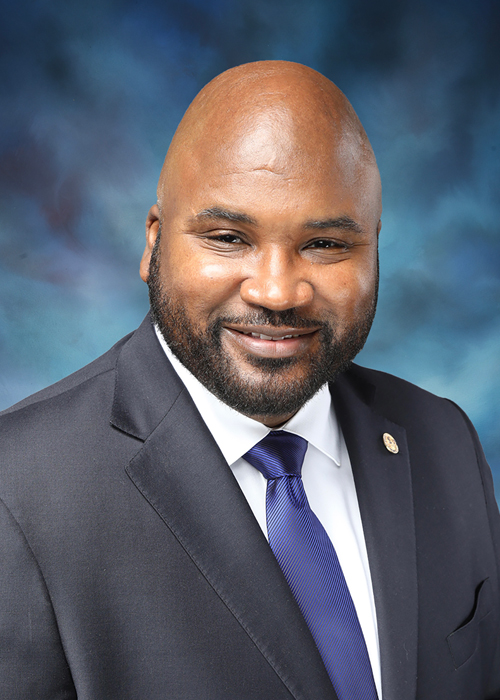
Sen. Elgie Sims
Sponsored bills
Amends the Code of Criminal Procedure of 1963. Provides that the posting of bail by a defendant shall not be a factor when considering if he or she qualifies for the appointment of a Public Defender. Defines "indigent". Effective immediately.
Amends the Business Assistance and Regulatory Reform Act. Makes a technical change in a Section concerning the goals of the Act.
Amends the Code of Criminal Procedure of 1963. Makes a technical change in a Section concerning the short title.
Amends the Juvenile Court Act of 1987. Provides that on and after July 1, 2020, a detention screening instrument shall be used for referrals to all authorized juvenile detention facilities in this State prior to a judicial hearing. Provides a minor alleged to be a delinquent minor taken into temporary custody must be brought before a judicial officer within 48 hours (rather than 40 hours, excluding Saturdays, Sundays and court designated holidays). Provides that if an appearance is required of any minor taken and held in a place of custody or confinement operated by the State or any of its political subdivisions, including counties and municipalities, the chief judge of the circuit may permit by rule for the minor's personal appearance to be made by means of two-way audio-visual communication, including closed circuit television and computerized video conference, in the following proceedings: the initial appearance before a judge; a detention or shelter care hearing; or any status hearing. Amends the Probation and Probation Officers Act. Provides that the Division of Probation Services of the Supreme Court shall adopt a statewide juvenile detention screening instrument that has been verified through evidence-based and data-based practices that is to be used by all authorized juvenile detention facilities. Makes other changes. Effective immediately.
Amends the Consumer Fraud and Deceptive Business Practices Act. Makes a technical change in a Section concerning definitions.
Amends the Unified Code of Corrections. In provisions concerning authorized fines, provides that an additional penalty is imposed in sentencing for an offense concerning vehicle wheel and axle loads and gross weights of: (1) $15 for each $40 of the first $330, or fraction thereof, of fine imposed; and (ii) $10 for each $40, or fraction thereof, of fine imposed in excess of $330 (rather than an additional penalty of $15 for each $40, or fraction thereof, of fine imposed). Effective immediately.
Amends the Code of Civil Procedure. Makes a technical change in the short title Section.
Appropriates $3,000,000 from the General Revenue Fund to the Supreme Court for probation reimbursements and training for probation officers, with regard to pre-trial services and other operational expenses in support of bail reform for the fiscal year ending June 30, 2018. Appropriates $7,500,000 from the General Revenue Fund to the Supreme Court for probation reimbursements and training for probation officers, with regard to pre-trial services and other operational expenses in support of bail reform for the fiscal year ending June 30, 2019. Effective immediately.
Creates the Community Renewal and Revitalization Act. Provides for the qualifications for and designation of Health, Opportunity, Prosperity, and Empowerment (HOPE) Zones. Provides for a HOPE Zone tax credit and other credits and benefits going to businesses operating in HOPE Zones. Provides for the powers and duties of the Department of Commerce and Economic Opportunity under the Act. Provides for State incentives regarding public services and physical infrastructure. Provides for State regulatory exemptions in HOPE Zones. Provides for State and local regulatory alternatives under the Act. Amends the Illinois Income Tax Act to allow for a specified tax credit for wages paid to qualified ex-offenders in HOPE Zones. Modifies the term "qualified ex-offender" to include a person hired by a taxpayer 5 years (currently, 3 years) after being released from an Illinois adult correctional center. Amends the Small Business Job Creation Tax Credit Act to allow a specified tax credit for businesses operating in HOPE Zones. Provides that the Department shall limit the monetary amount of credits awarded under the Act to no more than $100,000,000 (currently, $50,000,000).