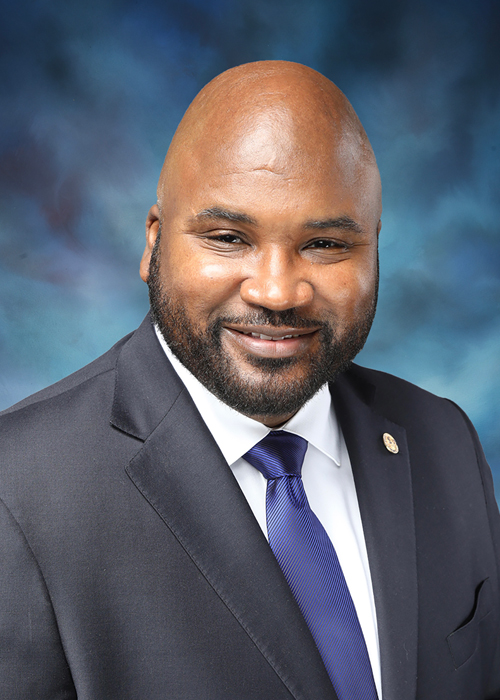
Signed into law
·
Illinois Senate
·
Co-sponsor
MINIMUM WAGE/INCOME TAX CREDIT
Amends the Minimum Wage Law. Makes a technical change in a Section concerning the short title. Senate Floor Amendment No. 1 Deletes reference to: 820 ILCS 105/1 Adds reference to: 5 ILCS 100/5-45 from Ch. 127, par. 1005-45 35 ILCS 5/704A 820 ILCS 105/4 from Ch. 48, par. 1004 820 ILCS 105/7 from Ch. 48, par. 1007 820 ILCS 105/10 from Ch. 48, par. 1010 820 ILCS 105/11 from Ch. 48, par. 1011 820 ILCS 105/12 from Ch. 48, par. 1012 Replaces everything after the enacting clause. Amends the Illinois Income Tax Act and the Minimum Wage Law. Provides for an increase in the minimum wage and for a credit against withholding payments in relation to the increase. Increases the minimum wage to $9.25 per hour beginning January 1, 2020. Provides for annual increases in the minimum wage culminating in a minimum wage of $15 per hour beginning on January 1, 2025. Provides to employers with 50 or fewer full-time equivalent employees a credit against tax withheld beginning January 1, 2020. Reduces the credit beginning January 1, 2021. Provides employers may claim the credit amount in effect on January 1, 2025 until December 31, 2026 and that employers with no more than 5 employees may claim that credit until December 31, 2027. Authorizes the Department of Labor to perform random audits of employer to ascertain compliance with the Minimum Wage Law. Authorizes a penalty of $100 per employee for failure to maintain required records. Effective immediately. Pension Note (Government Forecasting & Accountability) There is no readily discernible fiscal impact associated with SB1, as engrossed. To the extent minimum wage workers participate in pension funds governed by the Pension Code, there could be an increase in accrued liability, but it would presumably be very small and likely actuarially insignificant. State Debt Impact Note (Government Forecasting & Accountability) This bill would not change the amount of authorization for any type of State-issued or State-supported bond, and, therefore, would not affect the level of State indebtedness. Fiscal Note (Dept of Revenue) Increasing the minimum wage to $15 per hour over 6 years increases state revenues. The positive effect on tax revenue, in the form of income and sales taxes, is only slightly offset by the negative effect on income tax revenues of the tax credit extended to eligible businesses. Overall, the net impact of this proposed legislation is an increase in state revenues of nearly $390 million by fiscal year 2027. The positive effect on tax revenue is produced by the additional income tax collection and sales tax collection given by higher wages and personal consumption expenditure in the state economy. We estimate Individual Income tax (IIT) revenue at the current individual income tax rate of 4.95 percent. The estimate for Sales Tax revenue values were decreased to account for the fact that the state does not tax services and receives no share of revenue on food for consumption off site, prescription drugs or certain medical devices. The negative effect on Income tax revenue is due to the tax credit against withholdings. The tax credit for eligible employers is a declining percentage of the wage increment defined as the differential between the employee's hourly wage from the final quarter of the previous calendar year and the State's minimum wage of the present year). The credit, applied on a calendar year basis, is set to scale down over the course of the ramp (to year 2025) at which point the calculation of the credit shifts to a flat, fixed dollar amount. The schedule of credits is as follows: 25% credit in 2020; 21% credit in 2021; 17% credit in 2022; 13% credit in 2023; 9% credit in 2024, and 5% credit in 2025. In calendar year 2026, the credit for businesses is fixed to match the credit taken in 2025; in calendar year 2027, the credit for those businesses with 5 or fewer employees is fixed to match the credit taken in 2025. In calculating the cost of the tax credit, we considered the number of minimum wage jobs increasing from $8.25 in 2019 to $10.00 in 2020, from $10.00 to $11.00 in 2021 and so on until 2027. We discounted those jobs in firms with more than 50 employees using Census bureau data on small firms in Illinois. We considered 1750 hours of work as full time in accordance with prior studies on the subject. All estimates above are static estimates, meaning that they do not account for changes in the labor supply and demand associated to the increase in labor cost. Home Rule Note (Dept. of Commerce & Economic Opportunity) This bill does not pre-empt home rule authority. State Mandates Fiscal Note (Dept. of Commerce & Economic Opportunity) This bill does create a State mandate. Balanced Budget Note (Office of Management and Budget) Please be advised that the Balanced Budget Note Act does not apply to SB 1, as it is not a supplemental appropriation that increases or decreases appropriations. Under the Act, a balanced budget note must be prepared only for bills that change a general funds appropriation for the fiscal year in which the new bill is enacted. Correctional Note (Dept of Corrections) There is no fiscal or population impact on the Department of Corrections. Judicial Note (Admin Office of the Illinois Courts) This bill would neither increase nor decrease the number of judges needed in the State of Illinois. Housing Affordability Impact Note (Housing Development Authority) This bill will have no effect on the cost of constructing, purchasing, owning, or selling a single-family residence.