Designates the portion of Interstate Route 80 of the National System of Interstate and Defense Highways within the State of Illinois, from mile marker 26 to mile marker 51, as the "U.S. Marine Corps Highway Semper Fidelis".
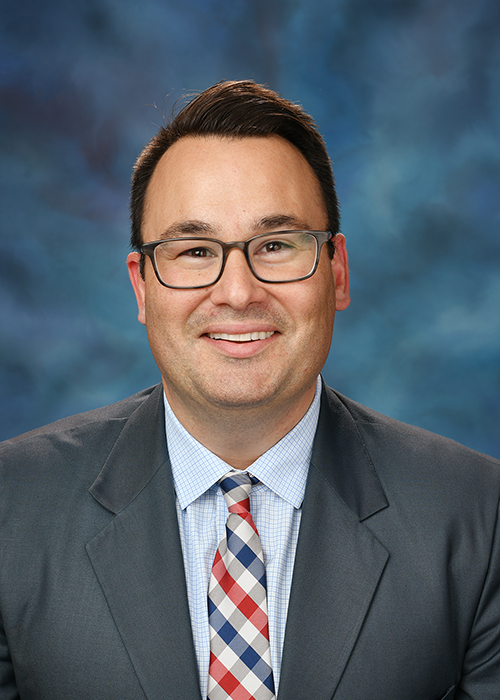
Sen. Mike Porfirio
Sponsored bills
Amends the School Code. In provisions concerning radon testing, provides that every school building of a school district that is occupied or will be occupied shall be tested by January 1, 2028 and shall be tested every 5 years thereafter for radon (instead of recommending that every occupied school building of a school district be tested every 5 years for radon). Provides that all new schools of a school district shall be built using radon resistant new construction techniques in accordance with the American National Standards Institute/American Association of Radon Scientists and Technologists CC-1000, Soil Gas Control Systems in New Construction of Multifamily, School, Commercial and Mixed-Use Buildings standard or a successor standard (instead of recommending that new schools of a school district be built using radon resistant new construction techniques, as shown in the United States Environmental Protection Agency document, Radon Prevention in the Design and Construction of Schools and Other Large Buildings). Removes a provision allowing a person to perform radon screening tests without a license. Makes changes concerning the exemption. Provides that if radon is found to exceed specified levels, then the school district shall (instead of may) hire a licensed radon professional to perform confirmatory measurements (instead of to perform measurements before any mitigation decisions are made). Sets forth provisions concerning mitigation. Provides that a school district may use life safety funds, if available, for radon testing and mitigation. Preempts home rule powers.
Amends the Missing Persons Identification Act. Requires a law enforcement agency to attempt to obtain a biological sample from closely related family members of the missing person or a personal item of the missing person beginning 30 days after the date of the missing person report (rather than within 30 days after receipt of a report). Provides that a law enforcement agency may not establish or maintain a policy that requires the observance of a waiting period before accepting a missing person report. Modifies the circumstances under which a law enforcement agency may not refuse to accept a missing person report. Requires a law enforcement agency to notify a person responsible for the missing person's welfare, or other specified individuals, about specified efforts to locate a missing person. Provides that, if a person remains missing for 30 days after the date of report, the law enforcement agency shall immediately (rather than may) generate a report of the missing person within NamUs, and the law enforcement agency shall (rather than may) attempt to obtain specified information and materials that have not been received. Modifies the follow-up action required by a law enforcement agency after creation of a missing person report. Modifies the definition of "high-risk missing person". Upon receipt of a missing person report (rather than immediately), requires the responding local law enforcement agency to enter all collected information relating to the missing person case in the Law Enforcement Agencies Data System and the National Crime Information Center. Makes other changes to reporting requirements. Modifies requirements for submission of fingerprints from unidentified remains for analysis as well as other requirements relating identified human remains. Provides that an assisting law enforcement agency, a medical examiner, a coroner, or the Illinois State Police may not close an unidentified person case until the individual has been identified and must keep the case active. Requires the coroner, medical examiner, or assisting law enforcement agency (rather than the coroner or medical examiner) to obtain a biological (rather than DNA) sample from an individual whose remains are not identifiable, and modifies how the sample may be analyzed and labeled. Makes other changes.
Urges the Illinois Supreme Court and relevant authorities to require, as a consistent part of continuing education, LGBTQ+ and HIV cultural competency education for all attorneys, judges, and courtroom staff in the State of Illinois.
Urges the President of the United States to authorize the DHS Secretary to establish a program to evaluate parole and work authorization on a case-by-case basis for long-term immigrant workers who are undocumented and residing in Illinois to address this State's critical need for labor and to secure the family life for tens of thousands of mixed status families in Illinois. Urges the Governor to work with federal partners to urge, by all possible means, the establishment of such a parole and work authorization program for the long-term immigrant population who are undocumented and residing in Illinois.
Amends the University of Illinois Act. In provisions concerning scholarships for the children of veterans, provides that an honorary scholarship may also be given to the children of persons who served at any time during the invasion of Panama between December 20, 1989 and January 31, 1990.
Maddy summaryThis bill officially designates the State of Illinois Building in Chicago as the "Jesse White State of Illinois Building." It directly affects the building located at 115 S. LaSalle Street, correcting the address from the original draft to ensure accuracy. The legislation is a commemorative resolution that does not change laws or create new programs, but rather assigns a specific name to honor Jesse White. Once passed, the building will carry this new name on official records and signage.
Amends the Clerks of Courts Act. Removes language providing for the compensation of Clerks of the Circuit Court. Provides instead that the salary of a clerk of the circuit court elected or appointed after the effective date of the amendatory Act shall be set as a percentage of the salary of Judges of the Circuit Court and shall be in the following amounts: in counties where the population is less than 14,000, 55%; in counties where the population is 14,001 to 30,000, 60%; in counties where the population is 30,001 to 60,000, 65%; in counties where the population is 60,001 to 100,000, 70%; in counties where the population is 100,001 to 200,000, 75%; in counties where the population is 200,001 to 300,000, 80%; in counties where the population is 300,001 to 3,000,000, 85%; and in counties where the population is over 3,000,000, 90%. Requires the State to furnish 66 2/3% of the total annual salary to be paid to a clerk of the circuit court, and the county to furnish 33 1/3% of the total annual salary. Provides that if, on the effective date of the amendatory Act, the salary of a clerk is greater than the percentage of the circuit judges salary in the provisions, that circuit clerk's salary shall not be reduced.

Amends the Illinois Vehicle Code. Provides that a person who is convicted of obscene depiction of a purported child is ineligible to receive a school bus driver permit. Amends the Criminal Code of 2012. Provides that "child pornography" includes the depiction of a part of an actual child under 18 who by manipulation, creation, or modification, appears to be engaged in sexual activity. Creates the offenses of obscene depiction of a purported child and non-consensual dissemination of sexually explicit digitized depictions. Defines offenses and provides criminal penalties for violations. Amends the Code of Criminal Procedure of 1963. Provides for the forfeiture to the State: (1) of any profits or proceeds and any property the person has acquired or maintained in violation of those offenses; (2) any interest in, securities of, claim against, or property or contractual right of any kind affording a source of influence over any enterprise that the person has established, operated, controlled, or conducted in violation of those offenses; and (3) any computer that contains an obscene depiction of a purported child. Amends the Bill of Rights for Children. Provides that under certain conditions, the parent or legal guardian of a child who is the victim of obscene depiction of a purported child may make a victim's impact statement on the impact which the defendant's criminal conduct or the juvenile's delinquent conduct has had upon the child. Amends the Unified Code of Corrections. Provides that a period of probation, a term of periodic imprisonment, or conditional discharge shall not be imposed for specified violations of the offense of obscene depiction of a purported child. Provides for enhanced penalties for specified violations of obscene depiction of a purported child. Provides that the court shall impose a consecutive sentence when the defendant is convicted of specified violations of the offense of obscene depiction of a purported child. Amends the Sex Offender Registration Act to provide that a person convicted of obscene depiction of a purported child must register as a sex offender.
Amends the Whistleblower Act. Changes the definitions of "employer" and "employee". Defines "adverse employment action", "public body", "retaliatory action", and "supervisor". Provides that an employer may not take retaliatory action against an employee who discloses or threatens to disclose information about an activity, policy, or practice of the employer that the employee has a good faith belief that such activity, policy, or practice violates a State or federal law, rule, or regulation or poses a substantial and specific danger to public health or safety. Includes additional relief, damages, and penalties for violation of the Act. Allows the Attorney General to initiate or intervene in a civil action to obtain appropriate relief if the Attorney General has reasonable cause to believe that any person or entity is engaged in a practice prohibited by the Act. Provides that the changes made by the amendatory Act apply to claims arising or complaints filed on or after January 1, 2025. Effective January 1, 2025.