

Creates the Companion Artificial Intelligence Protection Act. Provides that an operator of a companion artificial intelligence product shall not deploy or operate a companion artificial intelligence product that incorporates specified features. Provides for auditing and reporting requirements. Provides that an operator shall provide a clear notification during an interaction with a companion artificial intelligence product informing the user that the user is communicating with a companion artificial intelligence product. Requires the implementation of mandatory user safeguards, including a crisis intervention protocol. Sets forth provisions concerning liability and enforcement. Effective January 1, 2027.
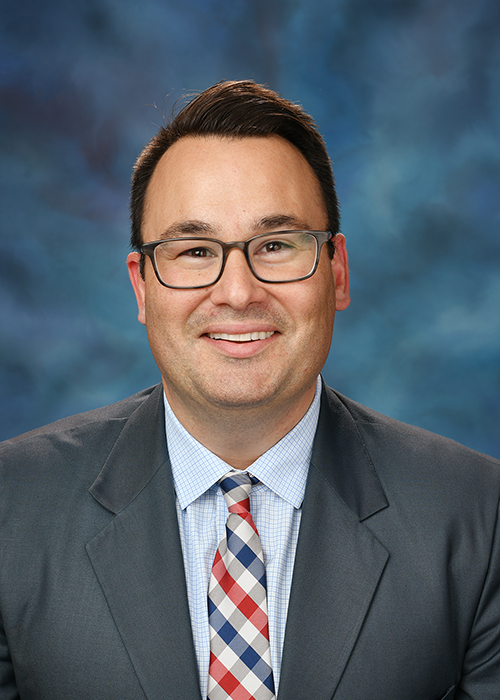
Sen. Mike Porfirio
Sponsored bills
Creates the Artificial Intelligence Design Requirements Act. Sets forth provisions concerning product liability actions brought against a developer of an artificial intelligence system for defective design, failure to contain adequate instructions or warnings, and failure to conform to an express warranty. Provides that a deployer of an artificial intelligence system shall be deemed to be liable as a developer for harm caused by a product if: (1) the deployer makes material and substantial change to the product or (2) the deployer intentionally misuses the product contrary to the express warranty and that use was the proximate cause of harm to the plaintiff. Sets forth provisions concerning applicability and enforcement.
Creates the Artificial Intelligence Safety Measures Act. Defines "frontier model", "frontier developer", and "large frontier developer". Requires large frontier developers to adopt and publish a frontier AI framework addressing catastrophic risk management, transparency, and cybersecurity. Mandates reporting of critical safety incidents to the Illinois Emergency Management Agency and Office of Homeland Security and establishes civil penalties for noncompliance. Directs the Department of Innovation and Technology to review and recommend updates to definitions and standards. Creates a consortium to develop ILCompute, a public cloud computing resource. Exempts specified information under the Freedom of Information Act. Makes conforming changes to the Freedom of Information Act.
Amends the Illinois Housing Development Act and the Illinois Income Tax Act. Provides that the amount of credits awarded under the affordable housing tax donation program is limited to $41,831,227 in State fiscal year 2027 and shall increase by 10% each fiscal year thereafter (currently, $32,850,352 in State fiscal years 2022 and 2023 increased by 5% each fiscal year thereafter). Provides that the affordable housing donation income tax credit applies through the taxable year ending on December 31, 2036 (currently, December 31, 2026). Effective immediately.
Amends the Medical Assistance Article of the Illinois Public Aid Code. In provisions concerning the Medicaid Access Adjustment payments to nursing facilities, provides that for dates of service beginning January 1, 2027, the Medicaid Access Adjustment shall be increased by $5.75 to $10.50 per diem. Provides that beginning January 1, 2027, facilities located outside of Rate Areas 6, 7, and 8 shall have the Medicaid percent of occupied bed days to be at least 60% of all occupied bed days adjusted quarterly to qualify for the Medicaid Access Adjustment. Provides that the remaining facilities shall have their threshold remain at 70%.
Amends the Illinois Lottery Law. In a provision concerning a scratch-off for the benefit of Illinois veterans, provides that the 3-member funding authorization committee appointed by the Director of Veterans Affairs shall meet twice a year (instead of on a quarterly basis), at minimum.
Amends the Illinois Procurement Code. In provisions concerning competitive sealed bidding, provides that a contract for supplies may be awarded using a market basket analysis to evaluate the lowest price a vendor can offer for a representative sample of supplies.
Amends the Illinois Gambling Act. Allows gaming operations at airports under the administration or control of the Chicago Department of Aviation to use video gaming terminals. Provides that 10% of the total revenue generated by gaming operations at O'Hare International Airport and Chicago Midway International Airport shall be distributed as follows: (1) for revenue generated at the O'Hare International Airport, 1/6 to any municipalities and governing bodies that participate in a mutual aid agreement to serve O'Hare International Airport, with no more than 50% of that revenue distributed to contiguous municipalities, 1/6 to City of Chicago ward facilities where the airport is located, 1/6 to Chicago Park District facilities serving the area where the airport is located, 1/6 to the Chicago public schools serving the area where the airport is located, 1/6 to Chicago Police Department facilities serving the area where the airport is located, and 1/6 to the Residential Sound Insulation Program; and for revenue generated at the Chicago Midway International Airport, 2% to City of Chicago ward facilities where the airport is located, 2% to Chicago Park District facilities serving the area where the airport is located, 2% to the Chicago public schools serving the area where the airport is located, 2% to Chicago Police Department facilities serving the area where the airport is located, and 2% to the Residential Sound Insulation Program.
Amends the Survivor Support and Trafficking Prevention Article of the Illinois Public Aid Code. Extends eligibility for State funded cash assistance and SNAP benefits to humanitarian immigrants, subject to available funding, if they are not eligible for such benefits solely due to citizenship or immigration status requirements but otherwise meet the financial and nonfinancial factors of eligibility. Lists the classes of humanitarian immigrants eligible for SNAP benefits under the Article. Provides that any individual residing in an institution or other setting that provides the majority of the individual's daily meals is not eligible for SNAP benefits. Exempts persons who do not have legal authorization to work from the statutory work requirements. Makes other changes. Effective immediately.
Amends the Administration Article of the Illinois Public Aid Code. Requires the Department of Human Services to, subject to available funding, establish a Families Receiving Emergency Support for Hunger (FRESH) Program to provide FRESH benefits to households subject to termination of the household's Supplemental Nutrition Assistance Program (SNAP) benefits, or a reduction in the household's monthly SNAP benefit allotment, if the termination or reduction in SNAP benefits occurred as a result of one or more members of the household failing to meet federal SNAP work requirements. Provides that, for eligible households whose SNAP benefits were reduced or terminated, FRESH benefits shall be provided as a one-time lump sum payment distributed via an Electronic Benefits Transfer card. Requires the Department to make FRESH program applications available online and at local Family and Community Resource Centers immediately upon the first of the month following the effective date of the amendatory Act. Provides that an application for FRESH benefits shall not be deemed an application for any other public aid provided under the Code. Requires the Department to provide within a specified time frame FRESH benefits to households' that experience a reduction or termination of SNAP benefits prior to or after the first month following the effective date of the amendatory Act, if certain application submission deadlines are met. Requires the Department to publish monthly data reports on the FRESH program and to include such data in the Department's annual report to the General Assembly. Prohibits the Department and local governmental units from considering a household's receipt of FRESH benefits when determining the household's eligibility for other assistance provided under the Code. Provides that the provisions of the amendatory Act are inoperative on and after January 1, 2028. Effective immediately.