

Amends the Department of State Police Law of the Civil Administrative Code of Illinois. Provides that the Department of State Police shall establish an electronic system to accept online payments for assessments for certain minor traffic violations issued under the Criminal and Traffic Assessment Act. Provides that the Department shall determine which violations are subject to the system and shall provide notice to a person who is eligible for its use. Provides that the Department shall charge a nominal fee of $2.50 for each transaction to maintain the system. Senate Floor Amendment No. 3 Deletes reference to: 20 ILCS 2605/2605-440 new Adds reference to: 30 ILCS 525/2 from Ch. 85, par. 1602 Replaces everything after the enacting clause. Amends the Governmental Joint Purchasing Act. Authorizes the Division of Forensic Services of the Department of State Police to purchase supplies and services made available by the Federal Acquisition Regulations System, and as allowed for by the federal government for state governmental entities. Provides that such procurements made by the Division of Forensic Services are presumptively approved methods of source selection under the Illinois Procurement Code without further source selection approval required from the chief procurement officers established under the Illinois Procurement Code. Makes conforming changes.
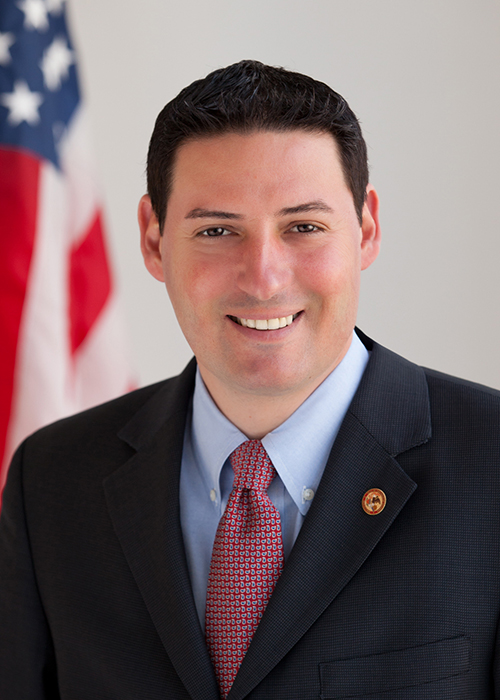
Rep. John Cabello
Sponsored bills
Amends the Freedom of Information Act. Changes the definition of "recurrent requester" to exclude requests made by members of the General Assembly and requests made to access and disseminate information pertaining to public policy and the administration of State government. Exempts from disclosure under the Act certain records in which opinions of a public body or its agents are expressed. Provides that the exemption does not apply if the records were produced in connection with the preparation of a report that is required to be publicly produced by an agency of the executive branch. Provides that the public body shall include with each denial of a request for public records an index that includes specified information. Provides that except in the case of a recurrent requester, a public body denying a request for public records shall place in an interest-bearing escrow account or other segregated account of the public body the sum of $7,500 for each request denied. Provides that the deposited funds shall remain in the account for a period of 60 days after the date of the public body's final denial of a request, or, if a requester has sought review of the denial or challenged the denial in court, until the review process has been completed or a final order has been entered. Provides that if a determination is made that the public body improperly denied a request to inspect or copy a public record, the deposited funds shall be awarded to the requester in addition to or as part of any other award. Makes other changes.
Amends the Lobbyist Registration Act. Provides that the term "official" as used under the Act includes specified officials of a unit of local government. Modifies the terms "lobby" and "lobbying" to include communications with units of local government for the ultimate purpose of influencing any executive, legislative, or administrative action, and further specifies such actions. Modifies the term "lobbyist" to mean a natural person who, on behalf of any person other than himself or herself, or as any part of his or her duties as an employee of another, undertakes to influence or lobby for any executive, legislative, or administrative action for State government or a unit of local government. Amends the Illinois Governmental Ethics Act to provide that no legislator may engage in lobbying as that term is defined under the Lobbyist Registration Act (currently, as defined under the Illinois Governmental Ethics Act) for compensation.
Amends the State Officials and Employees Ethics Act. Provides that any (i) member of the General Assembly, (ii) person whose appointment to office is subject to the advice and consent of the Senate, or (iii) head of a department, commission, board, division, bureau, authority, or other administrative unit within the government of this State who takes office on or after the effective date of the amendatory Act shall not, within a 3-year period immediately following termination of that person's most recent term of office, register as a lobbyist and engage in lobbying with members of the General Assembly. Effective immediately.
Amends the Illinois Governmental Ethics Act. Provides additional required economic interests to be listed by specified persons on a statement of economic interests filed under the Act. Defines "relative".
Amends the State Officials and Employees Ethics Act. Provides that the Legislate Ethics Commission shall adopt no rule requiring the Legislative Inspector General to seek the Commission's advance approval before commencing any investigation or issuing a subpoena. Provides that any existing rule, as of the effective date of the amendatory Act, requiring the Legislative Inspectors General to seek the Commission's advance approval before commencing any investigation or issuing a subpoena is void. Removes language providing that the Legislative Inspector General needs the advance approval of the Commission to issue subpoenas. Provides that within 60 days after receipt of a summary report and response from the ultimate jurisdictional authority or agency head, the Executive and Legislative Ethics Commissions shall make available to the public the report and response or a redacted version of the report and response (currently, report required to be made public only if it resulted in a suspension of at least 3 days or termination of employment). Makes conforming changes. Effective immediately.
Amends the Illinois Governmental Ethics Act. Modifies the definition of "representation case" to include matters before units of local government. Provides that no legislator or employee of a governmental entity may accept or participate in any way in any representation case if the State or unit of local government is an adverse party or if the result is an adverse effect on State or local revenue, State or local finances, or the health, safety, welfare, or relative tax burden of any State resident. Prohibits (rather than allows) participation in a representation case by a person with whom the legislator maintains a close economic association. Provides that no legislator or employee of a governmental entity may derive any income, compensation, or other tangible benefit from providing opinion evidence as an expert against the interests of the State or a unit of local government in any judicial or quasi-judicial proceeding before any administrative agency or court. Provides that a legislator shall officially recuse himself or herself, including a written explanation of the recusal, from any legislative matter in which the legislator or his or her spouse or immediate family member has a financial interest. Makes conforming and other changes.
Amends the Illinois Vehicle Code. Reduces the trailer flat weight tax for maximum loads of 3,000 lbs. and less from $118 to $18, if and only if Senate Bill 1939 of the 101st General Assembly becomes law. Effective immediately.
Creates the Domestic Violence Task Force Act. Creates the Domestic Violence Task Force. Provides that the Task Force shall: (1) conduct a comprehensive review of the process, operation, and enforcement of current domestic violence laws across the State; (2) identify gaps in the process, operation, and enforcement of those laws; (3) develop recommendations to address those gaps; (4) establish a framework for specialized protective networks for victims, treatment options for victims and offenders, and specialty courts for the accumulation of specialized domestic violence skills for courts; and (5) review the need for special consideration for conditions of bail in cases involving domestic violence within the ongoing changes brought on bail reform. Establishes membership and appointment of the Task Force. Provides that the Attorney General shall provide administrative support to the Task Force. Provides that the Attorney General, or the Attorney General's designee, shall be the chair of the Task Force. Provides that the Task Force shall review available research, best practices, and effective interventions to formulate recommendations. Provides that the Task Force shall produce a report detailing the Task Force's findings and recommendations. Provides that the Task Force shall submit a report of its findings and recommendations to the General Assembly and the Governor on or before September 1, 2022. Repeals the Act on September 1, 2027. Effective immediately.
Amends the Unified Code of Corrections. Provides that if an offender defaults in the payment of a fine or any installment of that fine, the court may issue a summons for his or her appearance (deletes warrant of arrest). Provides that the court may issue a warrant of arrest, if after being served with a summons, the offender fails to appear for the scheduled hearing. House Committee Amendment No. 2 Deletes language of the introduced bill. Provides that no less than 30 days before the issuance of a warrant for an offender who failed to appear before the court because of the offender's nonpayment of a fine levied against him or her, a notice shall be mailed to the offender by first class mail to the most recent address which the offender has provided to the court. Provides that the notice shall contain the following information: (1) the amount of the fine which is due and owing; (2) the docket number of the case in which the fine was assessed; (3) the due date for payment of the fine; (4) instructions as to how payment of the fine may be made; (5) an explanation that willful refusal to pay the fine may result in imprisonment; and 6) instructions as to how the offender may request a hearing to present evidence that the offender did not willfully refuse to pay the fine, and that failure to pay was the result of the offender's inability to pay the fine.