

Maddy summaryHB 1267 updates Illinois' Personnel Record Review Act to explicitly include county, municipal, and State law enforcement agencies under the definition of "employer." This change ensures police departments and their personnel records are covered by the existing law governing employee record reviews. The bill does not create new policies but clarifies that current procedures for reviewing personnel records apply to law enforcement agencies, directly affecting police departments and their employees. The change is procedural, aligning law enforcement with other covered employers under the Act.
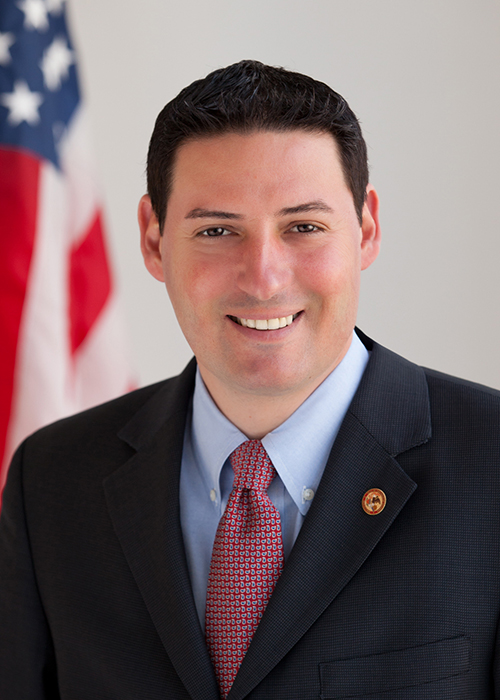
Rep. John Cabello
Sponsored bills
Amends the Illinois Procurement Code. Provides that authorized emergency vehicles are excluded from the definitions of "flexible fuel vehicles" and "fuel efficient hybrid vehicles".
Maddy summaryHB 1401 removes specific provisions in Illinois' Health Care Right of Conscience Act that previously provided exemptions for healthcare providers related to COVID-19. It directly affects healthcare providers who may have relied on these temporary exemptions during the pandemic. The bill simply repeals Section 13.5 of the Act, eliminating the COVID-19-related conscience protections from state law. This is a procedural change with no new requirements or funding.
Proposes to amend the Bill of Rights Article of the Illinois Constitution. Provides that, subject only to the police power, the right of the individual citizen to keep and bear arms and to carry firearms (rather than the right of the individual citizen to keep and bear arms) shall not be infringed. Effective upon being declared adopted.
Amends the Illinois Vehicle Code. Adds language providing that a person who damages a vehicle or who damages or removes any part of a vehicle commits a misdemeanor if the person does so with intent and without the right to do so (instead of "without authority to do so"). Adds language providing that a person who tampers with a vehicle or goes in it, on it, or works to attempt to work any of its parts, or sets or attempts to set it in motion commits a misdemeanor if he does so without right to do so and with intent to commit a crime (instead of "without authority to do so").
Amends the School Code. By July 15 of each year, requires certain school boards to report, on their school district's website, a list of the learning materials and activities used for student instruction during the previous school year. Requires that the report also include any procedures that are in effect at each school for the documentation, review, or approval of the learning materials and activities used for student instruction. Specifies the minimum information that must be included in the report. Allows a school district to update the report on an ongoing basis and to utilize collaborative online document or spreadsheet software to update or make additions to the report. Sets forth other requirements. Effective July 1, 2025.
Amends the Firearm Owners Identification Card Act. Makes 18 (rather than 21) years of age as the minimum age in which a person, who is not an active duty member of the United States Armed Forces or the Illinois National Guard, may apply for a Firearm Owner's Identification Card without parental or legal guardian consent. Amends the Firearm Concealed Carry Act. Makes 18 (rather than 21) years of age as the minimum age for applying for and being issued a concealed carry license.
Amends the Criminal Code of 2012. In the offense of aggravated battery based on the status of the victim, includes the battery of a health care worker: (1) performing his or her official duties; (2) battered to prevent performance of his or her official duties; or (3) battered in retaliation for performing his or her official duties. Deletes provision that a person commits aggravated battery when, in committing a battery, other than by discharge of a firearm, he or she knows the individual battered to be a nurse while in the performance of his or her duties as a nurse. Provides that a violation is a Class 2 felony. Defines "health care worker".
Amends the Criminal Code of 2012. Provides that a person who is justified in the use of force, including deadly force, does not have a duty to retreat. Provides that a person who is justified in the use of force, including the use of force that is intended or likely to cause death or great bodily harm, is immune from criminal prosecution and civil action for the use of force justified under these provisions (rather than have an affirmative defense to a criminal prosecution). Defines "criminal prosecution" to include charging or prosecuting the defendant.
Amends the Criminal Code of 2012. Provides that it is unlawful for a person, after receiving a warning not to approach from a first responder who is engaged in the lawful performance of a legal duty, to violate the warning and approach or remain within 14 feet of the first responder with the intent to: (1) interrupt, disrupt, hinder, impede, or interfere with the first responder's ability to perform the first responder's duty; (2) threaten the first responder with physical harm; or (3) harass the first responder by interfering with the first responder performing the first responder's duty. Provides that a violation is a Class A misdemeanor. Defines "first responder" and "harass".