Recognizes the rapid responders of Illinois for their dedication, courage, and unwavering commitment to protecting and uplifting communities. Acknowledges the vital role rapid responders play in supporting immigrant families, promoting safety and awareness, and strengthening unity across all communities.
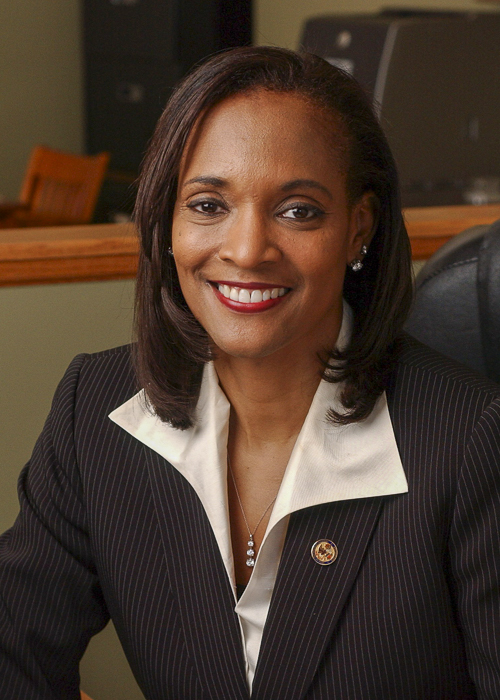
Rep. Camille Lilly
Sponsored bills
Declares August 2026 as Civility Month in the State of Illinois. Commends South Suburban College for its commitment to promoting respectful dialogue, civic engagement, inclusion, and community-building throughout the Southland region.
Recognizes Chicago's unparalleled history as the "Blues Capital of the World". Celebrates the artists, past and present, who have shaped the soundtrack of our State. Supports the calls for the City of Chicago to develop permanent, physical monuments and public art installations beyond existing murals to provide the reverence and international visibility that Chicago blues pioneers deserve. Urges for greater community advocacy and a revival of investment in blues culture and for the State and local governments to provide substantial support for the infrastructure that solidifies the legacy of the legendary Blues artists including the preservation of historic sites such as Muddy Waters' Kenwood home and support for local blues education non-profits.
Maddy summaryThis bill officially names a section of Interstate 57 in Cook County, Illinois, as the Reverend Jesse L. Jackson Sr. Expressway. It requires the Illinois Department of Transportation to install signs and plaques at appropriate locations to display this new name. The legislation directly affects drivers and travelers using Interstate 57 in Cook County by changing how the highway is identified on signage. This is a commemorative measure that honors Reverend Jesse L. Jackson Sr. without altering any traffic laws or transportation regulations.
Maddy summaryThis House Resolution designates June 10, 2026, as "Prescription Drug Take-Back Day" in Illinois. It is a ceremonial declaration recognizing the success of existing community drug take-back programs, which allow residents to safely dispose of unused or expired medications. The resolution references Illinois' existing Drug Take-Back Act (Public Act 102-1055) and past collection efforts, such as Cook County's 5,443 pounds and DuPage County's 13,470 pounds of medication collected in 2024-2025. It does not create new laws or requirements but formally designates a date to highlight ongoing overdose prevention efforts.
Creates the Protect Health Data Privacy Act. Provides that a regulated entity shall disclose and maintain a health data privacy policy that clearly and conspicuously discloses specified information. Sets forth provisions concerning health data privacy policies. Provides that a regulated entity shall not collect, share, or store health data, except in specified circumstances. Provides that it is unlawful for any person to sell or offer to sell health data concerning an individual without first obtaining valid authorization from the individual. Provides that a valid authorization to sell individual health data must contain specified information; a copy of the signed valid authorization must be provided to the individual; and the seller and purchaser of health data must retain a copy of all valid authorizations for sale of health data for 6 years after the date of its signature or the date when it was last in effect, whichever is later. Sets forth provisions concerning the consent required for collection, sharing, and storage of health data. Provides that an individual has the right to withdraw consent from the processing of the individual's health data. Provides that it is unlawful for a regulated entity to engage in discriminatory practices against individuals solely because they have not provided consent to the processing of their health data or have exercised any other rights provided by the provisions or guaranteed by law. Sets forth provisions concerning an individual's right to confirm whether a regulated entity is collecting, selling, sharing, or storing any of the individual's health data; an individual's right to have the individual's health data that is collected by a regulated entity deleted; prohibitions regarding geofencing; and individual health data security. Provides that any person aggrieved by a violation of the provisions shall have a right of action in a State circuit court or as a supplemental claim in federal district court against an offending party. Provides that the Attorney General may enforce a violation of the provisions as an unlawful practice under the Consumer Fraud and Deceptive Business Practices Act. Defines terms. Makes a conforming change in the Consumer Fraud and Deceptive Business Practices Act.
Urges the Illinois State Board of Education (ISBE) to identify and publish a list of evidence-based, decision-making, and impulse-control curricula that have been demonstrated to reduce violence involvement, make at least one free or low-cost curriculum available statewide for optional integration into existing Social and Emotional Learning (SEL) instruction, encourage districts to implement these programs using existing resources and staff development, and develop, pilot, and rigorously test new school-based decision-making and violence-prevention curricula that can be easily adopted by ISBE and schools statewide if proven effective in reducing violence. Urges the Administrative Office of the Illinois Courts (AOIC), the Department of Juvenile Justice (DJJ), and county probation and diversion programs to identify and approve evidence-based, decision-making curricula appropriate for minors under supervision, diversion, or detention, to encourage their integration as standard early interventions, and to implement these initiatives within existing budgets and structures. Urges the Illinois Department of Human Services (IDHS) and the Illinois Criminal Justice Information Authority (ICJIA) to coordinate with ISBE, AOIC, DJJ, and local partners to align violence-prevention curricula and community-based interventions across settings. Recognizes Professor Jens Ludwig for his groundbreaking research, leadership, and publication of Unforgiving Places. Acknowledges the contributions of other scholars and organizations advancing behavioral approaches to violence prevention.

Urges the United States Department of Education to reverse the reclassification of architecture graduate degrees from "professional" to" non-professional" degrees under the One Big Beautiful Bill Act (OBBBA).
Creates the Permanent Punishment Review Task Force Act. Establishes the Permanent Punishment Review Task Force. Provides for the Task Force's appointment and membership. Provides that the Illinois Criminal Justice Information Authority shall provide administrative and other support to the Task Force. Provides that the Illinois Criminal Justice Information Authority may collaborate with the co-chairing organization to help provide this support. Provides that the duties of the Task Force include: (1) researching and analyzing the statutory permanent punishments under Illinois law; (2) identifying factors and data relevant to determining whether a permanent punishment should be modified or eliminated based on available scholarship; (3) identifying or developing models, or both, for periodic, systematic review of Illinois's permanent punishment laws; (4) analyzing such models, including potential funding requirements, and proposing recommendations to the General Assembly; and (5) issuing a report, on or before January 1, 2028, setting forth those recommendations and summarizing the research and findings of the Task Force. Provides that the Task Force may meet in person or virtually, and shall issue a written report of its findings and recommendations to the General Assembly on or before January 1, 2028, after which the Task Force is dissolved. Repeals the Act on July 1, 2028. Effective immediately.
Amends the Illinois Health Insurance Portability and Accountability Act. Makes a technical change in a Section concerning the applicability and scope of the Act.