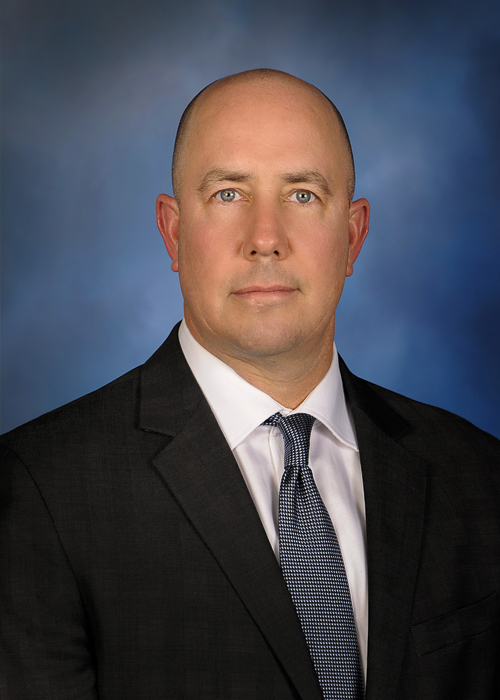
Photo of Lance Yednock
D Illinois House · District 76

Rep. Lance Yednock

Contact Email
Compare
Total votes
4,887
all sessions
Attendance
97%
112 missed
Near the chamber average
With party
96%
of cast votes
Near the chamber average
Bipartisan score
2%
crosses aisle rarely
Near the chamber average
Sponsored
460
bills & resolutions
Near the chamber average
Committees
0
assignments
460 bills and resolutions

Sponsored bills

Total
460
Primary
123
Co-sponsor
337
This page
460
matching current filters
Co-sponsor SB 3867
Signed into law · Illinois Senate · Co-sponsor
SCH CD-LUNCH-VETERAN CHILDREN

Amends the School Code. Provides that all school boards shall waive fees assessed by the district for each student with a parent who is a veteran with an income at or below 200% of the federal poverty level. Effective immediately. Senate Committee Amendment No. 1 Provides that all school boards shall waive fees assessed by the district for each student with a parent who is a veteran or active duty military personnel (only veteran in the introduced bill) with an income at or below 200% of the federal poverty level.

Signed into law May 27, 2022 1 co-sponsor
Primary HB 4386
Signed into law · Illinois House · Lead sponsor
WILDLIFE CD-RIFLE-DEER HUNTING

Amends the Wildlife Code. Provides that a centerfire rifle may be used to harvest deer during the firearm open season set by the Director of Natural Resources annually. Provides that all straight walled rifle rounds are legal ammunition for a centerfire rifle. House Floor Amendment No. 1 Adds reference to: 520 ILCS 5/1.2aa new 520 ILCS 5/1.2bb new 520 ILCS 5/2.33 from Ch. 61, par. 2.33 Replaces everything after the enacting clause. Amends the Wildlife Code. Defines "centerfire" and "single shot". Allows a person to take deer with a single shot centerfire rifle during the open season set by the Director of Natural Resources. Limits legal handguns and rifles to centerfire handguns that are either single shot or revolvers and centerfire rifles that are single shot. Limits legal ammunition for a centerfire handgun or rifle to a bottleneck centerfire cartridge of .30 caliber or larger with a case length not exceeding one and two-fifths inches, or a straight-walled centerfire cartridge of .30 caliber or larger, both of which must be available as a factory load with the published ballistic tables of the manufacturer showing a capability of at least 500 foot pounds of energy at the muzzle. Provides that it is unlawful while deer hunting: (1) to possess or be in close proximity to a rifle that is not centerfire; or (2) be in possession of or in close proximity to a magazine that is capable of making a rifle not a single shot.

Signed into law May 27, 2022 0 co-sponsors
Co-sponsor SB 1405
Signed into law · Illinois Senate · Co-sponsor
MEDICAL PATIENT RTS-VISITATION

Amends the Community Mental Health Act. Makes a technical change in a Section concerning the short title. Senate Floor Amendment No. 1 Deletes reference to: 405 ILCS 20/0.1 from Ch. 91 1/2, par. 300.1 Adds reference to: 410 ILCS 50/3.2 from Ch. 111 1/2, par. 5403.2 Replaces everything after the enacting clause. Amends the Medical Patient Rights Act. Removes language providing that nothing in the Act shall restrict the ability of a health care facility to regulate the hours of visitation, the number of visitors per patient or the movement of visitors within the facility. Provides that, during a period for which the Governor has issued a proclamation declaring that a disaster exists or in the event of an outbreak or epidemic of a communicable disease in the community in which the health care facility is located, a health care facility shall ensure an opportunity for at least one visitor, not counting a clergy person, to visit a resident or patient of the health care facility. Requires visitation to be subject to the guidelines, conditions, and limitations of the health care facility's visitation policy and any rules or guidelines established by the U.S. Centers for Medicare and Medicaid Services and the Centers for Disease Control and Prevention. Provides that visitors may be required by the health care facility to submit to health screenings necessary to prevent the spread of infectious disease. Provides that a health care facility may restrict a visitor who does not pass its health screening requirement and require a visitor to adhere to infection control procedures. Provides that a health care facility may deny visitation under the Act if the situation demands. Makes other changes. Effective immediately. House Floor Amendment No. 2 Replaces everything after the enacting clause. Reinserts the provisions of the engrossed bill with the following changes. Authorizes a skilled nursing home, extended care facility, or intermediate care facility to prohibit an individual from visiting a resident or patient of the nursing home or facility if specific facts demonstrate that the individual would endanger his or her physical health or safety or the health or safety of a resident, patient, or health care worker of the nursing home or facility. Requires such a denial to be in writing and provided to the individual and the resident or patient with whom the individual was denied visitation. Requires each skilled nursing home, extended care facility, and intermediate care facility to inform each resident of the nursing home or facility (or that individual's representative) of the resident's visitation rights and the facility's visitation-related policies and procedures. Specifies that these nursing homes and facilities must not restrict, limit, or otherwise deny visitation privileges on the basis of race, color, national origin, religion, sex, gender identity, sexual orientation, or disability. Requires the nursing homes and facilities to ensure that all visitors enjoy full and equal visitation privileges, consistent with the residents' preferences.

Signed into law May 27, 2022 1 co-sponsor
Co-sponsor SB 1486
Signed into law · Illinois Senate · Co-sponsor
DCFS-PERSONAL PROTECTION

Amends the Technology Advancement and Development Act. Makes a technical change in a Section concerning the short title. Senate Floor Amendment No. 1 Deletes reference to: 20 ILCS 700/1001 Adds reference to: 20 ILCS 505/21.6 new Replaces everything after the enacting clause. Amends the Children and Family Services Act. Provides that a child protective investigator is authorized to carry and use personal protection spray devices, such as mace, pepper mace, or pepper gas, for self-defense purposes while investigating a report of child abuse or neglect if the child protective investigator has been trained on the proper use of such personal protection spray devices by the Illinois State Police. Requires the Illinois State Police to establish a training program for child protective investigators on the proper use of personal protection spray devices for self-defense purposes. Requires the Department of Children and Family Services to provide funding for the training program. Effective immediately. House Floor Amendment No. 3 Replaces everything after the enacting clause. Amends the Children and Family Services Act. Provides that a front-line staff member is authorized to carry and use personal protection spray devices, as defined, for self-defense purposes while investigating a report of child abuse or neglect if the front-line staff member has been trained on the proper use of such personal protection spray devices by the Department of Children and Family Services, in consultation with the Illinois State Police. Provides that by January 1, 2023, the Department, in consultation with the Illinois State Police, shall (i) identify a list of approved personal protection spray devices and (ii) jointly develop and approve a training curriculum and program for front-line staff members on the proper use of such personal protection spray devices for self-defense purposes. Requires the Department to provide funding for the training program. Sets forth specific circumstances under which a front-line staff member may use a personal protection spray device including if the front-line staff member: (i) reasonably believes that use is necessary to protect the staff member from an imminent physical assault posed by another person; (ii) uses the device to incapacitate a person attempting a physical assault in order to avoid imminent physical harm and to facilitate escape from danger when there is no other alternative available to the front-line staff member; and (iii) except in exigent circumstances, has issued a verbal warning to persons in close proximity to the spray area. Provides that a front-line staff member's use of personal protection spray devices during the performance of his or her professional duties in any manner other than as expressly authorized under the amendatory Act shall be prohibited by Department policy. Provides that whenever a front-line staff member discharges a personal protection spray device, the front-line staff member shall complete an incident report. Provides that, following the discharge of a personal protection spray device that results in exposure, the front-line staff member shall notify his or her supervisor and, if appropriate, call 9-1-1 for emergency response or responders as soon as reasonably practical and when safe to do so. Requires the Department to annually report and publish on its website, beginning January 1, 2024, the number of front-line staff members trained to carry personal protection spray devices, the number of front-line staff members reporting personal protection spray devices and the make or model of the devices, and the number of reported uses of personal protection spray devices by service region. Provides that, in addition, the Department shall report each incident involving the deployment of a personal protection spray device that occurred during the preceding calendar year, including: (1) the estimated age, gender, and race of the intended target of the personal protection spray device; (2) whether there were injuries to the intended target resulting from the deployment of the personal protection spray device; (3) the age, gender, and race of the front-line staff member who utilized the personal protection spray device; and (4) whether there were injuries to the front-line staff member resulting from the incident. Requires the Department to also report yearly data on the number of personal protection spray device deployments found to be against Department policy. Effective immediately.

Signed into law May 27, 2022 1 co-sponsor
Co-sponsor HB 836
Signed into law · Illinois House · Co-sponsor
PRIVATE DETECTIVE-TRAINING

Amends the Private Detective, Private Alarm, Private Security, Fingerprint Vendor, and Locksmith Act of 2004. In a provision requiring training for registered employees of a private detective agency within 30 days of their employment, specifies that the training may be classroom-based or online Internet-based and removes certain topics that must be included in that training. Provides that registered employees of a private detective agency and private detectives shall complete an additional 8 hours of annual training each calendar year. Provides that private security contractors shall complete an additional 4 hours of annual training each calendar year. Provides that classroom basic training for private security contractors may be provided in a classroom setting or may be Internet-based online or other supervised computerized training. Provides that if a private security contractor owns or is employed by a private security contractor agency, the private security contractor agency shall maintain a record of the annual training and must make the record of annual training available to the Department of Financial and Professional Regulation upon request. Provides that a licensee applying for a firearm control card must complete a firearm training course consisting of 48 hours (rather than 40 hours) of training. Provides that a licensee or employee in possession of a valid firearm control card shall complete an additional 8 hours of refresher training each calendar year. Requires that commercial or industrial operations that employ one or more persons (rather than 5 or more persons) shall register their security forces with the Department and that registration subjects the security force to certain requirements. Makes other changes. Amends the Criminal Code of 2012 to make conforming changes. House Floor Amendment No. 1 Replaces everything after the enacting clause. Reinserts the provisions of the introduced bill with the following changes: In provisions amending the Private Detective, Private Alarm, Private Security, Fingerprint Vendor, and Locksmith Act of 2004, provides that training for registered employees of a private detective agency, private detectives, and private security contractors may be provided in a classroom or seminar setting or via Internet-based online learning programs (rather than in a classroom setting or may be Internet-based online or other supervised computerized training); provides that the original form or a copy (rather than the form) that certifies that the employee successfully completed basic and annual training shall be placed in the employee's file with the employer for the period the employee remains with the employer (and makes conforming changes); and makes other changes. In provisions amending the Criminal Code of 2012, removes language that provides that specified provisions concerning the unlawful use of a weapon do not apply to an athlete's possession, transport on official Olympic and Paralympic transit systems established for athletes, or use of competition firearms sanctioned by the International Olympic Committee, the International Paralympic Committee, the International Shooting Sport Federation, or USA Shooting in connection with such athlete's training for and participation in shooting competitions at the 2016 Olympic and Paralympic Games and sanctioned test events leading up to the 2016 Olympic and Paralympic Games; specifies that, for certain security guards, 20 hours of training for a security officer and 28 (rather than 20) hours of firearm training are required to qualify for an exemption; and makes conforming changes. Senate Floor Amendment No. 1 Deletes reference to: 225 ILCS 447/5-10 225 ILCS 447/15-25 225 ILCS 447/20-20 225 ILCS 447/25-20 225 ILCS 447/35-40 720 ILCS 5/24-2 Adds reference to: New Act Replaces everything after the enacting clause. Creates the Health Insurance Coverage Premium Misalignment Study Act. Sets forth provisions concerning the purpose of the Act and findings. Provides that the Department of Insurance shall oversee a study to explore rate setting approaches that may yield a misalignment of premiums across different tiers of coverage in Illinois' individual health insurance market. Provides that the study shall produce cost estimates for Illinois residents addressing metal-level premium misalignment policy along with the impact of the policy on health insurance affordability and access and the uninsured rates for low-income and middle-income residents, with break-out data by geography, race, ethnicity, and income level. Provides that the study shall evaluate how premium realignment if implemented would affect costs and outcomes for Illinoisans. Provides that the Department shall develop and submit, no later than January 1, 2024, a report to the General Assembly and the Governor concerning the design, costs, benefits, and implementation of premium realignment to increase affordability and access to health care coverage that leverages existing State infrastructure.

Signed into law May 26, 2022 1 co-sponsor
Co-sponsor HB 4306
Signed into law · Illinois House · Co-sponsor
DCFS-YOUTH IN CARE-MENTAL HLTH

Amends the Children and Family Services Act. Provides that all youth in care shall be assigned a mental health provider to manage their mental health care needs. Requires a youth's mental health provider to visit the youth and conduct a well-being assessment within 30 days after the youth is removed from his or her home and placed in the temporary custody or guardianship of the Department of Children and Family Services. Provides that additional follow-up visits and well-being checks shall be scheduled and conducted until the youth is no longer under the custody or guardianship of the Department. Provides that any mental health care services provided to the youth shall be in addition to any care or services the youth receives from his or her primary care provider. Grants the Department rulemaking authority. House Floor Amendment No. 1 Replaces everything after the enacting clause. Amends the Children and Family Services Act. Creates the Holistic Mental Health Care for Youth in Care Task Force. Requires the Task Force to review and make recommendations regarding mental health and wellness services provided to youth in care, including a program of holistic mental health services provided 30 days after the date upon which a youth is placed in foster care, in order to determine how to best meet the mental health needs of youth in care. Provides that the Task Force shall also assess the capacity of State licensed mental health professionals to provide preventive mental health care to youth in care; review the current payment rates for mental health providers serving the youth in care population; evaluate the recruitment and retention of mental health providers who are persons of color to serve the youth in care population; and perform other specified duties. Provides that the Task Force shall consist of 9 members and that members shall serve without compensation but may be reimbursed for necessary expenses incurred in the performance of their duties. Requires the Task Force to meet at least once each month beginning no later than July 1, 2022 and at other times as determined by the Task Force. Provides that the Task Force may hold electronic meetings and a member of the Task Force shall be deemed present for the purposes of establishing a quorum and voting. Provides that the Department of Healthcare and Family Services, in conjunction with the Department of Children and Family Services, shall provide the Task Force with administrative support. Requires the Task Force to prepare and submit to the Governor and the General Assembly at the end of each quarter a report that summarizes its work and makes recommendations resulting from its study. Effective immediately. Fiscal Note, House Floor Amendment No. 1 (Dept. of Children & Family Services) There is no material cost to this legislation. Senate Floor Amendment No. 1 Replaces everything after the enacting clause. Reinserts the engrossed bill with the following changes: Provides that the Task Force shall include: (i) a member appointed by the Governor from the Office of the Governor who has a focus on mental health issues, (rather than a member from the Office of the Governor who has a focus on mental health issues); (ii) one member who is a former youth in care, appointed by the Governor (rather than one member who is a former youth in care recommended by the Illinois Chapter of the Foster Care Alumni of America); and (iii) one representative from the managed care entity managing the YouthCare program, appointed by (rather than recommended by) the Director of Healthcare and Family Services. Requires the Task Force to submit its final report to the Governor and the General Assembly no later than December 31, 2024. Provides that upon submission of its final report, the Task Force is dissolved.

Signed into law May 25, 2022 1 co-sponsor
Primary SB 3017
Signed into law · Illinois Senate · Lead sponsor
EDUC-PHYSICIANS-LOAN REPAYMENT

Amends the Loan Repayment Assistance for Physicians Act. To address the shortage of obstetrical services in rural communities, provides that a physician who provides obstetrical care and works at a privately owned rural health clinic in this State may qualify for assistance under the Act if all other established criteria are met. Effective immediately. Senate Committee Amendment No. 1 Deletes reference to: 110 ILCS 949/27 new Adds reference to: 20 ILCS 2310/2310-220 was 20 ILCS 2310/55.73 110 ILCS 935/1 from Ch. 144, par. 1451 110 ILCS 935/3.04 from Ch. 144, par. 1453.04 110 ILCS 935/3.09 110 ILCS 970/1-20 from Ch. 144, par. 2781-20 110 ILCS 980/3 from Ch. 144, par. 2703 305 ILCS 5/12-4.24a from Ch. 23, par. 12-4.24a Replaces everything after the enacting clause. Amends the Underserved Physician Workforce Act. Provides that the Act may be cited as the Underserved Health Care Provider Workforce Act (rather than the Underserved Physician Workforce Act). Adds a government-owned, privately owned, independent, or provider-based Rural Health Clinic or hospital that accepts Medicaid patients and assists patients who are uninsured to qualify for Medicaid or develop a discount payment plan to the definition of "designated shortage area". Makes changes to the definition of "eligible health care provider". Amends the Department of Public Health Powers and Duties Law of the Civil Administrative Code of Illinois, the Nurses in Advancement Law, the Private Medical Scholarship Agreement Act, and the Illinois Public Aid Code to make related changes. Effective immediately. Senate Floor Amendment No. 3 Replaces everything after the enacting clause. Reinserts the contents of the bill as amended by Senate Amendment No. 1, with the following changes. With respect to the definition of "Designated Shortage Area" in the Underserved Physician Workforce Act, adds a government-owned, privately owned, independent, or provider-based Rural Health Clinic or hospital that accepts Medicaid, Medicare, the State's Children's Health Insurance Program, private insurance, and self-pay (rather than a government-owned, privately owned, independent, or provider-based Rural Health Clinic or hospital that accepts Medicaid patients and assists patients who are uninsured to qualify for Medicaid or develop a discount payment plan, or both, according to financial need). Changes the definition of "eligible health care provider" to mean a primary care physician, general surgeon, emergency medicine physician, obstetrician, advanced practice registered nurse, or physician assistant who accepts Medicaid, Medicare, the State's Children's Health Insurance Program, private insurance, and self-pay (rather than a primary care physician, general surgeon, emergency medicine physician, obstetrician, advanced practice registered nurse, or physician assistant who accepts Medicaid patients or develops a discount payment plan, or both, for patients according to financial need). Effective immediately.


Signed into law May 17, 2022 0 co-sponsors
Primary SB 1435
Signed into law · Illinois Senate · Lead sponsor
REGULATION-TECH

Amends the Public Utilities Act. Makes a technical change in a Section concerning the reading of meters. Senate Floor Amendment No. 1 Deletes reference to: 220 ILCS 5/8-302 from Ch. 111 2/3, par. 8-302 Adds reference to: 210 ILCS 85/4.5 Replaces everything after the enacting clause. Amends the Hospital Licensing Act. In provisions regarding a hospital in multiple locations operating under a single license, provides that, at the time of the application to operate under a single license, a hospital located in a county with fewer than 125,000 inhabitants may apply to the Department of Public Health for approval to conduct its operations from more than one location within contiguous counties in which both facilities are located, provided that the second county has fewer than 35,000 inhabitants. Effective immediately.

Signed into law May 17, 2022 0 co-sponsors
Primary SB 3663
Signed into law · Illinois Senate · Lead sponsor
SCH CD-REPORTING REQUIREMENTS

Amends the School Code. Requires the State Board of Education to (i) combine the Grant Periodic Reporting and Electronic Expenditure Reporting into one report, (ii) require only school districts that have multiple facilities or schools to comply with the Site-Based Expenditure Reporting requirements of the federal Every Student Succeeds Act, and (iii) combine the financial reporting required for all school districts into 2 reports. Sets forth related provisions. Provides that for 2 years beginning on the effective date of the amendatory Act (i) requirements related to the submission and publication of the annual statement of the affairs of a school district, (ii) requirements related to the submission of an annual report of teacher dismissals, and (iii) requirements related to completing professional development activities for the renewal of a Professional Educator License do not apply. Requires only the Chicago school district (rather than each school district, charter school, and nonpublic, non-sectarian elementary or secondary school) to file its policy on bullying with the State Board of Education. Effective immediately. Senate Committee Amendment No. 1 Adds reference to: 105 ILCS 5/2-3.103 from Ch. 122, par. 2-3.103 Replaces everything after the enacting clause. Reinserts the provisions of the introduced bill with the following changes: Provides that the State Board of Education shall review all reports on the ISBE Web Application system and eliminate all reports considered to be outdated or obsolete. Provides that for any reports that school districts are required to return to the State Board of Education, the State Board of Education shall only send deadline notices to school districts that have not already completed their reporting obligations. Further amends the School Code. Provides that the provisions concerning salary and benefit surveys do not apply for 2 years beginning on the effective date of the amendatory Act. Effective immediately. Senate Floor Amendment No. 3 Deletes reference to: 105 ILCS 5/2-3.103 105 ILCS 5/2-3.192 new 105 ILCS 5/10-17 105 ILCS 5/10-20.26 105 ILCS 5/27-23.7 Replaces everything after the enacting clause. Amends the Educator Licensure Article of the School Code. Provides that the number of professional development hours required is reduced by 20% for any renewal cycle that includes the 2021-2022 school year. Effective immediately.

Signed into law May 13, 2022 0 co-sponsors
Co-sponsor SB 3762
Signed into law · Illinois Senate · Co-sponsor
VETS-DEPENDENTS SCHOLARSHIP

Amends the School Code. Provides that any spouse, natural child, legally adopted child under the age of 18 at the time of adoption, minor child younger than 18 who is under a court-ordered guardianship for at least 2 continuous years prior to application, or step-child under the age of 18 at the time of marriage of an eligible veteran or serviceperson shall, upon application and proper proof, be awarded a MIA/POW Scholarship. Provides that the holder of a MIA/POW Scholarship shall not be required to pay any tuition or mandatory fees while attending a State-controlled university or public community college in this State for a period equivalent to 4 years of enrollment, including summer terms. Amends the Children of Deceased Veterans Act. Changes the name of the Act to the Deceased, Disabled, and MIA/POW Veterans' Dependents Educational Opportunity Grant Act. Requires the Illinois Department of Veterans' Affairs to provide, subject to appropriation, for matriculation and tuition fees, board, room rent, books and supplies for the use and benefit of any natural child, adopted child, minor child who is under a court-ordered guardianship for at least 2 continuous years prior to application, or step-child of an eligible veteran or serviceperson, if the child is not under 10 and not over 18 years of age. Requires the child to provide proof of compliance with Illinois compulsory attendance requirements as provided under the School Code. Defines "eligible veteran or service person". Requires the Department to adopt rules on how to render payments to eligible minor children of deceased veterans or servicepersons. Effective immediately.

Signed into law May 13, 2022 1 co-sponsor
Showing 261 to 270 of 460 bills
Previous 1 26 27 28 46 Next