Reaffirms the State's steadfast commitment to promoting a person-centered, community-based mental health and substance use treatment system that is evidence-backed and recognizes each person's dignity, humanity, and autonomy in determining the best course of care in the least restrictive environment in compliance with the Constitution and laws of the State of Illinois.
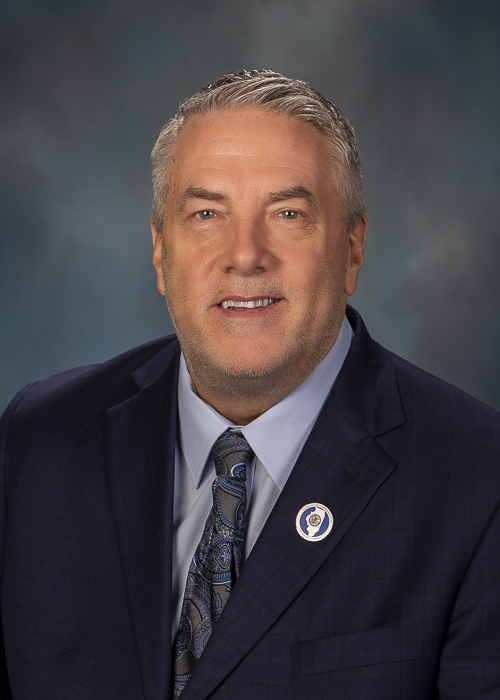
Rep. Gregg Johnson
Sponsored bills
Amends the Unified Code of Corrections. Creates the End-of-life Care Peer Support Program. Provides that the program is available to terminally ill persons committed to the Department of Corrections. Provides that the program shall be administered by the Department of Corrections in partnership with certain health care providers. Provides that individual patients may accept or decline care or participation in the program. Provides that individual patients shall define the scope of peer support, including the option to opt out of certain aspects of support. Provides that patient care plans shall be developed with the individual patient, the patient's peer support attendants, and the interdisciplinary team. Provides that participating patients shall be subject to the least restrictive security measures possible, with access to comfort items such as blankets, memorabilia, music, and books. Provides that participating patients shall have the following rights: (1) the right to dignity, privacy, respect, and culturally competent care; (2) the right to request peer support services; (3) the right to refuse services; and (4) the right to request family visitation. Provides that all participants in the program, including patients and peer support attendants, shall have access to grief counseling and mental health care services as needed. Provides that the program shall be funded through: (1) the Individual Benefit Fund; (2) direct appropriations from the General Revenue Fund; and (3) federal appropriations if applicable.
Amends the Illinois Act on the Aging. Provides that, subject to federal approval, on and after January 1, 2027, rates for in-home services shall be increased to $33.92 to sustain a minimum wage of $20.75 per hour for direct service workers. Requires rates in subsequent State fiscal years to be no lower than the rates put into effect upon federal approval. Provides that in order for a provider of in-home services to be eligible to receive the $33.92 rate, the provider must pay a minimum wage of $20.75 per hour to all direct service workers employed by the provider. Requires providers of in-home services to certify to the Department on Aging that they remain in compliance with the mandated wage increase for direct service workers. Requires each provider of in-home services to submit cost reports to the Department consistent with a specified administrative rule in order to be eligible for the $33.92 rate for in-home services. Provides that fringe benefits shall not be reduced in relation to the described rate increases. Requires the Department, beginning January 1, 2027, to ensure that each in-home service provider spends a minimum of 79% of the total payments the provider receives for home care aide services it furnishes under the Community Care Program on total compensation for direct service workers who furnish those services. Requires annual direct service worker cost reports from providers; and requires the Department to amend existing rules on financial reporting and minimum direct service worker costs to reflect the increase in the direct service worker spending requirement from 77% to 79%.
Creates the Police Mental Health Leave Act. Provides that a law enforcement officer suffering from a mental illness as a result of a traumatic event shall be entitled to use 5 days of paid mental health leave during any 12-month period. Requires a law enforcement agency to adopt a mental health leave policy that includes specified provisions. Sets forth provisions concerning existing leave policies; employee protections; retaliation; and recordkeeping. Provides for a private right of action.
Maddy summaryHB 624, titled "HOUSING-TECH," amends the State Housing Act. This bill makes a technical change specifically to a section within the act that concerns its short title.
Amends the Administration Article of the Illinois Public Aid Code. Requires the Department of Human Services to, subject to available funding, establish a Families Receiving Emergency Support for Hunger (FRESH) Program to provide FRESH benefits to households subject to termination of the household's Supplemental Nutrition Assistance Program (SNAP) benefits, or a reduction in the household's monthly SNAP benefit allotment, if the termination or reduction in SNAP benefits occurred as a result of one or more members of the household failing to meet SNAP work requirements. Provides that, for eligible households whose SNAP benefits were reduced or terminated, FRESH benefits shall be provided as a one-time lump sum payment distributed via an Electronic Benefits Transfer card. Requires the Department to make FRESH program applications available online and at local Family and Community Resource Centers immediately upon the first of the month following the effective date of the amendatory Act. Provides that an application for FRESH benefits shall not be deemed an application for any other public aid provided under the Code. Requires the Department to provide within a specified time frame FRESH benefits to households' that experience a reduction or termination of SNAP benefits prior to or after the first month following the effective date of the amendatory Act, if certain application submission deadlines are met. Requires the Department to publish monthly data reports on the FRESH program and to include such data in the Department's annual report to the General Assembly. Prohibits the Department and local governmental units from considering a household's receipt of FRESH benefits when determining the household's eligibility for other assistance provided under the Code. Provides that the provisions of the amendatory Act are inoperative on and after January 1, 2028. Effective immediately.
Amends the Commission to End Hunger Act. Creates the SNAP Response Working Group. Provides that the co-chairs of the Commission to End Hunger shall convene and appoint the co-chairs of the Working Group. Provides that the Working Group shall review and analyze federal changes to the Supplemental Nutrition Assistance Program (SNAP), gather and analyze data regarding the potential impact of the federal changes to SNAP on Illinois residents, and gather relevant estimates and data about Illinois' SNAP payment error rate, including the monthly State-reported error rate. Requires the SNAP Response Working Group to make projections about the cost to the State to maintain SNAP in Illinois in federal Fiscal Year 2028. Directs the Working Group to submit a preliminary report to the General Assembly no later than January 1, 2027. Provides that the preliminary report shall outline the federal changes to SNAP and identify the number of State residents impacted by those changes. Further provides that the preliminary report shall include initial recommendations for State action to prevent or mitigate any harm to State residents caused by the federal changes and shall project the cost to maintain the Supplemental Nutrition Assistance Program in Illinois in federal Fiscal Year 2028. Provides that, no later than April 1, 2027, the Working Group shall issue a full report to the General Assembly that includes an analysis on the impact of federal changes to SNAP on Illinois, final recommendations for State action to prevent or mitigate harm resulting from those changes, updated projections of the cost to maintain the program in federal Fiscal Year 2028, and any other cost projections relating to the Working Group's recommendations. Requires the SNAP Response Working Group to provide any relevant additional updates to its recommendations or projections as appropriate. Specifies that all reports of the Working Group shall be published by the Department of Human Services on its website. Provides that the SNAP Working Group shall be dissolved on May 31, 2027. Effective immediately.
Amends the Law Enforcement Officer-Worn Body Camera Act. Provides that an auxiliary officer is a law enforcement officer for purposes of the Act. Amends the Law Enforcement Camera Grant Act. Specifies that the Illinois Law Enforcement Training Standards Board must make grants to units of local government in Illinois and Illinois public universities for, among other things, purchasing or leasing officer-worn body cameras and associated technology for auxiliary officers and training auxiliary officers. Defines "auxiliary officer" for purposes of both Acts.
Creates the Fuel Gas Detector and Alarm Act. Requires the installation of a fuel gas detector and alarm in certain buildings. Sets forth fuel gas detector and alarm standards and requirements for residential rental units. Details fuel gas detector and alarm requirements in the event of a sale or exchange of a building. Provides for a civil penalty, set by local ordinance. Limits liability. Requires noninterference with fuel gas detectors and alarms. Effective January 1, 2026.
Creates the Natural Organic Reduction Regulation Act. Provides that any person doing business in this State, or any cemetery, crematory, funeral establishment, corporation, partnership, joint venture, voluntary organization, or any other entity, may erect, maintain, and operate a natural organic reduction facility in the State and provide the necessary appliances and facilities for the natural organic reduction of human remains in accordance with the Act. Provides that an individual or a person, cemetery, crematory, funeral establishment, corporation, partnership, joint venture, voluntary organization, or other entity may reduce human remains only in a natural organic reduction facility operated by a disposition authority licensed for this purpose and only under the limitations provided in the Act. Provides for: grounds for denial or discipline; surrender of a license; license, display, transfer; authorizing agent; authorization for natural organic reduction; performance of natural organic reduction services, training; recordkeeping; natural organic reduction procedures; disposition of reduced human remains; limitation of liability; hazardous implants; penalties; failure to file an annual report; injunctive action, cease and desist order; service of notice; investigations, notice, and hearing; compelling testimony; administrative review, venue, certification of record, and costs; and preneed of natural organic reduction arrangements. Effective June 1, 2026.