

Amends the Department of Public Health Powers and Duties Law of the Civil Administrative Code of Illinois. Provides that the Department shall investigate and apply for federal funding opportunities, including, but not limited to, a specified federal grant, to support maternal mental health, to the extent that programs are financed, in whole, by federal funds. Provides that the Department shall file a report with the General Assembly on or before January 1, 2021 of the Department's efforts to secure and utilize the federal funding it receives from its efforts. Provides that the amendatory Act's provisions are repealed on January 1, 2022. House Committee Amendment No. 1 Removes language referring to a specific grant available under the federal 21st Century Cures Act.
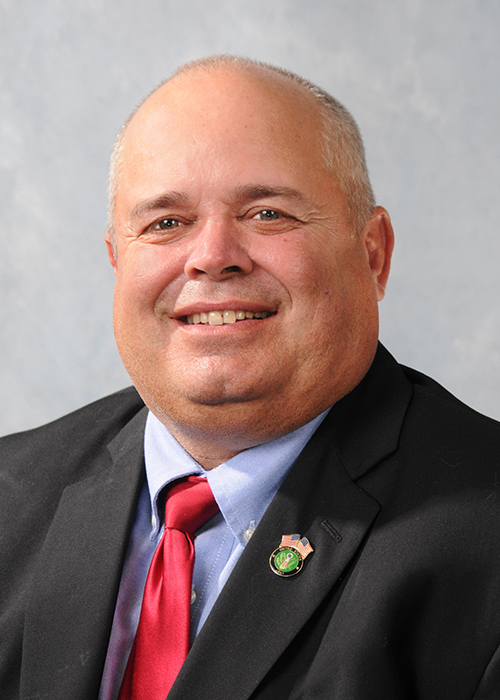
Rep. Dan Swanson
Sponsored bills
Creates the Seizure Smart School Act. Provides for legislative findings and defines terms. Requires the parent or guardian of a student with epilepsy who seeks assistance with epilepsy-related care in a school setting to submit a seizure action plan with the student's school. Provides that a delegated care aide shall perform the activities and tasks necessary to assist a student with epilepsy in accordance with the student's seizure action plan. Requires training for school employees and delegated care aides. Requires that an information sheet be provided to any school employee who transports a student with epilepsy to a school-sponsored activity. Provides that a school district may not restrict the assignment of a student with epilepsy to a particular school on the basis that the school does not have a full-time school nurse and a school may not deny a student access to the school or any school-related activity on the basis that the student has epilepsy. Provides for school employee protection against retaliation, immunity, and rights under federal law. Amends the Charter Schools Law of the School Code to make a related change. Amends the State Mandates Act to require implementation without reimbursement. House Committee Amendment No. 3 Replaces everything after the enacting clause. Reinserts the provisions of the introduced bill with the following changes. Makes a change to the legislative findings. Changes the definition of "delegated care aide" to mean a school employee or paraprofessional who has agreed to receive training in epilepsy and assist a student in implementing his or her seizure action plan and who has entered into an agreement with a parent or guardian of that student. Limits the definition of "school employee" to include, among other persons, a person who is employed by a school district or school as a principal, administrator, guidance counselor, or teacher. Provides that the training of a delegated care aide shall include consultation with the student's parent or guardian and may include consultation with an epilepsy educator approved by the Epilepsy Foundation of America and training for school employees must be provided annually through approximately one hour of self-study review approved by the Epilepsy Foundation of America or by an epilepsy educator approved by the Epilepsy Foundation of America (rather than requiring training for school employees and delegated care aides to be provided by a trained health care provider with an expertise in epilepsy). Removes a provision requiring the principal of a school to coordinate the training of all delegated care aides. Provides that, if applicable, a seizure action plan (rather than an information sheet) must be provided to any school employee who transports a student with epilepsy to a school-sponsored activity; makes a conforming change. Requires a school employee to be in compliance with the training provisions of the Act in order to have immunity. Adds an effective date of July 1, 2020. House Floor Amendment No. 4 Replaces everything after the enacting clause. Reinserts the provisions of the introduced bill as amended by House Amendment No. 3 with the following changes. Provides that the definition of "school employee" may not be interpreted to require a school district, charter school, or nonpublic school to hire additional personnel for the sole purpose of the personnel to serve as a delegated care aide. Provides that if a student has been managing his or her epilepsy care in a school setting before the effective date of the Act, the student's parent or guardian may (rather than must) sign and submit a seizure action plan with the student's school. Provides that it is the responsibility of a student's parent or guardian to share the health care provider's instructions on the student's epilepsy management during the school day. Removes a provision requiring the seizure action plan to include the treating physician's, advanced practice registered nurse's, or physician assistant's instructions on the student's epilepsy management during the school day. Provides that a student's parent or guardian is responsible for informing the school, in a timely manner, of any changes to the student's seizure action plan and emergency contact information. Provides that the principal of a school shall facilitate the school's compliance with the provisions of a student's seizure action plan (rather than ensure that the school has at least one delegated care aide present and available at the school during all school hours and during school-sponsored activities). Provides that the training for school employees must be fully consistent with the best practice guidelines issued by the Centers for Disease Control and Prevention. Provides that the training of a delegated care aide must be provided by a licensed health care provider with an expertise in epilepsy or an epilepsy educator who has successfully completed the relevant curricula offered by the Centers for Disease Control and Prevention (rather than must include consultation with the student's parent or guardian and may include consultation with an epilepsy educator approved by the Epilepsy Foundation of America). Makes other changes. Effective July 1, 2020. House Floor Amendment No. 5 Removes a provision requiring training for school employees to be provided annually through approximately one hour of self-study review approved by the Epilepsy Foundation of America or by an epilepsy educator approved by the Epilepsy Foundation of America.
Amends the School Code. With regard to criminal history records checks and checks of the Statewide Sex Offender Database and Statewide Murderer and Violent Offender Against Youth Database, provides that if a criminal history records check or check of the Statewide Sex Offender Database or Statewide Murderer and Violent Offender Against Youth Database is performed by a regional superintendent for an applicant seeking employment as a substitute teacher with a school district, the regional superintendent may disclose to the State Board of Education whether the applicant has been issued a certificate based on those checks. Provides that if the State Board receives information on an applicant, then it must indicate in the Educator Licensure Information System for a 90-day period that the applicant has been issued or has not been issued a certificate. Provides that a school district seeking to employ the substitute teacher may use the information in the Educator Licensure Information System rather than initiating its own criminal history records check or check of the Statewide Sex Offender Database or Statewide Murderer and Violent Offender Against Youth Database. Makes other changes concerning the Statewide Murderer and Violent Offender Against Youth Database. Effective immediately. House Committee Amendment No. 1 Removes a provision allowing a school district seeking to employ a substitute teacher to use the information in the Educator Licensure Information System rather than initiating its own criminal history records check or check of the Statewide Sex Offender Database or Statewide Murderer and Violent Offender Against Youth Database.
Amends the Criminal Code of 2012. Extends from January 1, 2020 to January 1, 2025, the date of the inoperability of the eavesdropping exemption that provides with prior request to and written or verbal approval of the State's Attorney of the county in which the conversation is anticipated to occur, recording or listening with the aid of an eavesdropping device to a conversation in which a law enforcement officer, or any person acting at the direction of a law enforcement officer, is a party to the conversation and has consented to the conversation being intercepted or recorded in the course of an investigation of a qualified offense as defined in the exemption. Effective immediately. Senate Floor Amendment No. 2 Extends from January 1, 2020 to January 1, 2023, (in the introduced bill, January 1, 2025) the date of the inoperability of the eavesdropping exemption that provides with prior request to and written or verbal approval of the State's Attorney of the county in which the conversation is anticipated to occur, recording or listening with the aid of an eavesdropping device to a conversation in which a law enforcement officer, or any person acting at the direction of a law enforcement officer, is a party to the conversation and has consented to the conversation being intercepted or recorded in the course of an investigation of a qualified offense as defined in the exemption. House Floor Amendment No. 2 Adds reference to: 430 ILCS 65/4 from Ch. 38, par. 83-4 430 ILCS 65/8 from Ch. 38, par. 83-8 430 ILCS 66/50 430 ILCS 68/5-5 430 ILCS 68/5-25 520 ILCS 5/3.4b new 720 ILCS 5/24-2 Amends the Firearm Owners Identification Card Act. Provides that a person who is under 21 years of age may apply for a Firearm Owner's Identification Card without parental consent required if he or she is an active duty member of the United States Armed Forces. Amends the Firearm Concealed Carry Act. Provides that a concealed carry license shall be renewed for a period of 5 years from the date of expiration on the applicant's current license upon the applicant completing the necessary requirements under the Act. Amends the Firearm Dealer License Certification Act. Provides that "retail location" does not include the World Shooting and Recreational Complex. Provides that the provisions of the Act related to the certification of a license do not apply to transfers of firearms to a resident registered competitor or attendee or non-resident registered competitor or attendee by a licensed federal firearms dealer at a competitive shooting event held at the World Shooting and Recreational Complex that is sanctioned by a national governing body. Amends the Wildlife Code. Provides that a current or retired law enforcement officer authorized by law to possess a concealed firearm shall be exempt from the provisions of the Code prohibiting possession of those firearms. Amends the Criminal Code of 2012 to exempt current or retired law enforcement officers. Effective immediately.
Proposes to amend the Legislature Article of the Illinois Constitution. Creates the Independent Redistricting Commission to adopt and file with the Secretary of State a redistricting plan for Legislative and Representative Districts. Provides for the selection of Commissioners and establishes the authority of a Special Commissioner to design a redistricting plan in the event that the Commission fails to properly adopt and file a redistricting plan. Effective beginning with redistricting in 2021 and applies to members elected in 2022 and thereafter.
Proposes to amend the Legislature and Revenue Articles of the Illinois Constitution. Provides that the General Assembly may increase the rate of an existing tax or impose a new tax only by a law approved by the vote of two-thirds of the members elected to each house. Provides that the General Assembly may override the veto of the Governor of a bill to increase the rate of an existing tax or impose a new tax only by a record vote of two-thirds of the members elected to each house. Effective upon being declared adopted.
Urges lawmakers to slow the process of legalizing recreational marijuana in Illinois, so that lawmakers, stakeholders, and experts alike have the chance to consider the societal impact of legalization and examine all the data from other states that have passed similar legislation.
Urges the creation via legislation of the Illinois Commission on Fiscal Responsibility and Reform, whose purpose shall be to examine the extent to which current practices of the executive agencies either conform to or fall short of established laws, regulations and best practices, and to determine the fiscal impact which the State realizes as a result of falling short of compliance with such practices.
Amends the State Police Act. Provides that the Department of State Police shall pay directly or reimburse, up to a maximum of $20,000 (rather than $10,000) the burial expenses of each State police officer who is killed in the line of duty. House Floor Amendment No. 2 Adds reference to: 820 ILCS 315/3.5 Replaces everything after the enacting clause. Amends the State Police Act. Provides that the Department of State Police shall pay directly or reimburse, up to a maximum of $20,000 (rather than $10,000) the burial expenses of each State police officer who is killed in the line of duty after June 30, 2018. Amends the Line of Duty Compensation Act. Provides that a burial benefit of up to a maximum of $20,000 (rather than $10,000) shall be payable to the surviving spouse or estate of a law enforcement officer or fireman who is killed in the line of duty after June 30, 2018.
Urges all four caucuses and the Governor to consider the Kaskaskia Watershed Comprehensive Plan when creating the upcoming fiscal year budget.