

Amends the Illinois TRUST Act. Provides that law enforcement may not: (i) retain information regarding the citizenship or immigration status or place of birth of any individual; (ii) give any immigration agent access, including by telephone or other communication medium (rather than only including by telephone), to any individual who is in that agency's custody; (iii) permit immigration agents' use of agency facilities or equipment, including any agency electronic databases not available to the public (rather than permit immigration agents use of agency facilities or equipment, including any agency electronic databases not available to the public, for investigative interviews or other investigative or immigration enforcement purpose); or (iv) provide information to any immigration agent regarding any individual in the agency's custody (rather than provide information in response to any immigration agent's inquiry or request for information regarding any individual in the agency's custody). Provides that law enforcement may not enter into or maintain any agreement regarding direct access to any electronic database or other data-sharing platform maintained by a law enforcement agency, or otherwise provide such direct access to a federal entity enforcing civil immigration law or any third parties unless such third parties certify that the information will not be used for civil immigration purposes or knowingly disseminated for any purpose related to civil immigration enforcement. Adds provisions from the Keep Illinois Families Together Act to the Illinois TRUST Act. Changes reporting requirements. Removes certain provisions from the legislative purpose. Changes definitions. Repeals the Keep Illinois Families Together Act. Effective immediately.
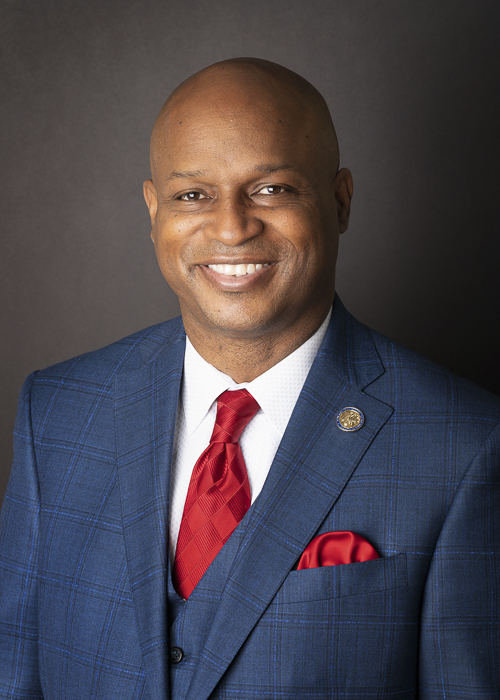
Rep. Chris Welch
Sponsored bills
Maddy summaryHB 577 amends the Illinois Administrative Procedure Act. It makes a technical change to a section concerning the short title of the act.
Amends the State Commemorative Dates Act. Provides that the Governor shall annually designate by official proclamation the third Friday of September in each year as POW/MIA Recognition Day (rather than the third Friday of September in each year is designated as POW/MIA Recognition Day) to be observed in honor and remembrance of the men and women who, as POWs, have suffered captivity in foreign countries while in active service with the United States armed forces or who, as MIAs, have been recognized as missing in action in a time of war or during a period of hostilities (rather than who were recognized as POWs or MIAs in a time of war or during a period of hostilities). Provides that the Governor shall request, in the Governor's annual designation by official proclamation, that some portion of the third Friday of September be used for solemn contemplation on the plight of members of the United States armed forces who have been held prisoners of war and members of the United States armed forces who have been missing in action and the resolve of families and friends who continue to seek the fullest possible accounting for missing loved ones. Effective immediately.
Declares the week of July 5 through July 10, 2026 as Blues Kids Week in the State of Illinois in recognition of the annual Blues Camp in Chicago and in celebration of Illinois' rich Blues legacy. Recognizes Fernando Jones and the Blues Kids Foundation for their extraordinary contributions to music education, cultural preservation, and youth development
Maddy summaryHB 237 amends the Cannabis Regulation and Tax Act. The bill makes a technical change within a specific section of the Act that relates to its short title.
Maddy summaryHB 765 makes a technical amendment to the Illinois Health Benefits Exchange Law. Specifically, it modifies a section concerning the short title of the existing law.
Amends the Illinois Police Training Act. Provides that the Illinois Law Enforcement Training Standards Board shall develop or approve a course to assist law enforcement officers in identifying and interacting with individuals with epilepsy. Provides that the course must be fully consistent with the best practice guidelines issued by the Centers for Disease Control and Prevention. Provides that the Board shall conduct or approve the epilepsy identification and treatment training course no later than 2 years after the effective date of the amendatory Act. Provides that the Board may consult with the Department of Public Health or the Department of Human Services to develop and update the curriculum as needed. Provides that, every 3 years, a law enforcement officer shall complete training on identifying and interacting with individuals with epilepsy.
Maddy summaryHB 446 amends the Farm Fresh Schools Program Act. The bill makes a technical change in a section of the Act concerning its short title.
Creates the Illinois Moorish-American Family Commission Act. Creates the Illinois Moorish-American Family Commission to advise the Governor and General Assembly, as well as work directly with State agencies, to improve and expand existing policies, services, programs, and opportunities for Moorish-American families, children, and adults and guide the efforts of and collaborate with State agencies, including, but not limited to, the Department on Aging, the Department of Children and Family Services, the Department of Commerce and Economic Opportunity, the Department of Corrections, the Department of Human Services, the Department of Healthcare and Family Services, the Department of Public Health, the Department of Transportation, the Department of Employment Security, and others. Sets forth provisions concerning the members of the Commission, funding, addresses and reports, and oversight. Provides that administrative, technical, and staffing support for the Commission shall be provided by the Commission on Equity and Inclusion. Effective immediately.
Amends the School Code. Creates the Out-of-School Time (OST) Advisory Council for the purpose of providing information and advice to the Governor and State agencies regarding State and federal policy and funding issues affecting out of school time programs. Sets forth membership, co-chairperson's and meetings. Provides that the OST Advisory Council shall: (1) provide information on the status of funding provided for OST programs in each fiscal year; (2) provide recommendations on legislative and administrative action needed to ensure that funding for before and after school programs is allocated promptly to qualified providers of OST programs; (3) provide information on the quality of services and accountability measures that are appropriate for school-age children and youth; (4) provide information regarding challenges faced by OST programs that impede the provision of the best possible services; (5) provide recommendations on the equitable reach of OST programs to ensure that the State has policies in place that promote access to the children and youth most in need of services; (6) make recommendations to the Governor and State agencies on reporting requirements, priority points, statewide evaluation, and licensure for OST programs; and (7) create and deliver to the Governor and General Assembly an annual report on statewide successes in OST and areas of growth for the future. Effective July 1, 2025.