

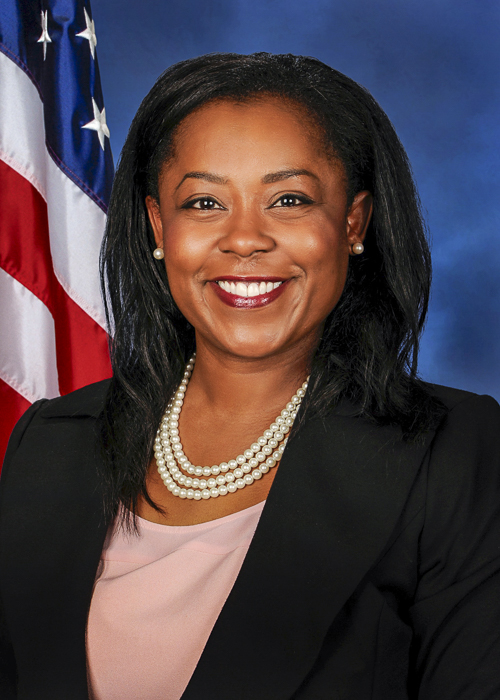
Declares May 3 through May 9, 2026 as Black Farmers and Growers Week in the State of Illinois. Encourages the people of Illinois and their representatives in government to learn about the history of Black farming communities and the contributions made by African Americans to agriculture in the United States. Encourages State agencies and policymakers to ensure that agricultural programs intended to support farmers are implemented in a manner that meaningfully reaches Black farmers and growers across Illinois, including emerging, limited-resource, and socially disadvantaged producers, and that outreach and program participation extend broadly throughout the State's Black farming communities.
Rep. Sonya Harper
Sponsored bills
Appropriates $15,000,000 to the Southern Illinois University Board of Trustees for the expansion of the National Corn-to-Ethanol Research Center at Southern Illinois University at Edwardsville to expand its research capabilities and to increase biomanufacturing workforce training. Effective July 1, 2026.
Commemorates the 60th anniversary of the Marquette Park March. Honors the memory of Dr. Martin Luther King Jr. and Albert Raby. Reaffirms the commitment to continuing the fight for fair housing and economic justice for all Illinoisans.
Declares July 11, 2026 as Unplug Illinois Day in the State of Illinois. Encourages all citizens to participate in this opportunity by unplugging from their electronic devices and visiting their local parks, recreation sites, and conservation areas.
Urges the Illinois Department of Natural Resources, in conjunction with the Illinois Department of Agriculture, to increase conservation efforts and to delay seasonal cutting of milkweed and other pollinator enhancement plants along Illinois waterways until August.
Declares March 1 through March 7, 2026 as Illinois Soil Health Week in the State of Illinois. Encourages the celebration of Soil Health Week and its related activities to increase the awareness of Illinois farmers, eaters, and those involved in agribusiness of the importance of the air and water quality environment for all citizens of this State.
Declares April 11-17, 2025 as Black Maternal Health Week. Recognizes that Black women are experiencing high, disproportionate rates of maternal mortality and morbidity in the State of Illinois. Recognizes that the alarmingly high rates of maternal mortality among Black women are unacceptable and unjust. States what the Black community needs to mitigate the effects of systemic and structural racism. States that in order to improve maternal health outcomes we must fully support and encourage policies grounded in the racial justice, reproductive justice, birth justice, and human rights frameworks that address Black maternal health inequity. States that Black women and birthing people must be active participants in the policy decisions that impact their lives. States that in order to ensure access to safe and respectful maternal health care for Black birthing people, the Black Maternal Health Momnibus Act and other legislation rooted in human rights that seeks to improve maternal care and outcomes must be passed. States the goals of Black Maternal Health Week.
Declares June 6, 2025 as Gun Violence Awareness Day and encourages all citizens to support their communities' efforts to prevent the tragic effects of gun violence and to honor and value human lives.
Creates the Distressed Farmers Act. Provides that the Department of Agriculture shall fund and administer programs to address the needs of distressed farmers. Amends The Illinois Income Tax Act. Provides that for taxable years beginning on or after January 1, 2026, each taxpayer who is a distressed farmer and who incurs qualified farming expenses during the taxable year is entitled to a tax credit in an amount equal to 100% of those qualified farming expenses, not to exceed $50,000 per taxpayer in any taxable year. Provides that qualified farming expenses include: (1) repairing tractors, trailers, and other vehicles; (2) purchasing, repairing, or constructing greenhouses and other covers for agricultural products; (3) purchasing tractors with tillers and other attachments; and (4) planting or harvesting food that will be delivered to an underserved community.
Creates the Comprehensive Charitable Food System Coordination Act. Provides that, in administering or appropriating State or State-managed federal grant funds for hunger relief, each State agency must: (1) consult and coordinate with specified actors in the charitable food system; (2) ensure that grant solicitations and funding criteria reflect the interconnected roles of food providers, distributors, producers, facilitators, and data systems; and (3) consider proposals that strengthen coordination, efficiency, resiliency, and equity across the charitable food system. Provides that State agencies are encouraged to establish advisory groups or working groups comprised of actors in the charitable food system. Requires certain reports. Amends the Department of Human Services Act. Provides that the Department of Human Services shall make grants from the Hunger Relief Fund to food banks and providers (currently, food banks only). Effective July 1, 2026.