

Amends the Illinois Act on the Aging. In provisions concerning the powers and duties of the Department on Aging under the Act, requires the Department to work with workforce development providers through the federal Workforce Innovation and Opportunity Act to establish and implement an affirmative action employment plan for the recruitment, hiring, training, and retraining of persons 60 or more years old for jobs for which their employment would not be precluded by law (rather than requiring the Department to make a grant to an institution of higher learning to study the feasibility of establishing and implementing an affirmative action employment plan for the recruitment, hiring, training, and retraining of persons 60 or more years old for jobs for which their employment would not be precluded by law). Requires the Department to conduct demonstration projects to identify additional ways to assist aging and minority senior citizens throughout the State (rather than requiring the Department to conduct a study of the feasibility of implementing the Senior Companion Program throughout the State). In a provision requiring the Department on Aging and the Department of Human Services to file a joint report with the Governor and the General Assembly, removes the requirement that the report be filed on or before September 30 of each year. Requires the Department on Aging and other specified agencies to submit an annual report on program and services for minority senior citizens in the State to be filed with the Governor and the General Assembly within 12 months of the closing of the lapse period for the fiscal year included in the report.
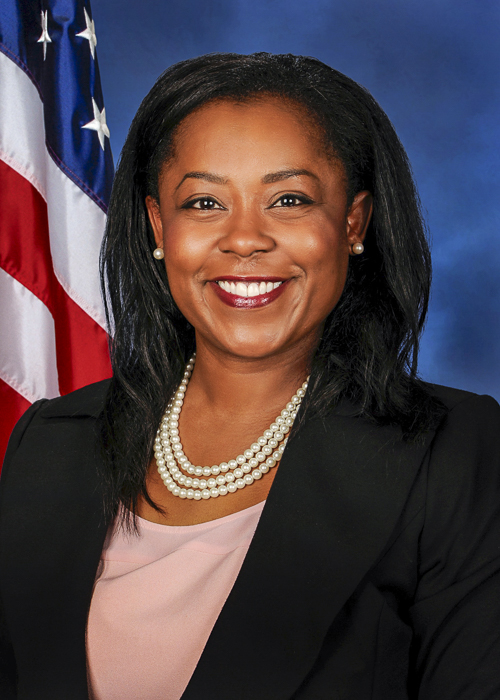
Rep. Sonya Harper
Sponsored bills
Amends the Criminal Code of 2012. Provides that various added sentences of imprisonment for committing offenses while armed with a firearm or by personally discharging a firearm are discretionary and constitute the maximum sentences that may be imposed by the court.
Amends the Illinois Human Rights Act. Provides that "protective hairstyle" means a hairstyle historically associated with race, including, but not limited to, hair texture and such hairstyles as braids, locks, and twists. Provides that "unlawful discrimination" includes discrimination against a person because of his or her actual or perceived protective hairstyle. Provides that it is a civil rights violation for an institution of elementary, secondary, or higher education to discriminate against any person on the basis of the person's protective hairstyle.
Amends the School Code. With respect to school discipline improvement plans, makes changes to how the State Board of Education determines the top 20% of school districts, when notification is given that a plan must be submitted, which school districts are required to submit a plan, the timeframe for school board approval of a plan and submission of that plan to the State Board, and when additional annual progress reports are required. Establishes the Safe Schools and Healthy Learning Environments Grant Program and grants under the program. Sets forth requirements for grant applicants and provisions for the distribution of funds appropriated for the program. Requires the State Board of Education to issue a yearly report on the results of the program in cooperation with school districts participating in the program. Provides that the State Board may adopt any rules necessary for the program. Effective immediately. Senate Committee Amendment No. 2 Deletes reference to: 105 ILCS 5/2-3.176 new Replaces everything after the enacting clause. Amends the School Code. With regard to the student discipline report, provides that the report must include data on the total number of school days missed by a student due to an out-of-school suspension or expulsion and data on the number of arrests made by law enforcement officers of students on school grounds, in school vehicles, at school activities or school-sanctioned events, or as a result of referrals by school officials. Provides that the report must be disaggregated by whether a student qualifies for services under the federal Individuals with Disabilities Education Act, the total number of school days missed by the student, and the incident type that caused the suspension, expulsion, or removal to an alternative setting. Provides that, in compiling the report, the State Board of Education must use the same disclosure avoidance standards used by the United States Department of Education in its public reporting of data submitted by each school district as part of the Civil Rights Data Collection and must also ensure that cross-tabulation by the various categories of disaggregation is possible. Makes other changes.
Amends the Medical Assistance Article of the Illinois Public Aid Code. Provides that social and emotional screenings for children that are conducted during a health examination shall be covered under the medical assistance program, subject to appropriations. Effective immediately.
Amends the Illinois Pesticide Act. Increases administrative penalties based on stated ranges of total violation points. Provides that beginning January 1, 2021 and each January 1 thereafter, the amounts of administrative penalties shall be adjusted by the Department of Agriculture based on the annual change in the Consumer Price Index. Requires the updated penalty amounts to be made available to the public on the Department's website.
Amends the Substance Use Disorder Act. In a provision concerning the functions of the Department of Human Services under the Act, requires the Department to act as the single State authority and subject matter expert for substance use disorder prevention, intervention, treatment, and recovery support services. Provides that in this role, the Department shall lead efforts and provide consultation regarding policy, funding, rules, and legislative changes that could impact existing and future substance use disorder initiatives. In a provision concerning the powers and duties of the Illinois Advisory Council established under the Act, provides that the Council shall: (i) identify substance use disorder policy, funding, service gaps, new and existing initiatives, and other related activities among State agencies that could reduce duplicative efforts and promote uniformity and consistency in service delivery; and (ii) recommend revisions and enhancements that may facilitate those objectives.
Amends the Mental Health and Developmental Disabilities Administrative Act. Requires the Department of Human Services to increase rates and reimbursements to fund a minimum of a $0.58 per hour wage increase, for front-line personnel for services provided in the City of Chicago, and $0.62 per hour, for front-line personnel for services provided in the rest of the State, above the wage rates published by the Department effective July 2019. Provides that the Department shall publish an annual mandatory wage chart with wage requirements for direct service personnel containing either a single statewide wage for all direct support personnel or one wage each for direct support personnel in Chicago and the rest of the State. Provides that future wage requirements shall be no less than the percent increased by the consumer price index-u. Includes compliance provisions for service providers. Defines terms.
Amends the Illinois Income Tax Act. Creates a credit for financial institutions in an amount equal to the aggregate amount of all fees, penalties, and any other income derived during the taxable year from each commercial loan transaction that is (i) originated by the financial institution, (ii) made to a person residing or located in this State, and (iii) made primarily for an agricultural project in this State. Effective immediately.
Creates the Family First Employer Program Act. Establishes the Family First Employer Program under the Department of Labor to award employers that create family-friendly workplaces by providing, for all full-time employees, advancement and leadership opportunities; the same pay rates for similar work; stipends or assistance for child care; paid leave for the birth or adoption of a child and medical care for employees or family members of employees; flexible work accommodations for other family obligations; and health insurance and retirement plan options. Provides for the awards to be presented by the Governor and to come with a logo that a designated employer may use for promotional purposes. Provides that the Department shall adopt rules to implement the program.