Declare's March 8, 2023 as International Women's Day. Reaffirms the State's commitment to pursue strategies that guarantee the basic human rights of women and girls, to promote meaningful and significant participation of women in all aspects of our society, to encourage equitable access to and healthcare for all women and girls, and to support policy initiatives that seek to achieve gender parity and empower all women.
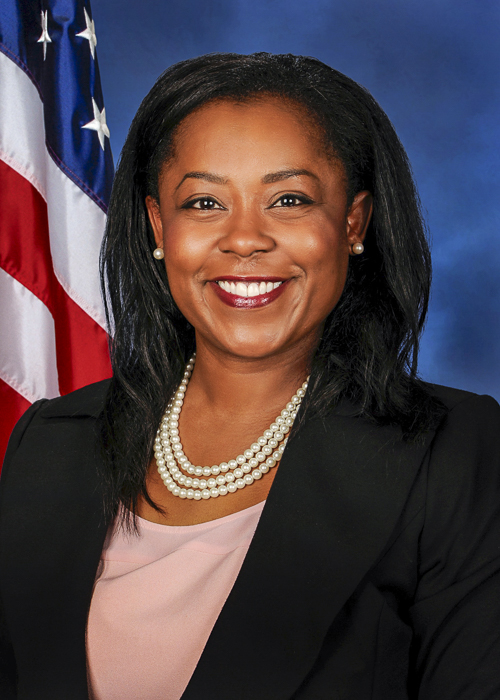
Rep. Sonya Harper
Sponsored bills
Urges state agencies, local governments, and other organizations to work together to identify and correct deficiencies that affect the State's eligibility for federal funding to fight climate change.
Amends the Seizure and Forfeiture Reporting Act. Requires each law enforcement entity that seizes, forfeits, or receives property under the Act to report specified information about the seizure and forfeiture of that property no later than 60 days after December 31 of the year in which the property is seized or forfeited. Provides that neither a law enforcement entity nor the Illinois State Police shall report the seizure, forfeiture, or receipt of property subject to reporting under federal law through equitable sharing agreements with the federal government. Provides that if a law enforcement entity does not seize, forfeit, or receive forfeiture funds during the reporting period, it shall file a null report. Makes changes concerning the information required in reports filed with the Illinois State Police under the Act. Provides that the Illinois State Police shall post annually on its website certain data. Provides that the Illinois State Police shall, within 120 days after the end of the calendar year, submit to the General Assembly, Attorney General, and Governor a written report summarizing activity in the State for the preceding year. Amends the Criminal Code of 2012. Provides that the Director's designee may sell or dispose of forfeited property. Amends the Drug Asset Forfeiture Procedure Act. Provides that the Director's designee may dispose of forfeited property.
Amends the Township Open Space Article of the Township Code. Reduces the acreage that constitutes open land or open space under the Article to 25 acres (currently, 50 acres). Provides, in the definition of "open space purposes", that development includes development for agricultural purposes. Provides that a township board may lease open space for open space purposes and may not lease any part of open space to anyone other than the federal government, a state government, or a local government. Provides that leased open space may be used for agricultural purposes. Provides that the township board may not sell, convey, donate, or otherwise dispose of open space without referendum approval by the majority of the voters of the township at a regular election, and provides that the board may certify the question of disposition of property to the appropriate election authority only if the board approves the question by at least a two-thirds majority of the board members. Provides that, if a township dissolves or is consolidated or merged or the boundaries of the township are altered, any affected open space shall continue to be used as required in the open space plan unless the open space is disposed of is approved by a two-thirds vote of the board of the unit of local government in control of that open space and after referendum of the voters of the unit of local government.
Amends the Department of Professional Regulation Law of the Civil Administrative Code of Illinois. Requires health care professionals who have continuing education requirements to complete cultural competency training, which shall include information on sensitivity relating to and best practices for providing affirming care to people in the person's preferred language, people with disabilities, documented or undocumented immigrants, people who are intersex, people living with HIV, and people of diverse sexual orientations and gender identities. Provides that for every license or registration renewal occurring on or after the effective date of the amendatory Act, a health care professional who has continuing education requirements must complete at least 5 hours in cultural competency training. Provides that for every license or registration renewal occurring on or after the effective date of the amendatory Act, a person licensed or registered by the Department under the Medical Practice Act of 1987 and who has continuing education requirements must complete at least 10 hours in cultural competency training. Provides that these continuing education hours may count toward meeting the minimum credit hours required for continuing education. Provides for rulemaking. Effective January 1, 2024.
Amends the Children and Family Services Act. Redefines the term "children" to include persons under the age of 23 (rather than 21) who were committed to the Department of Children and Family Services pursuant to the Juvenile Court Act or the Juvenile Court Act of 1987 and who continue under the jurisdiction of the court. Requires the Department to provide or authorize child welfare services, aimed at assisting minors to achieve sustainable self-sufficiency as independent adults, for any minor eligible for the reinstatement to wardship pursuant to the Juvenile Court Act of 1987, whether or not such reinstatement is sought or allowed, provided that the minor consents to such services and has not yet attained the age of 23 (rather than 21). Makes conforming changes in the Juvenile Court Act of 1987, the Illinois Identification Card Act, and the Medical Assistance Article of the Illinois Public Aid Code.
Amends the State Board of Education Article of the School Code. Provides that, beginning with the 2023-2024 school year, all internships for school social workers must be paid internships. Provides that, subject to appropriation, the State Board of Education shall award competitive grants on an annual basis to school districts to assist in the funding of these paid internships. Provides that the State Board of Education shall annually disseminate a request for applications to the grant program. Provides that higher priority shall be given to schools that demonstrate a shortage of school social workers, which is determined by the average ratio of school social workers to students in the target school district over the preceding 3 school years. Provides that the State Board of Education shall produce an annual report on the program. Amends the Board of Higher Education Act. Provides that, subject to appropriation, the Board of Higher Education shall award competitive grants on an annual basis to colleges and universities in this State to fund field placements for social workers. Provides that, subject to appropriation, colleges and universities shall annually disseminate a request for applications from students under the grant program. Provides that colleges and universities, upon receiving funding, shall provide applications to students eligible for this funding. Provides that a college or university shall give priority to applicants who are members of a racial minority. Provides that each college or university that receives funds shall provide an annual report to the Board of Higher Education, and the Board of Higher Education shall post those reports on the Board's website. Effective immediately.

Creates the Educational Credit for Election Judges Act. Provides that each institution of higher education shall adopt a policy regarding its awarding of academic credit for election judges. Provides that the policy shall apply to any individual who has been an election judge while enrolled in the institution of higher education. Provides that each institution of higher education shall submit its policy for awarding academic credit for election judges to the Board of Higher Education and the Illinois Community College Board, if applicable, before June 30, 2024 and before June 30 of every other year thereafter. Amends the Election Code. Provides that if an election judge receives academic credit, the judge may not be compensated under the Election Code.
Amends the Criminal Code of 2012. In the Sex Offenses Article of the Code, defines "coercive control" as direct or implied threat of danger, or retribution sufficient to coerce a reasonable person of ordinary susceptibilities to perform an act that otherwise would not have been performed, or acquiesce in an act to which one otherwise would not have submitted. Provides that a person commits criminal sexual assault if that person commits an act of sexual penetration and uses coercive control. Provides that a person commits criminal sexual abuse if that person commits an act of sexual conduct by the use of coercive control.
Declares April of 2023 as "Prescribed Burning Awareness Month" in the State of Illinois.