

Amends the Underserved Health Care Provider Workforce Act. Changes the definition of "designated shortage area" to mean an area designated as a medically underserved area or a health professional shortage area (rather than a physician shortage area, a medically underserved area, or a critical health manpower shortage area). Changes the term "eligible medical student" to "eligible student", and includes in the definition of that term a person who is studying optometry in an optometry college or institution located in Illinois and that a person may agree to practice full-time in a designated shortage area as an optometrist or anesthesiologist one year for each year he or she is a scholarship recipient. Includes a rural health center, a federally qualified health center, a federally qualified health center look alike, and an optometric office in the definition of "medical facility". Includes an optometrist in the definition of "eligible health care provider". Includes an obstetrician or gynecologist in the definition of "primary care physician". Includes loan repayment recipients in a provision regarding scholarship recipients who fail to fulfill specified obligations, and provides that the amounts paid by these scholarship or loan repayment recipients shall be deposited into the fund where the payment originated from (rather than the Community Health Center Care Fund). Repeals a different provision defining "primary care physician". Effective January 1, 2026.
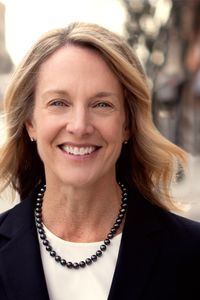
Rep. Marti Deuter
Sponsored bills
Amends the Department of Human Services Act. Establishes the Nonprofit Clinical Supervision Grant Program. Provides that, subject to appropriation, the Department of Human Services shall provide grants to eligible nonprofit associations to provide grants to nonprofit associations to hire licensed clinical social workers and to administer programs for group clinical supervision to assist social workers in fulfilling their supervised clinical experience requirements for licensure. Sets forth eligibility requirements for nonprofit associations. Sets forth requirements regarding the use of grant funds. Describes annual reporting requirements for grant recipients. Allows the Department of Human Services to adopt rules needed to implement the Nonprofit Clinical Supervision Grant Program. Amends the Higher Education Student Assistance Act. Changes the name of the School and Municipal Social Work Shortage Loan Repayment Program to the School and Municipal/County Social Work Shortage Loan Repayment Program. Increases the maximum amount of grants that may be awarded through the School and Municipal/County Social Work Shortage Loan Repayment Program. Allows a recipient to apply for additional grant funding in subsequent years only if the recipient verifies that the grant amount allocated in the prior year has been applied to reduce the balance of the recipient's educational loan.
Creates the Chicago Downtown Revitalization Task Force Act. Includes legislative findings. Creates the Chicago Downtown Revitalization Task Force. Includes provisions on Task Force membership, meetings, compensation, and administrative support. Requires the Task Force to (1) conduct an analysis of all taxes and economic incentives, monetary or otherwise, that impact downtown Chicago, including analyzing all taxes and incentives levied or administered directly by the State of Illinois as well as those authorized by State law but are implemented by units of local government, including the City of Chicago; (2) research and review trends impacting downtown Chicago, including, but not limited to, population growth, office occupancy rates, commercial office vacancy and valuation figures, retail sales, restaurant sales, hotel occupancy rates, and cultural event attendance; (3) examine national best practices in the area of post-pandemic revitalization of large urban centers and consider the applicability of such policies to downtown Chicago; (4) assess existing and potential industry clusters based on current and anticipated trends to consider policy solutions that may optimize the marketability and overall appeal of downtown Chicago to potential growth sectors; and (5) make recommendations regarding changes to existing policy or the implementation of new policies to enhance economic activity in and increase the overall vitality of downtown Chicago. Requires the Task Force to submit a report no later than 12 months after the effective date of the Act and periodically thereafter. Dissolves the Task Force 5 years after the effective date of the Act. Repeals the Act on January 1, 2032.
Amends the College Campus Press Act. Defines "public media produced at a State-sponsored institution of higher learning". Provides that all public media produced at a State-sponsored institution of higher learning is a public forum for expression by the employees producing media at the particular institution of higher learning. Provides that public media produced at a State-sponsored institution of higher learning shall not be subject to prior review by public officials of a State-sponsored institution of higher learning. Allows an employee working for or an agent of an entity creating public media produced at a State-sponsored institution of higher learning to commence a civil action to obtain appropriate injunctive and declaratory relief as determined by a court for violation of the Act by such State-sponsored institution of higher learning. Provides that expression made by an employee or agent of an entity producing public media produced at a State-sponsored institution of higher learning is neither expression of campus policy nor speech attributable to a State-sponsored institution of higher learning. Provides that a State-sponsored institution of higher learning shall be immune from any lawsuit arising from expression actually made by the public media produced at a State-sponsored institution of higher learning
Maddy summaryThis bill declares November 10-14, 2025, as School Psychology Week. It serves to recognize the contributions and role of school psychologists.
States that the new Department of Early Childhood and its planning process should prioritize appropriate attention to the facilities needs of our State's mixed-delivery system of early care and education. Additionally states that the State should move expeditiously to award its remaining Early Childhood Construction Grant monies to qualified applicants, to assist providers of critical birth-to-five programs in meeting their growing building-and-repair demands. Finally states that the State should also move as quickly as feasible to replenish Early Childhood Construction Grant resources to help Illinois achieve the long-term vision of the bipartisan Funding Commission for making services "simpler, better, fairer" for young children, their families, and communities statewide.
Declares the month of July 2025 as Systemic Juvenile Idiopathic Arthritis (SJIA) Awareness Month in the State of Illinois. Encourages funding for research organizations working towards finding the cause and the cure of SJIA in order to prevent this disease and offer successful treatment options.
Declares April 2025 as Autism Awareness and Acceptance Month in the State of Illinois to help increase public awareness of the need to support individuals with autism and the family members, medical professionals, and human services professionals who help care for individuals with autism.
Urges the State to increase reimbursement rates, state grants and contracts, and the minimum overhead allowance to meet the rising costs of providing essential human services in Illinois and supporting the workers who deliver those services.
Honors the memory of the Jewish people who were victims of the Holocaust and recognizes the bravery of survivors who have shared their stories with the world. Honors the memory of the millions of additional people, including prisoners of war, ethnic Poles, Romani people, Serbian civilians, people with disabilities, political opponents and dissenters, people labeled as asocial, Jehovah's Witnesses, gay, bisexual, and transgender people, and Black Germans, who were persecuted and murdered by the Nazi state and their collaborators. Expresses gratitude for the soldiers, resistance fighters, and all those who helped defeat the Nazi regime and end the Holocaust. Expresses gratitude for the American soldiers who fought around the world during World War II, including the over 980,000 men and women from Illinois who served in the U.S. Armed Forces and the approximately 22,000 who gave their lives in pursuit of liberty. Expresses gratitude for the American forces that liberated the Buchenwald concentration camp on April 11, 1945, and who would go on that month to liberate concentration camps at Dachau, Dora-Mittelbau, and Flossenburg before liberating Mauthausen in early May 1945. Urges all Illinoisans to commit to learning about the Holocaust in order to ensure that such atrocities are never perpetrated again. Urges all Illinoisans to enhance their efforts to combat antisemitism, bigotry, intolerance, and racism.