Amends the Property Tax Code. Provides that, for taxable years 2026 and thereafter, provisions concerning erroneous homestead exemptions also apply to persons who received an erroneous low-income senior citizens assessment freeze homestead exemption in a county with less than 3,000,000 inhabitants. Effective immediately.
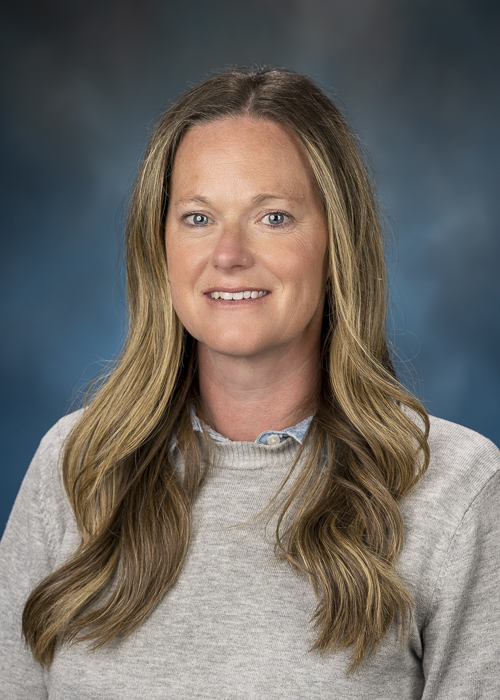
Rep. Mary Gill
Sponsored bills
Amends the Illinois Income Tax Act. Creates an income tax credit for each individual who (i) serves as a first responder for at least 10 months during the taxable year and (ii) incurs unreimbursed qualified wellness expenses during the taxable year. Provides that the amount of the credit is equal to 50% of the unreimbursed qualified wellness expenses incurred by the taxpayer during the taxable year, up to a maximum of $250 per eligible taxpayer. Sets forth limitations on the aggregate amount of credits that may be awarded under the amendatory Act. Effective immediately.
Amends the Illinois Insurance Code. Makes a technical change in a Section concerning the purpose of the Article regarding nonprofit risk organizations.
Amends the Illinois Income Tax Act. Provides that the maximum amount for the credit for instructional materials and supplies shall be $500 for each semester in the taxable year for taxable years beginning on or after January 1, 2026 (currently, $500 per taxable year). Effective immediately.
Amends the Hospital Licensing Act. Provides that, if an individual is treated at a hospital and the hospital conducts a urine drug screening to assist in diagnosing the individual's condition, the hospital shall include testing for fentanyl in the individual's urine screening. Provides that if the urine drug screening, conducted in accordance with the provisions, detects fentanyl, the hospital shall report the test results, which shall be deidentified, to the Department of Public Health through the State-designated health information exchange. Provides that a hospital that does not have chemical analyzer equipment is not subject to the provisions. Provides that the provisions do not affect any State law which provides civil or criminal immunity to an individual who is in need of medical assistance after ingesting or using alcohol or drugs or to an individual who, in good faith, assists another who is in need of medical assistance after ingesting or using alcohol or drugs. Effective immediately.
Amends the Department of Employment Security Law of the Civil Administrative Code of Illinois. Provides that the Department of Employment Security shall create a self-employment assistance program to provide benefits to individuals who are working to start a business in the State and who are otherwise eligible to receive benefits under the Unemployment Insurance Act. Provides that a participant in the program shall be deemed to be actively engaged in seeking work as required under the Unemployment Insurance Act. Provides that benefits paid to a participant in the program are considered to be benefits paid under the Unemployment Insurance Act. Provides that the Department of Employment Security shall adopt rules to implement and administer the program.
Provides that the Act may be referred to as the Knight-Silas Act. Amends the Criminal Code of 2012. Provides that a person commits aggravated battery when, in committing a battery, other than by the discharge of a firearm, he or she: (1) knowingly causes great bodily harm or permanent disability or disfigurement to an individual whom the person knows to be a Department of Children and Family Services employee; and (2) is, at the time of the commission of the offense, 21 years of age or older and causes great bodily harm or permanent disability or disfigurement to an individual whom the person knows to be a Department of Children and Family Services employee: (i) performing his or her official duties; (ii) battered to prevent performance of his or her official duties; or (iii) battered in retaliation for performing his or her official duties. Provides that "Department of Children and Family Services employee" includes any (i) Department caseworker or (ii) investigator employed by an agency or organization providing social work, case work, or investigative services under a contract with or a grant from the Department of Children and Family Services. Provides that a violation is a Class 2 felony. Provides that if the battery causes great bodily harm or permanent disability or disfigurement to the employee, the penalty is a Class 1 felony.

Provides that the Act may be referred to as the Knight-Silas Act. Amends the Criminal Code of 2012. Provides that aggravated battery, other than by the discharge of a firearm, includes a battery committed by a person who, at the time of the commission of the offense, is 21 years of age or older and the battery was committed upon an individual whom the person committing the offense knows to be a person working under the Adult Protective Services Program or an Ombudsman under the State Long Term Care Ombudsman Program of the Department on Aging, or a Department of Children and Family Services employee: (1) performing his or her official duties; (2) battered to prevent performance of his or her official duties; or (3) battered in retaliation for performing his or her official duties. Provides that a violation is a Class 2 felony, except if the battery causes great bodily harm or permanent disability or disfigurement to an individual, a violation is a Class 1 felony. Defines "Department of Children and Family Services employee" and "ombudsman".
Amends the School Code. Creates the Career and Technical Education Task Force to review career and technical education programming and policy and make recommendations to ensure all students have access to high quality, globally competitive career and technical educational programs. Sets forth members, compensation, meetings, and administrative staff. Requires the Task Force to prepare and deliver to the State Board of Education and the General Assembly a report covering the Task Force's findings. Dissolves the Task Force on January 1, 2027. Effective immediately.
Maddy summaryThis is a ceremonial resolution (not a policy bill) recognizing Illinois House Speaker Emanuel "Chris" Welch for becoming the first Black lawmaker elected as Illinois House Speaker in the state's 200+ year history. The resolution formally celebrates his leadership during Black History Month and acknowledges his re-election as Speaker in 2023 and 2025. It serves as a symbolic gesture from the Illinois House of Representatives to honor his historic role, with no new laws or policy changes enacted.