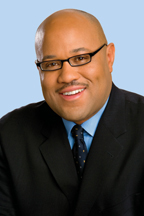
Photo of André M. Thapedi
D Illinois House · District 32 · Former member

Rep. André M. Thapedi

Contact Email
Compare
Total votes
11,267
all sessions
Attendance
95%
579 missed
Among the lowest in the chamber
With party
94%
of cast votes
Bipartisan score
3%
crosses aisle rarely
Sponsored
333
bills & resolutions
Lower than 99% of chamber peers
Committees
0
assignments
333 bills and resolutions

Sponsored bills

Total
333
Primary
0
Co-sponsor
333
This page
333
matching current filters
Co-sponsor HB 4917
In committee · Illinois House · Co-sponsor
CONSUMER DEBT-CHILD SUPPORT

Amends the Code of Civil Procedure. Provides that the definition of "consumer debt" does not include any money due or owing, or alleged to be due or owing, from a natural person for an arrearage of child support. Provides that the definition of "consumer debt judgment" does not include any judgment entered for an arrearage of child support.

In committee Jun 23, 2020 1 co-sponsor
Co-sponsor HB 2250
In committee · Illinois House · Co-sponsor
CD CORR-REFERRAL SERVICES

Amends the Unified Code of Corrections. Provides that the Department of Corrections shall make information about the availability of referral services to any other State or local agencies known to a parolee or releasee prior to his or her release from the correctional facility where the parolee or releasee has been residing. Effective immediately. Correctional Note (Dept of Corrections) As the amendment provided for in House Bill 2250 is already current practice, the Department will continue to provide resources to assist persons with their successful reentry efforts. The Department estimates that the requirements of this proposed registration can be managed by current staff at no additional cost to the Department. There are no new incarceration sanctions or enhanced incarceration penalties for the Department associated with these provisions. Therefore population impact on the Department. Fiscal Note (Dept of Corrections) There is no corrections population impact on the Department.

In committee Jun 23, 2020 1 co-sponsor
Co-sponsor HB 4562
In committee · Illinois House · Co-sponsor
PROBATE-GUARDIAN-DECISIONS

Amends the Guardians For Adults With Disabilities Article of the Probate Act of 1975. Provides that a guardian shall consider the ward's current preferences to the extent the ward has the ability to participate in decision making when those preferences are known or reasonably ascertainable by the guardian. Provides that decisions by the guardian shall conform to the ward's current preferences unless the guardian reasonably believes that doing so would result in substantial harm to the ward's welfare or personal or financial interests. Provides that if the guardian is unable to ascertain the ward's preferences, then the decisions may be made by conforming as closely as possible to what the ward would have done or intended under the circumstances. Makes conforming changes. Effective immediately.

In committee Jun 23, 2020 1 co-sponsor
Co-sponsor HB 27
In committee · Illinois House · Co-sponsor
VOCATIONAL OPPORTUNITY ACT

Creates the Vocational Academy Opportunity Act. Creates 2 vocational academies, one located in Cook County and the other in a downstate county, which shall be residential institutions. Provides that each academy shall be a State agency, funded by State appropriations, private contributions, and endowments. Provides that the academies shall be governed by a single Board of Trustees for the collective operation and oversight of the academies. Provides for the membership of the Board. Specifies the duties and powers of the Board. Provides that each academy shall be empowered to lease or purchase real and personal property on commercially reasonable terms for the use by the academy. Fiscal Note, House Floor Amendment No. 1 (State Board of Education) House Bill 27 (H-AM 1) would increase the Evidence-Based Funding (EBF) gap to adequacy. EBF provides funding to two existing laboratory schools. Based on the fiscal year 2019 EBF calculations, the Final Adequacy Target for the two existing non-residential laboratory schools, adjusted for regionalization, averaged nearly $10,700 per student. This fiscal note assumes that each new vocational academy would have an average student enrollment of 250 students per grade or 750 per school. Based on the FY19 EBF calculations mentioned above, the estimated state resources needed for the EBF formula would be $7.2 million for each vocational school to be funded at 90% adequacy for a total of $14.4 million. The bill does not provide a mechanism for the new school districts to receive a Base Funding Minimum from EBF for the new vocational schools. This bill would also impact EBF Tier funding amounts received by other school districts in the future as a result of reduced enrollment for a school district that has a pupil enroll in one of the new vocational academies. The bill also has an inconsistency with the definition Of "Average Student Enrollment" in Section 18-8.15 of the School Code. This estimate does not include construction costs nor the operational costs of housing students in a residential facility as the bill authorizes the school districts to use a cost recovery fee for these costs. The fiscal impact to the Illinois State Board of Education's operating budget cannot be determined at this time but there will be operational costs to comply with the provisions of House Bill 27 (H-AM 1). Fiscal Note, House Floor Amendment No. 2 (State Board of Education) House Bill 27 (H-AM 2) creates the Vocational Academy Opportunity Act and four public vocational academies which shall also be residential institutions. The bill provides that each academy shall be its own school district and funded as a laboratory school from the Evidence-Based Funding (EBF) formula The local capacity percentage for these new vocational academies in the EBF formula would be set at 10% in the absence of local tax resources. House Bill 27 (H-AM 2) would increase the EBF gap to adequacy. EBF provides funding to two existing laboratory schools. Based on the fiscal year 2019 EBF calculations, the Final Adequacy Target for the two existing non-residential laboratory schools, adjusted for regionalization, averaged nearly $I0,700 per student. This fiscal note assumes that each new vocational academy would have an average student enrollment of 250 students per grade or 750 per school. Based on the FY19. EBF calculations mentioned above, the estimated state resources needed for the EBF formula would be $7.2 million for each vocational school to be funded at 90% adequacy for a total of $28.8 million. The bill does not provide a mechanism for the new school districts to receive a Base Funding Minimum from EBF for the new vocational schools. This bill would also impact EBF Tier funding amounts received by other school districts in the future as a result of reduced enrollment for a school district that has a pupil enroll in one of the new vocational academies. The bill also has an inconsistency with the definition of "Average Student Enrollment" in Section 18-8.15 of the School Code. This estimate does not include construction costs nor the operational costs of housing students in a residential facility as the bill authorizes the school districts to use a cost recovery fee for these costs. The fiscal impact to the Illinois State Board of Education's operating budget cannot be determined at this time but there will be operational costs to comply with the provisions of House Bill 27 (H-AM 2).


In committee Jun 23, 2020 1 co-sponsor
Co-sponsor HB 2547
In committee · Illinois House · Co-sponsor
RACIAL DISCRIMINATION

Creates the Racial Impact Note Act. Provides that every bill which has or could have a disparate impact on racial and ethnic minorities, upon the request of any member, shall have prepared for it, before second reading in the house of introduction, a brief explanatory statement or note that shall include a reliable estimate of the anticipated impact on those racial and ethnic minorities likely to be impacted by the bill. Specifies the contents and provides for the preparation of each racial impact note. Amends the State Officials and Employees Ethics Act. Prohibits racial discrimination and harassment by State officers and employees. Provides that each State officer and employee shall annually complete a racial bias, discrimination, and harassment training program approved by the appropriate jurisdictional authority. Expands the jurisdiction of the Executive Ethics Commission to include allegations of racial discrimination and harassment by persons registered under the Lobbyist Registration Act. Provides that the personnel policies of units of local government shall prohibit racial discrimination and harassment. Defines "racial discrimination and harassment". Provides for rulemaking, including emergency rulemaking. Amends the Secretary of State Act. Provides the Secretary of State's Inspector General with jurisdiction to investigate complaints of racial discrimination and harassment by persons registered under the Lobbyist Registration Act. Amends the Lobbyist Registration Act. Prohibits racial discrimination and harassment by persons registered under the Lobbyist Registration Act. Provides that each registered lobbyist shall annually complete a racial bias, discrimination, and harassment training program approved by the Secretary of State. Defines "racial discrimination and harassment". Amends the Illinois Human Rights Act. Requires the Department of Human Rights to establish a racial discrimination and harassment hotline for the anonymous reporting of racial discrimination and harassment in both public and private places of employment, and to provide for reporting by both telephone and Internet. Amends the Illinois Administrative Procedure Act to provide for emergency rulemaking. Effective immediately.

In committee Jun 23, 2020 1 co-sponsor
Co-sponsor HB 203
In committee · Illinois House · Co-sponsor
NO REPRESENTATION WITHOUT POP

Creates the No Representation Without Population Act. Provides that the Department of Corrections shall collect and maintain an electronic record of the legal residence, outside of any correctional facility, and other demographic data for each person entering its custody after January 1, 2019. Provides for the minimum records that the Department shall maintain. Requires the Department to provide certain information to the Secretary of State after the decennial census. Requires the Secretary of State to request similar information from agencies that operate federal incarceration facilities. Requires the Secretary of State to prepare redistricting data to reflect the incarcerated persons at their residential address, rather than the address of the facility in which the person is incarcerated. Provides that for persons for whom a legal residence is unknown or not in the State, and for all persons reported in the census as residing in a federal correctional facility for whom a report was not provided, the Secretary of State to allocate the person to a State unit not tied to a specific determined geographic location, as other residents with unknown addresses are allocated. Requires the data collected to only be used as a basis for determining Legislative and Representative Districts. Prohibits the use of the data for the distribution of State or federal aid. Contains severability provisions. Effective immediately.

In committee Jun 23, 2020 1 co-sponsor
Co-sponsor HR 781
In committee · Illinois House · Co-sponsor
URGES HEARING PRE-K DECREASE

Urges the City of Chicago Council to hold a public hearing concerning the DFSS RFP process that resulted in the defunding of birth-to-five classrooms and staff.

In committee Jun 23, 2020 1 co-sponsor
Co-sponsor HB 3340
In committee · Illinois House · Co-sponsor
SUBMINIMUM WAGE PHASE-OUT

Amends the Department of Human Services Act. Contains a declaration of policy and intent. Requires the Department of Human Services, in partnership with specified State agencies, to develop and implement a plan to phase out, by July 1, 2024, authorizations under the Minimum Wage Law to pay an employee with a disability less than the minimum wage. Requires the Department to consult with specified organizations when implementing the phase-out plan. Requires the Secretary of Human Services to submit reports to the Governor and the General Assembly on the benchmarks and status of achieving the outcomes included in the phase-out plan and recommendations for funding levels or other resources necessary to implement the phase-out plan. Amends the Department of Labor Law. Prohibits the Director of Labor from authorizing a work activities center or other sheltered workshop to pay an employee who has a disability less than the minimum wage unless certain requirements are met. Amends the Illinois Council on Developmental Disabilities Law. Requires the Illinois Council on Developmental Disabilities to commission an independent study of the phase-out plan; determine whether the plans are having their intended effects; and make recommendations for possible changes in State law or policy regarding the employment of individuals with disabilities. Requires the Council to report its findings and recommendations to the Governor and the General Assembly by July 1, 2023. Amends the Minimum Wage Law. Provides that the State of Illinois shall not fund any entity that pays individuals less than the minimum wage under a certificate issued by the United States Department of Labor that authorizes Community Rehabilitation Programs to pay individuals less than the wage otherwise required for the individuals under federal law. Effective immediately, except that the provisions amending the Minimum Wage Law take effect July 1, 2024.

In committee Jun 23, 2020 1 co-sponsor
Co-sponsor HB 5044
In committee · Illinois House · Co-sponsor
CIV PRO-FORUM NON CONVENIENS

Amends the Code of Civil Procedure. Provides that all actions shall be tried in the county in which they are commenced, unless a statute specifically requires transfer to a different county (rather than except as otherwise provided by law). Abolishes the doctrine of intrastate forum non conveniens.

In committee Jun 23, 2020 1 co-sponsor
Co-sponsor HB 4826
In committee · Illinois House · Co-sponsor
REAL ESTATE TRANSFER REVENUE

Amends the Illinois Municipal Code. Provides that a home rule municipality with a population in excess of 1,000,000 may restructure the rates of an existing real estate transfer tax to specified amounts. Provides that if the municipality increases the real estate transfer tax rates as provided in this subsection, then of the entire proceeds received from the real estate transfer tax, 75% shall be dedicated to the city's general budget and 25% shall be dedicated to housing and services to combat homelessness.

In committee Jun 23, 2020 1 co-sponsor
Showing 31 to 40 of 333 bills
Previous 1 … 3 4 5 … 34 Next