

Creates the Task Force on Infant and Maternal Mortality Among African Americans Act. Creates the Task Force on Infant and Maternal Mortality Among African Americans. Provides for the membership of the Task Force. Provides for the election of a chairperson of the Task Force. Requires the Department of Public Health to provide technical support and assistance to the Task Force and to be responsible for administering its operations and ensuring that the requirements of the Act are met. Provides that members of the Task Force shall receive no compensation for their services as members of the Task Force. Provides for the meetings and duties of the Task Force. Provides that beginning December 1, 2020, and for each year thereafter, the Task Force shall submit a report of its findings and recommendations to the General Assembly. Provides findings. Effective immediately. House Floor Amendment No. 1 Adds: (1) one physician representing the Illinois Academy of Family Physicians; and (2) one physician representing the Illinois Chapter of the American Academy of Pediatrics as members of the Task Force on Infant and Maternal Mortality Among African Americans.
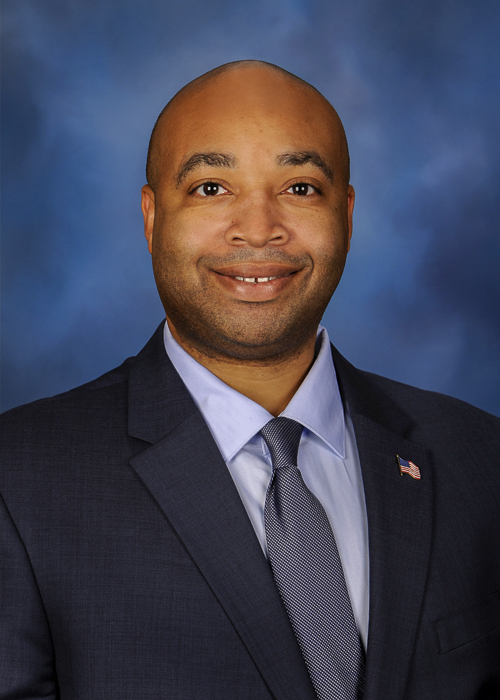
Rep. Justin Slaughter
Sponsored bills
Amends the Criminal Code of 2012. Extends from January 1, 2020 to January 1, 2025, the date of the inoperability of the eavesdropping exemption that provides with prior request to and written or verbal approval of the State's Attorney of the county in which the conversation is anticipated to occur, recording or listening with the aid of an eavesdropping device to a conversation in which a law enforcement officer, or any person acting at the direction of a law enforcement officer, is a party to the conversation and has consented to the conversation being intercepted or recorded in the course of an investigation of a qualified offense as defined in the exemption. Effective immediately. Senate Floor Amendment No. 2 Extends from January 1, 2020 to January 1, 2023, (in the introduced bill, January 1, 2025) the date of the inoperability of the eavesdropping exemption that provides with prior request to and written or verbal approval of the State's Attorney of the county in which the conversation is anticipated to occur, recording or listening with the aid of an eavesdropping device to a conversation in which a law enforcement officer, or any person acting at the direction of a law enforcement officer, is a party to the conversation and has consented to the conversation being intercepted or recorded in the course of an investigation of a qualified offense as defined in the exemption. House Floor Amendment No. 2 Adds reference to: 430 ILCS 65/4 from Ch. 38, par. 83-4 430 ILCS 65/8 from Ch. 38, par. 83-8 430 ILCS 66/50 430 ILCS 68/5-5 430 ILCS 68/5-25 520 ILCS 5/3.4b new 720 ILCS 5/24-2 Amends the Firearm Owners Identification Card Act. Provides that a person who is under 21 years of age may apply for a Firearm Owner's Identification Card without parental consent required if he or she is an active duty member of the United States Armed Forces. Amends the Firearm Concealed Carry Act. Provides that a concealed carry license shall be renewed for a period of 5 years from the date of expiration on the applicant's current license upon the applicant completing the necessary requirements under the Act. Amends the Firearm Dealer License Certification Act. Provides that "retail location" does not include the World Shooting and Recreational Complex. Provides that the provisions of the Act related to the certification of a license do not apply to transfers of firearms to a resident registered competitor or attendee or non-resident registered competitor or attendee by a licensed federal firearms dealer at a competitive shooting event held at the World Shooting and Recreational Complex that is sanctioned by a national governing body. Amends the Wildlife Code. Provides that a current or retired law enforcement officer authorized by law to possess a concealed firearm shall be exempt from the provisions of the Code prohibiting possession of those firearms. Amends the Criminal Code of 2012 to exempt current or retired law enforcement officers. Effective immediately.
Amends the Mental Health and Developmental Disabilities Administrative Act. Provides that a child shall continue to be eligible for an Individual Care Grant if the child is placed in the guardianship of the Department of Children and Family Services under the Juvenile Court Act of 1987 because the child requires care in a residential treatment facility and an application for the Family Support Program was pending with the Department Healthcare and Family Services or an active application was being reviewed by the Department when the guardianship order was entered. Provides that any minor who is placed in the guardianship of the Department of Children and Family Services under the Act while an application for the Family Support Program was pending with the Department of Healthcare and Family Services or an active application was being reviewed by the Department of Healthcare and Family Services shall continue to be considered eligible for services if all other eligibility criteria are met. Provides that the court shall conduct a hearing within 14 days upon notification to all parties that an application for the Family Support Program services has been approved and services are available. Makes other changes. Effective immediately. House Committee Amendment No. 1 Adds reference to: 705 ILCS 405/2-31 from Ch. 37, par. 802-31 705 ILCS 405/2-33 Replaces everything after the enacting clause. Reinserts the provisions of the engrossed bill. Further amends the Juvenile Court Act of 1987. Provides that wardship concerning neglected, abused, and dependent minors terminates at 21 years of age rather than 19 years of age. Provides that a provision providing the wardship of the minor and any custodianship or guardianship respecting the minor for whom a petition was filed automatically terminates when the minor attains the age of 19 years becomes inoperative on and after the effective date of the amendatory Act. Provides that notwithstanding any provision of law to the contrary, the changes made by the amendatory Act apply to all cases that are pending on or after the effective date of the amendatory Act. Provides that when terminating wardship, if the minor is over 18, or if wardship is terminated in conjunction with an order partially or completely emancipating the minor in accordance with the Emancipation of Minors Act, the court shall also consider the following factors, in addition to the health, safety, and best interest of the minor and the public: (1) the minor's wishes regarding case closure; (2) the manner in which the minor will maintain independence without services from the Department of Children and Family Services; (3) the minor's engagement in services including placement offered by the Department; (4) if the minor is not engaged the Department's efforts to engage the minor; (5) the nature of communication between the minor and the Department; (6) the minor's involvement in other State systems or services; (7) the minor's connections with family and other community support; and (8) any other factor the court deems relevant. Effective immediately.
Amends the Department of Commerce and Economic Opportunity Law of the Civil Administrative Code of Illinois. Provides that the Department of Commerce and Economic Opportunity shall create a Clean Water Workforce Pipeline Program to provide grants and other financial assistance to prepare and support individuals for careers in water infrastructure. Provides specified groups that may be provided with grants and other financial assistance on a competitive annual basis. Directs the Department to coordinate with the Environmental Protection Agency, Illinois Finance Authority, and other State agencies that provide financial support for water infrastructure projects. Provides that the Department may select a Program Administrator. Provides that recipients of grants or other financial assistance under the Program shall report annually to the Department. Amends the State Finance Act. Creates the Clean Water Workforce Development Fund. State Mandates Fiscal Note (Dept. of Commerce & Economic Opportunity) This bill does not create a State mandate. Fiscal Note (Dept. of Commerce & Economic Opportunity) HB 3349 requires DCEO to award grants designed to encourage and facilitate employment in water infrastructure careers. Competitive awards shall be made for various activities including: identification of individuals for job training in the water sector; counseling, preparation, skills training, and other support to increase a candidate's likelihood of success in a job training program and career; and several others. While HB 3349 requires DCEO to make the grants, the legislation does not specify a funding source for the program. Without a funding source, the legislation represents a potential unfunded mandate on the agency. Without additional information on available funding and the number of grants required to be awarded, the Department lacks the ability to determine program scope and ongoing implementation costs. As a result, we are unable to determine the fiscal impact of this legislation.
Amends the Personal Information Protection Act. Makes a technical change in a Section concerning the short title. House Committee Amendment No. 2 Deletes reference to: 815 ILCS 530/1 Adds reference to: New Act Replaces everything after the enacting clause. Creates the Data Transparency and Privacy Act. Finds that individuals have a right to privacy in information pertaining to the individual. Provides that an entity that collects through the Internet personal information about individual consumers must make disclosures to the individual regarding the collection of the information. Establishes that a consumer has a right to opt out of the sale of the consumer's information. Provides for enforcement by the Attorney General. Effective April 1, 2020. Fiscal Note, House Committee Amendment No. 2 (Office of the Attorney General) The proposed legislation, HB 3358 (H-AM 2) may require our Consumer Bureau to hire up to three additional privacy attorneys to undertake the additional privacy enforcement that may be required by the bill. Privacy enforcement is a specialized area for which attorneys must be knowledgeable in data security, which can get very technical and requires additional training and certifications, such as the Certified Information Privacy Professional designation issued by the International Association of Privacy Professionals. Because of the specialized nature of this work and the demand for attorneys with this expertise, we anticipate the salary of each attorney hired to perform the work required by this bill to be $86,500 each. Additional costs related to retirement contributions, social security , and group insurance would total $77,578 for each attorney. Because of the uncertainty in the additional level of work this bill may require of our Consumer Bureau, we estimate the costs to our office to range from $164,078, for one attorney, up to $494,234 for three attorneys. House Floor Amendment No. 3 Replaces everything after the enacting clause. Creates a Data Transparency and Privacy Act different than that contained in House Amendment No. 2. Finds that individuals have a right to privacy and a personal property interest in information pertaining to the individual. Provides that an entity that collects through the Internet personal information about individual consumers must make disclosures to the individual regarding the collection of the information. Exempts from the protections information collected while a natural person is acting in an employment context. Establishes that a consumer has a right to opt out of the sale of the consumer's information. Creates exemptions for certain retail transactions, credit arrangements, and government program utilization. Provides for enforcement by the Attorney General. Provides that there is no private right of action to enforce the Act. Effective April 1, 2020. State Mandates Fiscal Note, House Committee Amendment No. 2 (Dept. of Commerce & Economic Opportunity) This bill does not create a State mandate. Fiscal Note, House Floor Amendment No. 3 (Office of the Attorney General) The proposed legislation, HB 3358, as amended by House Amendment #3, may require our Consumer Bureau to hire up to three additional privacy attorneys to undertake the additional privacy enforcement that may be required by the bill. Privacy enforcement is a specialized area for which attorneys must be knowledgeable in data security, which can get very technical and requires additional training and certifications, such as the Certified Information Privacy Professional designation issued by the International Association of Privacy Professionals. Because of the specialized nature of this work and the demand for attorneys with this expertise, we anticipate the salary of each attorney hired to perform the work required by this bill to be $86,500 each. Additional costs related to retirement contributions, social security, and group insurance would total $77,578 for each attorney. Because of the uncertainty in the additional level of work this bill may require of our Consumer Bureau, we estimate the costs to our office to range from $164,078, for one attorney, up to $494,234 for three attorneys. Fiscal impact: Uncertain Judicial Note, House Floor Amendment No. 3 (Admin Office of the Illinois Courts) This bill would neither increase nor decrease the number of judges needed in the State of Illinois.
Appropriates $3,500,000 from the General Revenue Fund to the State Appellate Defender for a grant program to assist counties in providing public defenders to implement bail reform provisions of Public Act 100-1. Effective July 1, 2019.
Urges an investment of $1 billion by the State for affordable housing to be included in the next capital budget.
Appropriates $2 from the General Revenue Fund to the Department of Agriculture for its FY20 ordinary and contingent expenses. Effective July 1, 2019.
Directs the Department of Agriculture and the Department of Financial & Professional Regulation to conduct a disparity study on whether minority-owned businesses face any barriers that prevent the equitable participation in the business of cultivating, manufacturing, delivering, distributing, testing, transporting, and other avenues within the business of legalized cannabis in Illinois.
Directs the Department of Agriculture to conduct a disparity study on whether minority and women-owned businesses face any barriers that prevent the equitable participation in the business of cultivating, manufacturing, delivering, distributing, testing, transporting, and other avenues within the business of legalized cannabis in Illinois.