

Amends the Illinois Educational Labor Relations Act. Makes a technical change in a Section concerning the Illinois Educational Labor Relations Board. Senate Floor Amendment No. 1 Deletes reference to: 115 ILCS 5/5 Adds reference to: 105 ILCS 5/14-7.02c new Replaces everything after the enacting clause. Amends the Children with Disabilities Article of the School Code. Provides that the Illinois Purchased Care Review Board must accept amended student enrollment data from special education private therapeutic day schools that have specialized contractual agreements with a school district having a population exceeding 500,000 inhabitants in the 2016-2017 and 2017-2018 school years. Provides that the amended student enrollment data must be based on actual monthly enrollment days where a student placed by the school district was formally enrolled and began to receive services through the last date he or she was formally exited from the therapeutic day school. Provides that all enrolled days must be confined to the official beginning and end dates of the therapeutic day school's official calendar on file with the State Board of Education. Provides that a school district having a population of 500,000 or less inhabitants must be billed at the per diem rate approved by the Illinois Purchased Care Review Board based on days enrolled. House Committee Amendment No. 1 Deletes reference to: 105 ILCS 5/14-7.02c new Adds reference to: 105 ILCS 5/1-2 from Ch. 122, par. 1-2 Replaces everything after the enacting clause. Amends the School Code. Makes a technical change in a Section concerning the School Code's construction. Fiscal Note, House Floor Amendment No. 3 (IL State Board of Education) SB 458 (H-AM 3)includes new requirements for the State Board of Education (Board) and school districts that will have a fiscal impact. This fiscal impact estimate only addresses known or estimated costs for the Board and PreK-12 public school districts and not costs to other State agencies or other entities impacted by the amendments. The Board is tasked with providing staff support to 3 new advisory conm1ittees and one expanded advisory committee (KIDS Advisory Committee, Whole Child Task Force, and Inclusive History Commission; Professional Review Panel), adopting new learning standards (computer science and social science), overseeing the creation and/or expansion of programs (Freedom Schools), and will provide technical assistance to districts in implementing new mandates implemented, While existing staff will be able to take on some of the new work, new staff will likely be hired, The Board estimates that each additional staff member needed will cost $115,000 annually. To implement the requirements of these amendments, ISBE estimates needed an additional 3 staff for a total cost of $345,000. The legislation creates the Freedom Schools Grant Program which is subject to appropriation. ISBE estimates this program would cost $85,000 for every 120 students enrolled (this estimate is based on the EBF Cost factor of 1 teacher for every 120 students for Extended Day Supports). The legislation includes new requirements for school districts including expanded accelerated placement opportunities for students and new graduation and coursework requirements (computer literacy, computer science, foreign language and laboratory science). Additionally, once the Board completes adoption of new learning standards school districts will be required to implement these new standards. It is not known what these new requirements will cost school districts.
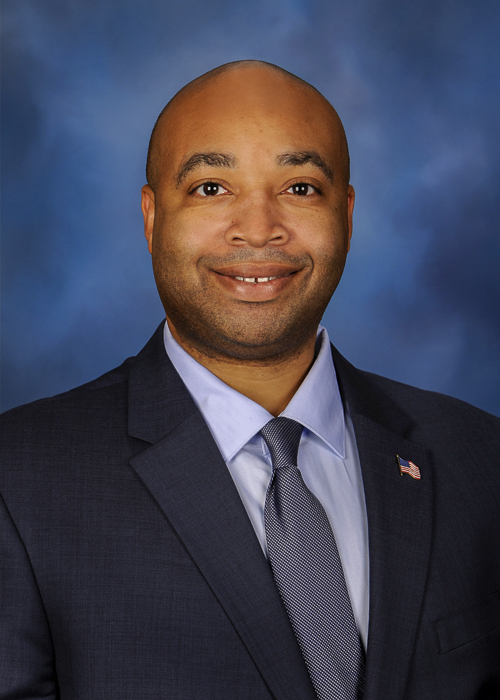
Rep. Justin Slaughter
Sponsored bills
Amends the School Code. With regard to the State Seal of Biliteracy program, provides that if the State Board of Education establishes criteria that includes the use of the Evidence-Based Reading and Writing section of the SAT college admissions test as an acceptable English language proficiency assessment to demonstrate English language proficiency, the minimum qualifying score for eligibility to receive the State Seal of Biliteracy must be 480. Effective immediately. House Floor Amendment No. 1 Replaces everything after the enacting clause. Reinserts the provisions of the introduced bill with the following change. Provides that the minimum qualifying score for eligibility to receive the State Seal of Biliteracy must be established by the State Board of Education by rule (rather than must be 480). Effective immediately. Senate Floor Amendment No. 3 Deletes reference to: 105 ILCS 5/2-3.159 Adds reference to: New Act 105 ILCS 5/2-3.64a-10 new 105 ILCS 5/27A-5 325 ILCS 20/11 from Ch. 23, par. 4161 105 ILCS 5/22-90 new 305 ILCS 5/5-39 new 105 ILCS 5/2-3.183 new 105 ILCS 5/27-22 from Ch. 122, par. 27-22 110 ILCS 205/9.40 new 105 ILCS 5/2-3.185 new 105 ILCS 5/10-17a from Ch. 122, par. 10-17a 105 ILCS 5/10-20.73 new 105 ILCS 5/10-20.74 new 105 ILCS 5/27-22 from Ch. 122, par. 27-22 105 ILCS 5/27-23.15 new 105 ILCS 5/14A-10 105 ILCS 5/14A-32 105 ILCS 5/22-45 30 ILCS 105/5.935 new 105 ILCS 5/2-3.186 new 105 ILCS 5/18-8.15 105 ILCS 5/21B-50 110 ILCS 947/50 110 ILCS 947/65.100 105 ILCS 5/2-3.25 from Ch. 122, par. 2-3.25 105 ILCS 5/2-3.187 new 105 ILCS 5/27-20.4 from Ch. 122, par. 27-20.4 20 ILCS 3975/4.5 105 ILCS 5/21B-70 Replaces everything after the enacting clause. Amends the School Code. Requires the State Board of Education to annually assess all public school students entering kindergarten. Creates the Whole Child Task Force to establish an equitable, inclusive, safe, and supportive environment in all schools for every student in this State. Amends the Early Intervention Services System Act. Makes changes concerning eligibility requirements for early intervention services. Creates the Data Governance and Organization to Support Equity and Racial Justice Act. Requires the Office of the Governor and the Department of Innovation and Technology to jointly establish an organization and governance that is responsible for certain data collection processes. Requires the State Board of Education and specified departments to submit a report detailing the statistical data on the racial and ethnic demographics of program participants for each major program administered by the State Board of Education or the respective department to the General Assembly. Amends the Medical Assistance Article of the Illinois Public Aid Code to make changes concerning the diagnostic code for behavioral health services for children ages 5 and under. Amends the School Code and the Board of Higher Education Act concerning high school coursework. Amends the School Code concerning computer science courses. Amends the Gifted and Talented Children Article of the School Code. Provides that a school district's accelerated placement policy shall allow for the automatic enrollment, in the following school term, of a high school student into the next most rigorous level of advanced coursework offered by the high school if the student meets or exceeds State standards in English language arts, mathematics, or science on a State assessment. Further amends the School Code. Requires the Illinois P-20 Council to make recommendations for short-term and long-term learning recovery actions for public school students in this State in the wake of the COVID-19 pandemic. Requires the State Board of Education to establish a Freedom School network. Subject to appropriation, requires the State Board of Education to establish and implement a grant program to provide grants to public schools, public community colleges, and not-for-profit, community-based organizations to facilitate improved educational outcomes for Black students in grades pre-kindergarten through 12. Makes changes concerning the evidence-based funding formula. Creates the Developmental Education Reform Act. Sets forth provisions concerning the placement of a student in introductory college-level English language or mathematics coursework. Amends the Educator Licensure Article of the School Code to make changes relating to the Alternative Educator Licensure Program for Teachers and the Illinois Teaching Excellence Program. Amends the Higher Education Student Assistance Act with respect to the Minority Teachers of Illinois scholarship program and the AIM HIGH Grant Pilot Program. Amends the School Code to make changes concerning the State Board of Education's social science learning standards, an Inclusive American History Commission, and the Black History unit of instruction. Requires the State Board of Education to issue a request to school districts to submit proposals to obtain funding to support professional development for educators and others working with young people in schools. Makes other changes. Effective immediately. Fiscal Note, Senate Floor Amendment No. 3 (IL State Board of Education) HB 2170 (S-AM 3) includes new requirements for the State Board of Education (Board) and school districts that will have a fiscal impact. This fiscal impact estimate only addresses known or estimated costs for the Board and PreK-12 public school districts and not costs to other State agencies or other entities impacted by the amendments. The Board is tasked with providing staff support to 3 new advisory committees and one expanded advisory committee (KIDS Advisory Committee, Whole Child Task Force, and Inclusive History Commission; Professional Review Panel), adopting new learning standards (computer science and social science), overseeing the creation and/or expansion of programs (Freedom Schools), and will provide technical assistance to districts in implementing new mandates implemented. While existing staff will be able to take on some of the new work, new staff will likely be hired. The Board estimates that each additional staff member needed will cost $115,000 annually. To implement the requirements of these amendments, ISBE estimates needed an additional 3 staff for a total cost of $345,000. The legislation creates the Freedom Schools Grant Program which is subject to appropriation. ISBE estimates this program would cost $85,000 for every 120 students enrolled (this estimate is based on the EBF Cost factor of 1 teacher for every 120 students for Extended Day Supports). The legislation includes new requirements for school districts including expanded accelerated placement opportunities for students and new graduation and coursework requirements (computer literacy, computer science, foreign language and laboratory science). Additionally, once the Board completes adoption of new learning standards school districts will be required to implement these new standards. It is not known what these new requirements will cost school districts.
Amends the Code of Criminal Procedure of 1963. Provides that a defendant charged with one or more misdemeanors and for whom a court has determined under the Code that a bona fide doubt of the defendant's fitness has been raised may be admitted into an unfit misdemeanant diversion program only upon the approval of the court. Provides that the court shall require an eligibility screening and an assessment of the defendant to determine whether the defendant may be able to receive mental health services under the Mental Health and Developmental Disabilities Code which shall reasonably assure her or his safety and that of the public and her or his continued participation in treatment. Provides that if, following this screening, the court determines that the defendant is appropriate for diversion, the criminal charges may be dismissed with or without prejudice. Provides that the misdemeanant diversion program may maintain or collaborate with mental health and substance use treatment providers necessary to provide a continuum of treatment options commensurate with the needs of the defendant and available resources. Makes other changes. Senate Floor Amendment No. 1 Provides that following the eligibility screening, if the State and the defendant agree to the diversion and the court determines that the defendant is appropriate for diversion, the criminal charges may be dismissed with or without prejudice. House Committee Amendment No. 1 Deletes reference to: 725 ILCS 5/Art. 104A heading new 725 ILCS 5/104A-1 new 725 ILCS 5/104A-2 new 725 ILCS 5/104A-3 new 725 ILCS 5/104A-4 new Adds reference to: 725 ILCS 5/100-1 from Ch. 38, par. 100-1 Replaces everything after the enacting clause. Amends the Code of Criminal Procedure of 1963. Makes a technical change in a Section concerning the short title.
Repeals the Statewide Organized Gang Database Act. Effective January 1, 2020. House Committee Amendment No. 1 Deletes reference to: 20 ILCS 2640/Act rep. Adds reference to: New Act 725 ILCS 5/115-10.5a new Replaces everything after the enacting clause. Creates the Law Enforcement Gang Database Information Act. Provides that each law enforcement agency that maintains a gang database or has access to a shared gang database shall have a policy regarding those databases. Provides that the policy shall include, but not be limited to: (1) that personnel authorized to access a gang database or shared gang database are limited to sworn law enforcement personnel, non-sworn law enforcement support personnel, criminal justice entities, or non-criminal justice technical or maintenance personnel, including information technology and information security staff and contract employees, who have been subject to character or security clearance and who have received approved training; (2) any records contained in a gang database, shared gang database, gang-related information in a law enforcement agency case report, gang-related information in a law enforcement agency dispatch note, or gang-related information in a law enforcement agency dispatch system record shall not be disclosed for the following purposes: employment, education, licensing, or housing, except that law enforcement and criminal justice entities may use information contained in a gang database or shared gang database for employment purposes, and records contained in a gang database or shared gang database may be disclosed to comply with federal law, for national security or homeland security purposes, for military screening purposes, or for other appropriate law enforcement purpose; (3) security procedures; and (4) the review and purge process from gang databases and shared gang databases. Defines terms. Amends the Code of Criminal Procedure of 1963. Provides that in all criminal cases, evidence which indicates the mere presence that the person was or is on a gang database or a shared gang database is not admissible. Effective immediately.
Amends the Illinois Enterprise Zone Act. Provides that a business that intends to establish a new utility-scale solar power facility may apply for a high impact business designation. Amends the Illinois Power Agency Act. Increases the long-term renewable procurement plan goals after the 2025 delivery year. Requires the long-term renewable procurement plan to include the procurement of new renewable energy credits. Provides that the Adjustable Block program shall be designed to be continuously open. Authorizes utilities to recover certain costs related to the Adjustable Block program. Excludes certain costs from a limitation on the costs of the Adjustable Block program. Makes other changes concerning the Adjustable Block program. Amends the Public Utilities Act. Requires the Illinois Commerce Commission to open a proceeding to update the interconnection standards and applicable utility tariffs. Requires the Commission to revise certain standards for interconnection based on specified criteria. Establishes an interconnection working group. Makes changes to provisions concerning net metering and the distributed generation rebate. Requires the Commission, in consultation with the Illinois Power Agency, to study and produce a report analyzing the potential for and barriers to the implementation of energy storage in Illinois. Requires the Agency to include a plan to procure energy from energy storage resources as part of its procurement plan for 2021. Extends a provision concerning a review, reconciliation, and true-up associated with renewable energy resources' collections and costs. Makes other changes. Amends the Illinois Administrative Procedure Act to authorize emergency rulemaking. Effective immediately.
Congratulates Larry R. Rogers Jr. on his installation as the 67th President of the Illinois Trial Lawyers Association.
Amends the Property Tax Code. Provides that, in counties with 3,000,000 or more inhabitants, taxpayers of income producing property shall submit income and expense data related to the property annually to the chief county assessment officer. Provides that, in counties with fewer than 3,000,000 inhabitants, the county board may provide by resolution that taxpayers of income producing property shall submit income and expense data annually to the chief county assessment officer. Provides that, when determining the value of property for assessment purposes, the assessor may consider all relevant information pertaining to the fair cash value of the property, including, but not limited to, income and expense data, sales data, property characteristics data, construction cost data, appraisals, and other valuation information. Effective immediately. Senate Committee Amendment No. 1 Replaces everything after the enacting clause. Reinserts the provisions of the introduced bill with the following changes: (1) provides that the term "income producing property" includes only non-owner-occupied real property; (2) defines "property"; (3) provides that failure to submit income and expense data shall result in a penalty of 0.5% (in the introduced bill, 2%) of the prior year's assessed value; (4) provides that the taxpayer shall not be required to pay more than $100,000 in penalties per property; (5) removes provisions from the introduced bill providing that, if the taxpayer fails to submit income and expense data, the taxpayer shall not be permitted to appeal the assessment of that income producing property for the applicable taxable year; and (6) provides that the chief county assessment officer is not prohibited from disclosing compiled and anonymized income and expense data. Effective immediately. Senate Floor Amendment No. 2 Deletes reference to: 35 ILCS 200/9-155 35 ILCS 200/9-160 Replaces everything after the enacting clause. Reinserts the provisions of Senate Amendment 1 with changes. Removes conforming changes concerning income and expense data, but retains the new Article concerning income-producing property. Provides that the term "income and expense data" include specific federal income tax returns (in Senate Amendment 1, federal income tax returns generally). Provides that "income-producing property" means property that is not exclusively owner-occupied (in Senate Amendment 1, non-owner-occupied). Removes a reference to gas stations. Defines "owner-occupied" and "taxpayer". Provides that the chief county assessment officer shall notify taxpayers of their obligation to submit income and expense data. Makes changes concerning the submission of federal tax forms. Provides that the penalty for failure to submit income and expense data shall be 0.05% (instead of 0.5%) of the prior year's market value. Adds provisions concerning administrative hearings. Makes other changes. Effective immediately.
Mourns the passing of Conrad Walter Worrill, Ph.D.
Amends the Criminal Code of 2012 concerning first degree murder. Provides that a person who kills an individual without lawful justification commits first degree murder if he or she acting alone, commits or attempts to commit a forcible felony other than second degree murder and, in the course of and in furtherance of the crime, he or she personally causes the death of an individual. Provides that a person who kills an individual without lawful justification commits first degree murder if he or she, when acting with one or more participants, commits or attempts to commit a forcible felony other than second degree murder, and in the course of and in furtherance of the offense, another participant in the offense causes the death of an individual, and he or she knew that the other participant would engage in conduct that would result in death or great bodily harm. Makes technical changes.
Amends the Unified Code of Corrections. Provides that in imposing a sentence for an offense that requires a mandatory minimum sentence of imprisonment or probation or conditional discharge of 2 years or more, the court may sentence the offender to probation or conditional discharge or other non-imprisonment sentence it deems appropriate instead of to a sentence of imprisonment or to a lesser sentence of imprisonment, probation, or conditional discharge than the minimum sentence of imprisonment, probation, or conditional discharge provided for the offense if the court finds that the defendant does not pose a risk to public safety and the interest of justice requires the non-imposition of the mandatory sentence of imprisonment or a lesser sentence of imprisonment, probation, or conditional discharge. Provides that the court must state on the record its reasons for not imposing the minimum sentence of imprisonment or a lesser sentence of imprisonment, probation, or conditional discharge. Provides that if the defendant has been charged with an offense involving the use, possession, or discharge of a firearm, the court may not deviate from a mandatory minimum sentence or probation or conditional discharge requirement, unless it is the recommendation of a presentence investigation and there is clear articulable evidence that the defendant is not a threat to the public safety. Provides that an offender convicted of a sex offense or an offense involving the infliction of great bodily harm may not be sentenced to a lesser term of imprisonment, probation, or conditional discharge. House Committee Amendment No. 2 Replaces everything after the enacting clause. Reinserts the provisions of the introduced bill with changes. Provides that in imposing a sentence for an offense that requires a mandatory minimum sentence of imprisonment or probation or conditional discharge of 2 years or more, the court may instead sentence the offender to a lesser term of imprisonment, probation, or conditional discharge it deems appropriate if the court finds that the defendant does not pose a risk to public safety and the interest of justice requires the non-imposition of the mandatory sentence of imprisonment or a lesser sentence of imprisonment, probation, or conditional discharge. Provides that an offender convicted of a sex offense, robbery offense, or a crime of violence as defined in the Crime Victims Compensation Act (rather than an offense involving the infliction of great bodily harm) may not be sentenced to a lesser term of imprisonment, probation, or conditional discharge under the provision. House Floor Amendment No. 4 Replaces everything after the enacting clause. Amends the Unified Code of Corrections. Provides that in imposing a sentence for an offense that requires a mandatory minimum sentence of imprisonment, the court may instead sentence the offender to probation, conditional discharge, or a lesser term of imprisonment it deems appropriate if: (1) the offense involves the use or possession of drugs, retail theft, or driving on a revoked license due to unpaid financial obligations; (2) the court finds that the defendant does not pose a risk to public safety; and (3) the interest of justice requires imposing probation, conditional discharge, or a lesser term of imprisonment. Provides that the court must state on the record its reasons for imposing probation, conditional discharge, or a lesser term of imprisonment.