

Amends the Juvenile Court Act of 1987. Deletes a provision that if, during the course of an electronically recorded custodial interrogation of a minor who, at the time of the commission of the offense was under the age of 18 years, the minor makes a statement that creates a reasonable suspicion to believe the minor has committed an act that if committed by an adult would be an offense other than an offense required to be recorded, the interrogators may, without the minor's consent, continue to record the interrogation as it relates to the other offense notwithstanding any provision of law to the contrary. Deletes a provision that any oral, written, or sign language statement of a minor made as a result of an interrogation under this provision shall be presumed to be inadmissible as evidence against the minor in any criminal proceeding or juvenile court proceeding, unless the recording is substantially accurate and not intentionally altered. Amends the Code of Criminal Procedure of 1963. Provides that an oral, written, or sign language statement of an accused made as a result of a custodial interrogation conducted at a police station or other place of detention shall be presumed to be inadmissible as evidence against the accused in any felony (rather than homicide) criminal proceeding unless: (1) an electronic recording is made of the custodial interrogation; and (2) the recording is substantially accurate and not intentionally altered. Makes other changes.
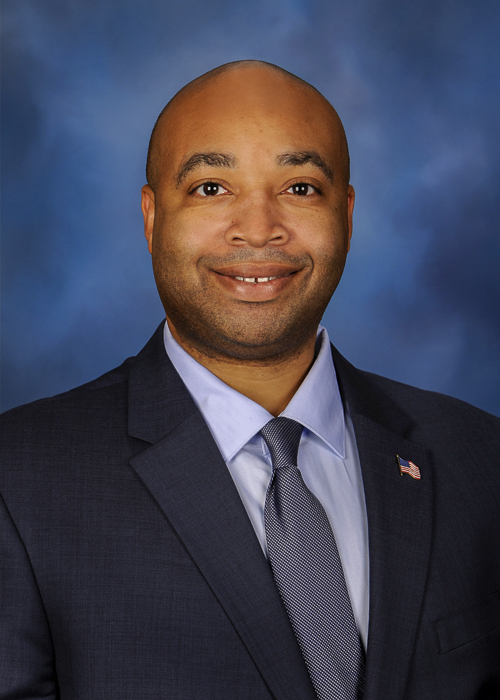
Rep. Justin Slaughter
Sponsored bills
Amends the Criminal Code of 2012. Eliminates the felony murder provisions from the first degree murder statute. Provides that a person commits second degree murder when he or she, acting alone or with one or more participants, commits or attempts to commit a forcible felony, other than first degree murder, and in the course of or in furtherance of the crime or flight from the crime, he or she or another participant causes the death of a person, other than one of the participants. Provides that it is an affirmative defense to the charge that the defendant: (1) was not the only participant in the underlying crime; (2) did not commit the homicidal act or in any way solicit, request, command, importune, cause, or aid in the commission of the crime; (3) was not armed with a deadly weapon; and (4) did not engage himself or herself in or intend to engage in and had no reasonable ground to believe that any other participant intended to engage in conduct likely to result in death or serious bodily injury. Amends the Code of Civil Procedure. Provides for relief from judgment for defendants convicted of first degree murder committed before the effective date of the amendatory Act. Provides that nothing in these provisions prevents a movant from applying for any other relief.
Amends the Criminal Code of 2012. Deletes a provision that a peace officer, or any other person acting under the color of law, shall not discharge kinetic impact projectiles or other non-lethal or less-lethal projectiles in a manner that targets the back.
Amends the Mental Health and Developmental Disabilities Code. Provides that the circuit court has jurisdiction over persons who are: (1) subject to involuntary admission on an inpatient basis; (2) subject to involuntary admission on an outpatient basis; or (3) in need of treatment by psychotropic medication and electroconvulsive therapy. Provides that no respondent who has pending felony charges may be ordered to undergo a program of hospitalization in a mental health facility operated by the Department of Human Services unless the Department agrees to the program of hospitalization.
Amends the State Commemorative Dates Act. Designates the month of August of each year as Moorish American Awareness Month to be observed throughout the State as a month to recognize the valuable contributions of Moorish Americans to this State and to the various aspects of American society. Effective immediately.
Amends the Code of Criminal Procedure of 1963. Provides that evidence of a defendant's creative or artistic expression, whether original or derivative, may not be received into evidence against that defendant in a criminal proceeding unless the evidence is determined by the court to be relevant and admissible, after an offer of proof by the proponent of the evidence outside the hearing of the jury, or the hearing as the court may require, and an on-the-record statement by the court of the findings of fact essential to its determination. Provides that in order to overcome the presumption of inadmissibility of evidence of defendant's creative or artistic expression, the proffering party must affirmatively prove by clear and convincing evidence: (1) literal, rather than figurative or fictional, meaning and, where the work is derivative, that the defendant intended to adopt the literal meaning of the work as the defendant's own thought or statement; (2) a strong factual nexus indicating that the creative or artistic expression refers to the specific facts of the crime alleged; (3) relevance to an issue of fact that is disputed; and (4) distinct probative value not provided by other admissible evidence. Provides that if the court admits creative or artistic expression as criminal evidence, the court has a duty to apply careful redactions, provide limiting instructions, and consider the least prejudicial means of presenting the creative or artistic expression to the fact finder.
Creates the Illinois Moorish-American Family Commission Act. Creates the Illinois Moorish-American Family Commission to advise the Governor and General Assembly, as well as work directly with State agencies, to improve and expand existing policies, services, programs, and opportunities for Moorish-American families, children, and adults and guide the efforts of and collaborate with State agencies, including, but not limited to, the Department on Aging, the Department of Children and Family Services, the Department of Commerce and Economic Opportunity, the Department of Corrections, the Department of Human Services, the Department of Healthcare and Family Services, the Department of Public Health, the Department of Transportation, the Department of Employment Security, and others. Sets forth provisions concerning the members of the Commission, funding, addresses and reports, and oversight. Provides that administrative, technical, and staffing support for the Commission shall be provided by the Commission on Equity and Inclusion. Effective immediately.
Amends the Code of Criminal Procedure of 1963. In a provision concerning commitment for treatment, provides that the court shall order that the placement be on an outpatient basis unless the court determines: (1) that outpatient treatment will not provide reasonable assurances for the safety of the defendant and others or provide reasonable assurances that the defendant can be restored to fitness on an outpatient basis, or (2) that clinically appropriate outpatient treatment is not accessible, or optimal, due to cost, waiting lists, treatment limits, or other barriers. Provides that the defendant shall be placed in a State operated facility under certain circumstances unless there are no beds available. Provides that if the Department of Human Services determines that a defendant, who has been placed in the Department's custody for treatment on an inpatient basis, can be treated on an outpatient basis, the Department shall provide written notification to the court, the State's Attorney, and counsel for the defendant of that determination, which notification shall set forth in detail the basis for the Department's determination. Provides that if the court determines: (1) that outpatient treatment will provide reasonable assurances for the safety of the defendant and others and provides reasonable assurances that the defendant can be restored to fitness on an outpatient basis or (2) that clinically appropriate outpatient treatment is not accessible, or optimal, due to cost, waiting lists, treatment limits or other barriers, the court shall order the defendant to undergo treatment on an outpatient basis. Provides that if the defendant has been placed in an outpatient treatment program, that program shall promptly notify the court, the Department, the State's Attorney and counsel for the defendant should the defendant fail to comply with the provisions of the court order for treatment or should the defendant no longer be appropriate for outpatient fitness restoration. Provides that if the court determines that outpatient treatment is no longer appropriate, the court shall order the defendant to receive treatment on an inpatient basis.
Amends the Illinois Procurement Code. Provides that for the purchase of any goods where a value-added reseller is used, the manufacturer of the goods must attest that every value-added reseller has the same discount or price from the manufacturer in order for the bid to be compliant. Effective immediately.
Amends the Guardianship and Advocacy Act. Provides that the guardianship training program shall include content regarding Alzheimer's disease and dementia. Amends the Probate Act of 1975. Requires a public guardian to complete a one-hour course on Alzheimer's disease and dementia within 6 months of appointment and annually thereafter.