Urges the General Assembly to address gun violence in Illinois through comprehensive policy change and support proper appropriations for victim services.
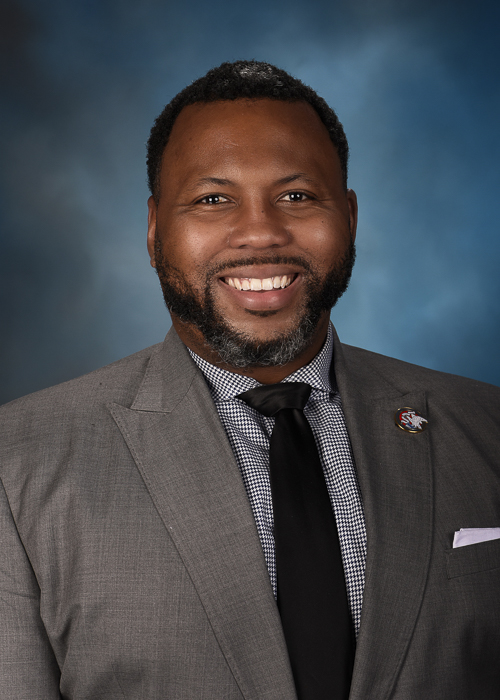
Rep. Kam Buckner
Sponsored bills
Creates the Faith Behind Bars Act. Provides that a person committed to a correctional institution or facility has a constitutional right to practice his or her faith in the correctional institution or facility absent harm and without undue burden to the State's correctional system. Provides that a committed person belonging to a faith group in a correctional institution or facility shall have access to pastoral and spiritual care absent harm and without undue burden to the State's correctional system. Provides that a correctional institution or facility shall provide reading materials for diverse faith groups, including, but not limited to, spiritual, religious texts, prayer manuals, prayer mats, and other requested material from committed persons. Provides that all correctional institutions and facilities in the State shall provide committed persons the ability to pray by facilitating time and clean location, fast by allowing a committed person to abstain from food when appropriate, and respect for dietary restrictions absent harm and without undue burden to the State's correctional system. Amends the Unified Code of Corrections by making a conforming change.
Creates the Illinois Strategic Action Plan for Aging Equity Act. Provides that the purpose of the Act is to appoint a planning commission to research and develop a comprehensive, cross-sector, long-term strategic action plan for aging equity that will lead to actionable goals and measurable outcomes for the years 2023 through 2035. Establishes the Strategic Action Planning Commission for Aging Equity. Provides that the planning commission shall be made up of State agency directors and appointed elected officials or their designees as ex officio members, and a group of voting individuals from the general public. Provides that the planning commission shall examine the effects, challenges, opportunities, and needs for planning related to the shifting age demographics toward an increasing portion of the State's and localities' populations being made up of older adults. Requires the planning commission to adopt guiding principles that include, but are not limited to: (i) advancing aging equity across the life course; (ii) developing cultural humility and being culturally responsive with inclusive policies, programs, and services; and (iii) harnessing the power of experience and knowledge of older persons in communities. Requires the Governor to appoint members to the planning commission within 3 months after the effective date of the amendatory Act; and to consult with the President and Minority Leader of the Senate, the Speaker and Minority Leader of the House of Representatives, and the Director of Aging about member appointments to ensure that (1) the planning commission reflects the geographic diversity of the State; (2) the planning commission is inclusive and consists of members who reflect a diversity of age, gender, ability, race, cultural, socioeconomic, and national background; (3) the planning commission includes Illinois residents age 60 or older; and other matters. Contains provisions on the composition of the planning commission; commission meetings; the commission's authority to establish a subcommittee; the establishment of an advisory committee; duties of the planning commission; data analysis; planning commission recommendations and reporting requirements; and other matters. Effective immediately.

Amends the Public Utilities Act. Provides that the energy transition assistance charge shall not exceed 1.3% of the amount paid per kilowatthour by eligible retail customers during the year ending May 31, 2009.
Amends the Cannabis Regulation and Tax Act. Provides that an Illinois resident 21 years of age or older (rather than a person who is a registered qualifying patient under the Compassionate Use of Medical Cannabis Program Act) may cultivate cannabis plants, with a limit of 5 plants that are more than 5 inches tall, per household without a cultivation center or craft grower license. Provides that an Illinois resident 21 years of age or older (rather than adult registered qualifying patients) may purchase cannabis seeds from a dispensary for the purpose of home cultivation. Provides that an Illinois resident 21 years of age or older (rather than a registered qualifying patient) who cultivates more than the allowable number of cannabis plants, or who sells or gives away cannabis plants, cannabis, or cannabis-infused products produced under this provision, is liable for penalties as provided by law, including the Cannabis Control Act (deletes in addition to loss of home cultivation privileges as established by rule). Deletes provision that cannabis plants may only be tended by registered qualifying patients who reside at the residence, or their authorized agent attending to the residence for brief periods, such as when the qualifying patient is temporarily away from the residence.
Amends the Election Code. Provides that the requirements to change a candidate's name do not apply to name changes resulting from a civil union to assume a spouse's surname or dissolution of a civil union or declaration of invalidity of a civil union to assume a former surname or a name change that conforms the candidate's name to his or her gender identity. Makes conforming changes throughout the Code. Effective immediately.
Amends the State Finance Act. Modifies the allocation of moneys from the Cannabis Regulation Fund. Provides that 4% (currently 8%) of specified moneys shall be transferred to the Local Government Distributive Fund to be used for law enforcement training programs (currently, crime prevention programs, training, and interdiction efforts). Provides that 24% (currently, 20%) of specified moneys shall be transferred to the Department of Human Services Community Services Fund to be used for specified purposes. Makes conforming changes. House Floor Amendment No. 1 Replaces everything after the enacting clause. Reinserts the provisions of the introduced bill with changes. Further modifies the allocation of moneys from the Cannabis Regulation Fund. Restores provision specifying that 8% (rather than 4%) of specified moneys shall be transferred to the Local Government Distributive Fund to be used for specified purposes. Reallocates the use of the 8% of moneys for specified purposes. Restores provision specifying that 20% (rather than 24%) of specified moneys shall be transferred to the Department of Human Services Community Services Fund to be used for specified purposes. Makes conforming changes.
Amends the Mental Health Early Action on Campus Act. Provides that the General Assembly shall appropriate $19,000,000 in Fiscal Year 2023 for the purposes of this Act. Provides that the funds shall be distributed to the public colleges and universities according to the recommendations of a specified report of the Commission on Government Forecasting and Accountability. Provides that the Commission on Government Forecasting and Accountability, in conjunction with the Illinois Community College Board and the Board of Higher Education, must make recommendations to the General Assembly on the amounts necessary to implement this Act for Fiscal Years 2024 through 2027, and may make such recommendations for Fiscal Years thereafter. Deletes provisions making the Act subject to appropriation. Effective July 1, 2022.
Creates the Bad Apples in Law Enforcement Accountability Act of 2021. Provides that a peace officer subjecting another person to the deprivation of individual rights is liable to the person for appropriate relief. Excludes sovereign immunity, statutory immunity, and statutory damages for claims brought under this provision. Provides that qualified immunity is not a defense to liability under this provision. Allows attorney's fees and costs to be awarded to the plaintiff. Provides that civil actions brought under this provision must be commenced within 5 years after the cause of action accrues. Requires units of local government to make public disclosures regarding judgments or settlements awarded under this provision. Determines what information is not required to be disclosed by the unit of local government. Fiscal Note (Illinois Court of Claims) The Illinois Court of Claims cannot provide an estimated cost to the State of Illinois if House Bill 1727 is passed. The Court has jurisdiction over State agencies, not individual State employees. It is not possible to forecast what future lawsuits may be filed, nor the facts surrounding the alleged events and/or potential awards by the Court.
Amends the Code of Criminal Procedure of 1963. Provides that in a prosecution of a case involving the injury, health, or safety of a cat or dog, the court may, on its own motion or motion of any party, appoint a licensed attorney-at-law of the State or a law student as a special advocate to assist the court, as deemed appropriate by the court, and represent the interests of justice regarding the health or safety of the cat or dog. Provides that the advocate may: (1) monitor the case; (2) consult any person with information that could aid the court and review records relating to the condition of the cat or dog and the defendant's actions, including, but not limited to, records from animal control officers, veterinarians, and police officers; (3) attend hearings; and (4) present information or recommendations to the court pertinent to determinations that relate to the interests of justice, provided that information shall be based solely on the duties undertaken under this provision. Defines "law student". Senate Floor Amendment No. 1 Provides that a law student appointed as a special advocate shall be authorized to provide services under Supreme Court Rule 711. Deletes language relating to the definition of "law student".