

Amends the School Code and the Illinois School Student Records Act. In provisions concerning the suspension or expulsion of a pupil, adds references to guardians (rather than just parents). Provides that a student may disclose mitigating factors, such as the student's status as a parent, expectant parent, or victim of domestic or sexual violence, in suspension or expulsion hearings. Provides that home instruction or correspondence courses must be made available to students who are unable to attend school because of pregnancy-related conditions, parenting obligations related to the health of a child, or health and safety concerns arising from domestic or sexual violence. Includes attendance at a medical or therapeutic appointment and appointments with a victim services provider as a valid cause for absence from school. Adds provisions to the Code concerning children and students who are parents, expectant parents, or victims of domestic or sexual violence, the purpose of which is to ensure that Illinois schools have policies, procedures, and protocols in place that ensure children and students who are parents, expectant parents, or victims of domestic or sexual violence are identified by schools in a manner respectful of their privacy and safety, treated with dignity and regard, and provided the protection, instruction, and related accommodations and services necessary to enable them to meet State educational standards and successfully attain a school diploma. Makes changes to the Chicago School District Article of the School Code concerning the transfer of students. Amends the State Mandates Act to require implementation without reimbursement. Makes other changes. Effective July 1, 2022. House Floor Amendment No. 1 Deletes reference to: 105 ILCS 5/26A-55 new Replaces everything after the enacting clause. Reinserts the contents of the bill with the following changes. Provides that the complainant and respondent and any named perpetrator directly impacted by the results of the complaint resolution procedure are entitled to simultaneous written notification of the results of the complaint resolution procedure within 10 business days (instead of 7 calendar days) after a decision or sooner if required by State or federal law or district policy. Provides that the complainant and respondent and any perpetrators directly impacted by the results of the complaint resolution procedure must receive the appeal decision, in writing, within 10 business days but in no case more than 15 business days (rather than within 7 calendar days but in no case more than 14 calendar days) after the conclusion of the review of findings or remedies or sooner if required by State or federal law. Removes a provision concerning enforcement; makes corresponding changes. Corrects typographical errors. Effective July 1, 2022. House Floor Amendment No. 2 Replaces everything after the enacting clause. Reinserts the contents of the bill as amended by House Amendment 1 with the following change. Adds one member who represents an association representing rural school superintendents to the Ensuring Success in School Task Force. Effective July 1, 2022. Fiscal Note, House Floor Amendment No. 1 (IL State Board of Education) As amended by HA 1, HB 3223 will have a fiscal impact of$139,652.04 annually to the State Board of Education. The amendment will have an unknown fiscal impact on school districts_ State Mandates Fiscal Note, House Floor Amendment No. 1 (Dept. of Commerce & Economic Opportunity) This bill does not create a State Mandate. Senate Committee Amendment No. 1 Replaces everything after the enacting clause. Amends the School Code and the Illinois School Student Records Act. In provisions concerning the suspension or expulsion of a pupil, adds references to guardians (rather than just parents). Provides that a student may disclose mitigating factors, such as the student's status as a parent, expectant parent, or victim of domestic or sexual violence, in suspension or expulsion hearings. Sets forth provisions concerning suspension and expulsion hearings. Provides that home instruction or correspondence courses must be made available to students who are unable to attend school because of pregnancy-related conditions, parenting obligations related to the health of a child, or health and safety concerns arising from domestic or sexual violence. Includes attendance at a medical or therapeutic appointment and appointments with a victim services provider as a valid cause for absence from school. Adds provisions to the Code concerning children and students who are parents, expectant parents, or victims of domestic or sexual violence, the purpose of which is to ensure that Illinois schools have policies, procedures, and protocols in place that ensure children and students who are parents, expectant parents, or victims of domestic or sexual violence are identified by schools in a manner respectful of their privacy and safety, treated with dignity and regard, and provided the protection, instruction, and related accommodations and services necessary to enable them to meet State educational standards and successfully attain a school diploma. Creates the Ensuring Success in School Task Force. Sets forth provisions concerning complaint resolution procedures and confidentiality. Makes changes to the Chicago School District Article of the School Code concerning the transfer of students. Amends the State Mandates Act to require implementation without reimbursement. Makes a conforming change to the Charter Schools Law. Makes other changes. Effective July 1, 2023. Senate Committee Amendment No. 2 Replaces everything after the enacting clause. Reinserts the contents of the engrossed bill as amended by Senate Amendment No. 1 with the following changes. Repeals the Section concerning the Ensuring Success in School Task Force on December 1, 2025 (instead of December 1, 2023). Amends the provisions concerning confidentiality. Requires each school district to adopt and ensure that the school has and implements a confidentiality policy regarding students. Provides that information about a student concerning whether the student has obtained assistance, support, or services (rather than only assistance or services) must be kept in strictest of confidence, except if the disclosure is permitted under (rather than in conflict with) certain State or federal laws or consented to in writing by the student or the student's parent or guardian. Provides that information about students may not be disclosed to any other individual outside of the district (rather than may not be disclosed to any other individual). With regard to domestic or sexual violence, provides that except as permitted (rather than except as required) under State or federal law, a school official may contact (instead of must not contact) the person named to be the perpetrator if the school official determines that the school official has an obligation to do so based on safety concerns or threats to the community, including the victim. Provides that a school district must not contact a person named by a student or the student's parent or guardian without providing prior written notice to the student or the student's parent or guardian (rather than without obtaining written permission from the student or the student's parent or guardian). Removes provisions requiring a school district to comply with the confidentiality provisions no later than July 1, 2024. Effective July 1, 2025.
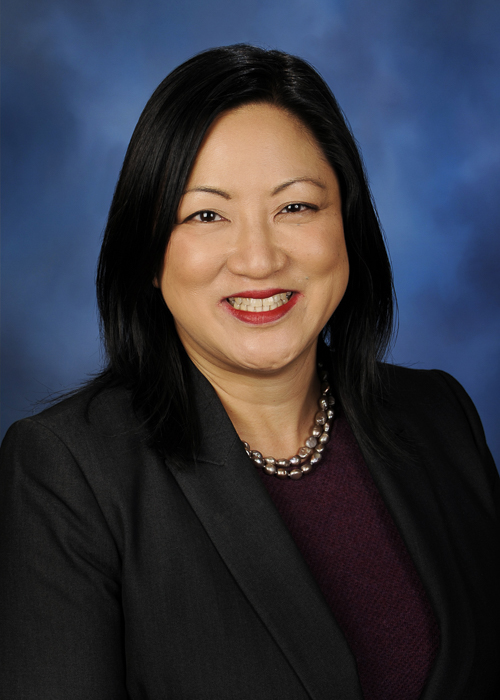
Rep. Theresa Mah
Sponsored bills
Amends the Evidence Article of the Code of Civil Procedure. Provides that "rape crisis organization" includes, but is not limited to, rape crisis centers certified by a statewide sexual assault coalition. House Committee Amendment No. 1 Changes the definition of "rape crisis organization" to mean any organization or association a major purpose of which (instead of "the major purpose of which") is providing information, counseling, and psychological support to victims of any or all of the crimes of aggravated criminal sexual assault, predatory criminal sexual assault of a child, criminal sexual assault, sexual relations between siblings, criminal sexual abuse, and aggravated criminal sexual abuse.
Amends the School Code to require a high school to include in its curriculum a unit of instruction about the process of naturalization by which a foreign citizen or foreign national becomes a U.S. citizen. Provides that the course of instruction shall include content from the components of the naturalization test administered by the U.S. Citizenship and Immigration Services. Provides that each school board shall determine the minimum amount of instructional time required. Effective immediately. House Floor Amendment No. 1 Provides that every public high school may include (rather than shall include) in its curriculum a unit of instruction on the process of naturalization.
Amends various Acts relating to the governance of public universities and community colleges in Illinois. Beginning with the 2022-2023 academic year, requires the governing board of each public university and community college district to designate an employee as a Dream Resource Liaison to be available on campus to provide assistance to students who lack proper authorization to be in the United States in streamlining access to all available financial aid and academic opportunities. Sets forth other provisions concerning the liaison. Encourages each governing board to establish a Dream Resource Center on each of its campuses to offer support services, including, but not limited to, State, federal, and other financial aid assistance, academic counseling, peer support services, psychological counseling, referral services, and legal services. Sets forth other provisions concerning the center. Effective July 1, 2021. House Floor Amendment No. 2 Replaces everything after the enacting clause. Amends various Acts relating to the governance of public universities and community colleges in Illinois. Beginning with the 2022-2023 academic year, requires the governing board of each public university and community college district to designate an employee as an Undocumented Student Resource Liaison to be available on campus to provide assistance to undocumented students and mixed status students within the United States in streamlining access to financial aid and academic support to successfully matriculate to degree completion. Sets forth other provisions concerning the liaison. Encourages each governing board to establish an Undocumented Student Resource Center on each of its campuses to offer support services, as well as mental health counseling options. Sets forth other provisions concerning the center. Effective July 1, 2021.
Amends the Fair Patient Billing Act. Requires a hospital to proactively offer information on charity care options available to patients, regardless of their immigration status, health insurance, or residency, and to obtain the signature of a patient declining charity care if the patient does not intend to access financial assistance. Effective July 1, 2021. House Floor Amendment No. 1 Replaces everything after the enacting clause. Amends the Fair Patient Billing Act. Provides that a hospital shall proactively offer information on charity care options available to uninsured patients, regardless of their immigration status or residency. Effective on the first day of the first month immediately following 90 days after becoming law.
Amends the School Code. In the provisions relating to holidays, adds January 17 (the birthday of Muhammad Ali) to the list of commemorative holidays. In the provisions relating to courses of study, provides that the teaching of history of the United States shall include the study of the contributions made by Muslims and Muslim Americans to society. House Committee Amendment No. 1 In the provisions relating to courses of study, provides that the teaching of history of the United States shall include the contributions made to society by Americans of different faith practices, including, but not limited to, Muslim Americans, Jewish Americans, Christian Americans, Hindu Americans, Sikh Americans, Buddhist Americans, and any other collective community of faith that has shaped America (rather than the study of the contributions made by Muslims and Muslim Americans to society).
Amends the Counties Code. Provides that, in counties with a population over 3,000,000, the Public Defender, without fee or appointment and with the approval of the county board, may act as attorney to noncitizens in immigration cases related to or resulting from an underlying court matter in which the Public Defender served as attorney before he or she became the Public Defender. Provides that representation by the Public Defender in immigration cases is limited to those arising in immigration courts located within the geographical boundaries of the county where the Public Defender has been appointed to office unless the board authorizes the Public Defender to provide representation outside the county. House Committee Amendment No. 1 Deletes reference to: 55 ILCS 5/3-4004.2 55 ILCS 5/3-4004.5 new Adds reference to: 55 ILCS 5/3-4006 from Ch. 34, par. 3-4006 Replaces everything after the enacting clause. Amends the Counties Code. Provides that, in counties with a population over 3,000,000, the public defender, without fee or appointment and with the concurrence of the county board, may act as attorney to noncitizens in immigration cases. Provides that representation by the public defender in immigration cases shall be limited to those arising in immigration courts located within the geographical boundaries of the county where the public defender has been appointed to office unless the board authorizes the public defender to provide representation outside the county.
Amends the Nursing Home Care Act and the Hospital Licensing Act. Upon request, requires long-term care facilities and hospitals to facilitate at least one phone call or video call between a resident or patient and a family member of the resident or patient each day during a pandemic or other public health emergency. Effective immediately. House Floor Amendment No. 1 Replaces everything after the enacting clause. Amends the Nursing Home Care Act. Provides that, upon request, a facility shall make every reasonable effort to facilitate at least one phone call or video call between a resident and a single family member of the resident each day during a disaster declared by the Governor under the Illinois Emergency Management Agency Act, unless doing so could pose a danger to residents or staff or redirect resources away from direct resident care and protection. Amends the Hospital Licensing Act. Provides that during a pandemic or other public health emergency, a hospital licensed under the Act shall develop and implement a contact policy to encourage patients' ability to engage with family members throughout the duration of the pandemic or other public health emergency, including through the use of phone calls, videos calls, or other electronic mechanism. Effective immediately.
Amends the Managed Care Reform and Patient Rights Act. Requires health insurance carriers that provide coverage for prescription drugs to ensure that, within service areas and levels of coverage specified by federal law, at least half of individual and group plans meet one or more of the following criteria: apply a pre-deductible and flat-dollar copayment structure to the entire drug benefit, limit a beneficiary's monthly out-of-pocket financial responsibility for prescription drugs to a specified amount, or limit a beneficiary's annual out-of-pocket financial responsibility for prescription drugs to a specified amount. Provides that all plans for prescription drugs offered under the amendatory Act must be clearly and appropriately named, marketed in the same manner as other plans offered by the health insurance carrier, and offered for purchase to any individual and group plan sponsor. Effective January 1, 2022. House Committee Amendment No. 1 Replaces everything after the enacting clause. Amends the Managed Care Reform and Patient Rights Act. In provisions concerning individual health plans that provide coverage for prescription drugs, provides that beginning January 1, 2023, health insurance carriers shall ensure that at least 10% of individual health care plans offered in each applicable service area apply a flat-dollar copayment structure to the entire drug benefit; and beginning January 1, 2024, health insurance carriers shall ensure that at least 25% of individual health care plans offered in each applicable service area apply a flat-dollar copayment structure to the entire drug benefit. In provisions concerning group health plans that provide coverage for prescription drugs, provides that beginning January 1, 2023, health insurance carriers shall offer at least one group health plan in each applicable service area that applies a flat-dollar copayment structure to the entire drug benefit; and beginning January 1, 2024, health insurance carriers shall offer at least 2 group health plans in each applicable service area that apply a flat-dollar copayment structure to the entire drug benefit. Provides that the flat-dollar copayment structure for prescription drugs must be applied pre-deductible and be reasonably graduated and proportionately related in all tier levels such that the copayment structure as a whole does not discriminate against or discourage the enrollment of individuals with significant health care needs. Requires the health insurance carriers to clearly and appropriately name the plans to aid in individual or group plan selection. Requires the health insurance carriers to market the plans in the same manner as their other plans. Requires the Department of Insurance to adopt rules necessary to implement and enforce the provisions. Effective January 1, 2023.
Creates the Prescription Drug Repository Program Act. Requires the Department of Public Health to, by rule, establish a prescription drug repository program, under which any person may donate a prescription drug or supplies needed to administer a prescription drug for use by an individual who meets eligibility criteria specified by the Department. Sets forth requirements that prescription drugs or supplies must meet in order to be accepted and dispensed under the program. Provides that no drugs or supplies donated under the prescription drug repository program may be resold. Provides that nothing in the Act requires that a pharmacy or pharmacist participate in the prescription drug repository program. Provides for civil and criminal immunity for drug and supply manufacturers and individuals in relation to the donation, acceptance, or dispensing of prescription drugs or supplies under the prescription drug repository program. Imposes conditions on any rulemaking authority. Amends the Pharmacy Practice Act, the Wholesale Drug Distribution Licensing Act, the Senior Pharmaceutical Assistance Act, the Illinois Food, Drug and Cosmetic Act, the Illinois Controlled Substances Act, and the Cannabis and Controlled Substances Tort Claims Act to provide that persons engaged in donating or accepting, or packaging, repackaging, or labeling, prescription drugs to the extent permitted or required under the Prescription Drug Repository Program Act are exempt from provisions of those other Acts that might prohibit or otherwise regulate such activity. House Committee Amendment No. 1 Replaces everything after the enacting clause. Creates the Illinois Drug Reuse Opportunity Program Act. Provides that, notwithstanding any other law or rule, donors may donate drugs to recipients and recipients may receive donated drugs from donors. Provides that recipients shall only dispense or administer drugs to eligible patients, further donate drugs to another recipient, or dispose of drugs in accordance with specified provisions. Provides that drugs donated for use under the Act are considered nonsaleable. Provides that, when dispensing a drug to an eligible patient, the recipient must do so at no cost to the eligible patient, except that a reasonable handling fee may be charged. Provides that recipients may only dispense or administer a prescription drug or provide an over-the-counter drug if specified requirements are met. Provides that recipients shall, to the greatest extent practicable, dispense drugs received under the Act to priority patients. Provides that drugs may be accepted under the Act only if specified requirements are met. Contains requirements for the further donation of drugs by a recipient. Contains provisions regarding the disposition of specified drugs. Provides that nothing in the Act requires that a pharmacy or pharmacist be a recipient of drugs under the Act. Provides that the Act shall supersede any inconsistent law or rule for activities conducted under the Act. Contains other provisions. Amends the Pharmacy Practice Act, the Wholesale Drug Distribution Licensing Act, the Senior Pharmaceutical Assistance Act, the Illinois Food, Drug and Cosmetic Act, the Illinois Controlled Substances Act, and the Cannabis and Controlled Substances Tort Claims Act to provide that persons engaged in donating or accepting, or packaging, repackaging, or labeling, prescription drugs to the extent permitted or required under the Illinois Drug Reuse Opportunity Program Act are exempt from provisions of those other Senate Committee Amendment No. 1 Replaces everything after the enacting clause. Reinserts the provisions of the engrossed bill with the following changes. Provides that "prescription drug" does not include a drug for the treatment of cancer that can only be dispensed to a patient registered with the drug manufacturer in accordance with the federal Food and Drug Administration's requirements. Provides that when dispensing a drug to an eligible patient, the recipient must do so at no cost to the eligible patient, except that a uniform reasonable handling fee (rather than a reasonable handling fee) may be charged.