

Appropriates the amount of $709,500 from the General Revenue Fund to the Department of Commerce and Economic Opportunity for a grant to the Forest Preserve District of Cook County for the administration and operation of Greencorps Chicago and Forest Preserve Experience programs within the Conservation Corps program. Effective July 1, 2024.
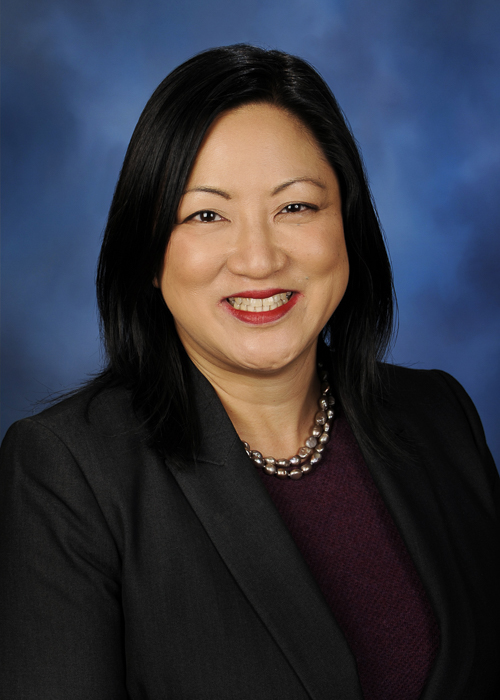
Rep. Theresa Mah
Sponsored bills
Amends the Children and Family Services Act. Creates the Due Process for Youth Oversight Commission (Commission) to oversee the creation and implementation of a youth's statutory right to counsel in abuse and neglect proceedings conducted in accordance with the Juvenile Court Act of 1987. Requires the Commission to provide direction and operational phases for implementation statewide, provide status reports and recommendations to the General Assembly regarding implementation, and provide ongoing implementation and program oversight for 5 years after statewide transition is completed. Contains provisions concerning the Commission's membership; term limits; scheduled meetings; data support provided by the Department of Children and Family Services; Commission duties; and the date of the Commission's dissolution. Amends the Foster Children's Bill of Rights Act. Expands the rights afforded to every child placed in foster care to include the right to have a court appoint an attorney to represent the youth in any abuse or neglect case who will advocate for the youth's wishes and make recommendations to the court regarding the youth's care. Provides that this right applies to court proceedings pending or commenced on or after a date established by the Commission by administrative rule. Amends the Juvenile Court Act of 1987. Provides that immediately upon the filing of an abuse or neglect petition, the court shall appoint counsel for each minor who is the subject of that petition, unless the minor has already retained counsel. Provides that this requirement shall apply to court proceedings pending or commenced on or after a date established by the Commission by administrative rule. Provides that each respondent in any petition filed under the Act who is 8 years of age or older shall be furnished a written "Notice of Rights" at or before the first hearing at which the respondent appears. Provides that counsel appointed by a court to represent a minor in neglect or abuse proceedings shall have a minimum of one in-person contact with the minor prior to each hearing and at least one in-person contact every quarter. Effective immediately.
Creates the Local Accessory Dwelling Unit Act. Defines terms. Provides that a unit of local government may not prohibit the building or usage of accessory dwelling units in the unit of local government. Provides that a unit of local government may provide reasonable regulations relating to the size and location of accessory dwelling units similar to other accessory structures unless a regulation would have the effect of prohibiting accessory dwelling units. Limits home rule powers.
Creates the Local Parking Regulation Act. Provides that, except as otherwise provided in the Act, a unit of local government may not impose or enforce any minimum automobile parking requirements on a development project if the project is located within one-half mile of a public transportation hub. In addition to other listed exceptions and limitations, allows a unit of local government to impose or enforce minimum automobile parking requirements in a development project that is located within one-half mile of a public transportation hub if the unit makes written findings that not imposing or enforcing any minimum automobile parking requirements on the development project would have a substantially negative impact, supported by a preponderance of the evidence in the record, on any of the following circumstances: (1) the region's ability to meet its housing needs for low-income households and very low-income households; (2) the region's ability to meet its needs for elderly housing or housing for persons with disabilities; or (3) problems with existing residential parking or commercial parking within one-half mile of the development project. Limits the concurrent exercise of home rule powers. Defines terms. Effective June 1, 2024.
Creates the Single-Family Zoning Ban Act. Defines "zoning unit" as a county, municipality, or township that has adopted zoning regulations, and defines other terms. Provides that, on and after June 1, 2025, for a zoning unit with a population equal to or greater than 100,000 but less than 500,000, and on and after June 1, 2026, for a zoning unit with a population equal to or greater than 500,000, the zoning unit may not zone area exclusively for single-family residential use. Requires middle housing to be allowed on property that is zoned residential. Requires adoption of zoning ordinances and zoning maps consistent with the Act by June 1, 2025 for zoning units with a population equal to or greater than 100,000 but less than 500,000 or by June 1, 2026 for a zoning unit with a population equal to or greater than 500,000. Provides that the Illinois Housing Development Authority shall develop a model middle housing ordinance that must be used if a zoning unit fails to adopt the required ordinance or zoning map. Allows the Authority to grant exceptions to compliance under specified situations. Requires the Authority to adopt rules regarding the form and substance of a zoning unit's application for an extension, and allows the Authority to adopt other rules relating an extension. Limits the concurrent exercise of home rule powers. Amends the Illinois Administrative Procedure Act. Grants the Authority emergency rulemaking authority to implement the Single-Family Zoning Ban Act. Effective immediately.
Mourns the death of Cook County Clerk Karen Yarbrough.
Urges support for the Family Roots Genealogy Pilot Program as it provides African American descendants of enslaved individuals the opportunity to trace their roots back to their ancestral homelands, to reconnect with their ancestral heritage, and to promote their well-being.
Amends the Firearm Concealed Carry Act. Provides that nothing in the Act prohibits a forest preserve district from prohibiting persons from carrying a firearm into any botanic garden, campground, aquatic center, grounds of an aquatic center, boat launch, boating center, athletic venue, picnic grove, nature center, grounds of a nature center, pavilion, grounds of a pavilion, golf course, parking lot, driving range, adventure course, grounds of an adventure course, zipline building, grounds of a zipline, equestrian center, grounds of an equestrian center, exercise venue, grounds of an exercise venue, any Illinois nature preserve, land and water reserve, or any public or private gathering or special event conducted on property that requires the issuance of a permit. Defines "grounds".
Amends the Illinois Vehicle Code. Provides that a person operating a bicycle may slow to a reasonable speed of 15 miles per hour or less, or a speed limit specified by the municipality or unit of local government, without making a complete stop at intersection or stop sign, if the bicycle operator yields the right-of-way to any traffic or pedestrian in or approaching the intersection. Provides that a person operating a bicycle who approaches an illuminated red traffic-control device must first stop at the intersection and yield to all other traffic and pedestrians and then, when safe to do so, may proceed straight or make a right turn through the intersection or, subject to specified conditions, make a left turn onto a one-way street only.
Amends the Liquor Control Act of 1934. Establishes a third-class wine-makers license. Provides that a third-class wine-makers license allows the manufacture of up to 250,000 gallons of wine per year and the storage and sale of such wine to distributors in this State and to persons without the State, as may be permitted by law. Provides that a person who has a third-class wine-maker's license and annually produces less than 250,000 gallons of wine may make application to the Illinois Liquor Control Commission for a self-distribution exemption to allow the sale of not more than 25,000 gallons of the exemption holder's wine to retail licensees per year and to sell cider, mead, or both cider and mead to brewers, class 1 brewers, class 2 brewers, and class 3 brewers that sell beer, cider, mead, or any combination thereof to non-licensees at their breweries. Provides that a wine-maker's premises license shall allow a licensee who concurrently holds a third-class wine-maker's license to sell and offer for sale at retail in the premises specified in such license up to 250,000 gallons of the third-class wine-maker's wine that is made at the third-class wine-maker's licensed premises per year for use or consumption but not for resale in any form. Provides that a wine-maker's premises license shall allow the licensee to sell and offer for sale at up to 3 (instead of 2) additional locations for use and consumption and not for resale. Sets forth licensing fees for a third-class wine-maker and for a fourth location of a wine-maker's premises license.