

Amends the Consumer Fraud and Deceptive Business Practices Act. Provides that each generative artificial intelligence system and artificial intelligence system that, using any means or facility of interstate or foreign commerce, produces image, video, audio, or multimedia AI-generated content shall include on the AI-generated content a clear and conspicuous disclosure that satisfies specified criteria. Provides that any entity that develops a generative artificial intelligence system and third-party licensee of a generative artificial intelligence system shall implement reasonable procedures to prevent downstream use of the system without the required disclosures. Provides that a violation of the provisions constitutes an unlawful practice within the meaning of the Act.
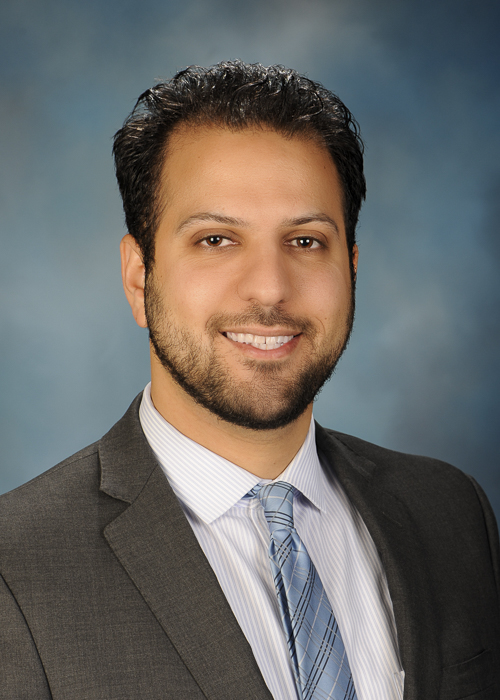
Rep. Abdelnasser Rashid
Sponsored bills
Amends the Courses of Study Article of the School Code. Provides that, beginning with the 2025-2026 school year, every public elementary school and high school shall include in its curriculum a unit of instruction studying the events of Arab American history, including the history of Arab Americans in the State and the Midwest, as well as the contributions of Arab Americans from the 19th century onward. Provides that the State Superintendent of Education may prepare and make available to all school boards instructional materials, including those established by the Public Broadcasting Service, that may be used as guidelines for the development of the unit of instruction. Provides that each school board shall determine the minimum amount of instructional time that qualifies as a unit of instruction. Provides that the regional superintendent of schools shall monitor a school district's compliance with the curricular requirements during the regional superintendent's annual compliance visit. Provides that a school may meet the requirements through an online program or course. Effective immediately.
Creates the Prohibition on Automated Online Ticket Purchasing Act. Provides that a person may not use or create any automated software program that performs automatic and repetitive tasks and is designed to impersonate or replicate human activity online to: (1) purchase tickets in excess of posted limits for an online ticket sale; (2) use multiple Internet protocol addresses, multiple purchaser accounts, or multiple e-mail addresses to purchase tickets in excess of posted limits for an online ticket sale; (3) circumvent or disable an electronic queue, waiting period, presale code, or other sales volume limitation system associated with an online ticket sale; or (4) circumvent or disable a security measure, access control system, or other control or measure that is used to facilitate authorized entry to an event. Provides that the Attorney General may seek injunctive relief in response to violations of the Act. Provides for civil penalties for violations of the Act.
Amends the Telephone Solicitations Act. Provides that a live operator soliciting the sale of goods or services shall immediately state the name and telephone number (rather than the name) of the business or organization being represented. Provides that a live operator shall disclose his or her mailing address and the business or organization being represented on any website owned or operated by the live operator and on any written communications to a customer. Provides that the provisions of the Act shall not apply to a live operator who makes a residential marketing telephone call in response to a customer's telephone call or contact with the website of the business or organization being represented if the customer affirmatively requests a follow-up telephone call or other contact from the business or organization being represented. Provides that specified violations of the Act are a Class C misdemeanor.
Creates the Nurture Originals, Foster Art, and Keep Entertainment Safe Act, which may be referred to as the NO FAKES Act. Creates a civil action for a violation of specified provisions may be brought by (i) an individual, the image, voice, or visual likeness of whom is used in the digital replica that is the subject of the action; or (ii) any other person that owns or controls, including by virtue of an exclusive license, the rights to the image, voice, or visual likeness of this individual; or (iii) in the case involving a sound recording artist, any person that has entered into a contract for the exclusive personal services of the sound recording artist as a sound recording artist. Provides that "digital replica" means a newly created, computer-generated, electronic representation of the image, voice, or visual likeness of an individual that (i) is nearly indistinguishable from the actual image, voice, or visual likeness of that individual; and (ii) is fixed in a sound recording or audiovisual work in which that individual did not actually perform or appear. Requires that the civil action must be brought within 3 years after the date on which the aggrieved party discovered, or with due diligence should have discovered, the violation. Provides that the amounts that may be recovered include: (i) an amount equal to the greater of $5,000 per violation or any damages suffered by the injured party as a result of the violation; (ii) punitive damages in the case of a willful violation in which the injured party has proven that the defendant acted with malice, fraud, or oppression; and (iii) reasonable attorney's fees.
Amends the Department of Innovation and Technology Act. Makes changes to the composition of the Task Force. Provides that the Task Force shall include 2 members (rather than one) appointed by the Speaker of the House of Representatives, one of whom shall serve as a co-chairperson.
Amends the Consumer Fraud and Deceptive Business Practices Act. Provides that it is an unlawful practice within the meaning of the Act for a licensed mental health professional to provide mental health services to a patient through the use of artificial intelligence without first obtaining informed consent from the patient for the use of artificial intelligence tools and disclosing the use of artificial intelligence tools to the patient before providing services through the use of artificial intelligence. Amends the Clinical Social Work and Social Work Practice Act, the Medical Practice Act of 1987, the Nurse Practice Act, the Illinois Occupational Therapy Practice Act, and the Professional Counselor and Clinical Professional Counselor Licensing and Practice Act. Makes corresponding changes in grounds for discipline. Provides that the Department of Financial and Professional Regulation may adopt rules to regulate the use of artificial intelligence tools to provide mental health services.
Amends the Election Code. Provides that a person shall not distribute, or enter into an agreement with another person to distribute, materially deceptive media if: (1) the person knows the media falsely represents a depicted individual; (2) the distribution occurs within 90 days before an election; (3) the person intends the distribution to harm the reputation or electoral prospects of a candidate in an election and the distribution is reasonably likely to cause that result; and (4) the person intends the distribution to change the voting behavior of electors in an election by deceiving the electors into incorrectly believing that the depicted individual in fact engaged in the speech or conduct depicted, and the distribution is reasonably likely to cause that result. Sets forth exceptions to the provision and penalties for violations of the provision. Effective immediately.
Amends the Criminal Code of 2012. Provides that the Public Act may be referred to as the Safe Firearm Storage Act. Provides that it is unlawful for any person to store or leave a firearm outside of that person's immediate possession or control (rather than within premises under his or her control if the person knows or has reason to believe that a minor under the age of 14 years who does not have a Firearm Owners Identification Card is likely to gain access to the firearm without the lawful permission of the minor's parent, guardian, or person having charge of the minor, and the minor causes death or great bodily harm with the firearm) unless the firearm is secured in a manner that renders it inaccessible to anyone but the owner or another lawfully authorized user: (1) by a device or mechanism, other than the firearm safety, designed to render a firearm temporarily inoperable; or (2) locked box or container. Deletes provisions that the law does not apply: (1) if a minor under 14 years of age gains access to a firearm and uses it in a lawful act of self-defense or defense of another; or (2) to any firearm obtained by a minor under the age of 14 because of an unlawful entry of the premises by the minor or another person. Deletes a provision that the firearm may be placed in some other location that a reasonable person would believe to be secure from a minor under the age of 14 years. Effective January 1, 2025.
Creates the Work Without Fear Act. Provides that it is unlawful for any person to engage in, or to direct another person to engage in, immigration-related retaliation against any person or his or her family member or household member for the purpose of, or with the effect of, retaliating against any person for exercising any right protected under State employment laws or by any local employment ordinance. Sets forth the duties and powers of the Department of Labor under the Act. Allows the Attorney General to initiate or intervene in a civil action to obtain appropriate relief if the Attorney General has reasonable cause to believe that any person has violated the Act. Provides that nothing in the Act shall be construed to prevent any person from making complaint or prosecuting his or her own claim for damages caused by retaliation. Allows a person who is the subject of retaliation prohibited by the Act to bring a civil action for: (1) back pay, with interest, and front pay, or, in lieu of actual damages, liquidated damages of $30,000; (2) a civil penalty in an amount not to exceed $10,000; (3) reasonable attorney's fees and court costs; and (4) equitable relief as the court may deem appropriate and just. Provides that a person that violates any provision of the Act shall be subject to an additional civil penalty in an amount of $25,000 for each violation, or $50,000 for each repeat violation within a 5-year period. Sets forth license suspension penalties for violations of the Act. Effective January 1, 2025.