Amends the Department of Human Services Act. Requires the Department of Human Services to establish and administer a grant program to provide grants to licensed day care facilities that are open 24 hours a day and give priority to serving the children of first responders. Provides that program grants must be used to provide subsidized child care services to the children of first responders. Provides that day care facilities seeking grants under the program may apply to the Department in a form and manner prescribed by the Department. Provides that the Department may adopt any rules necessary to implement the program.
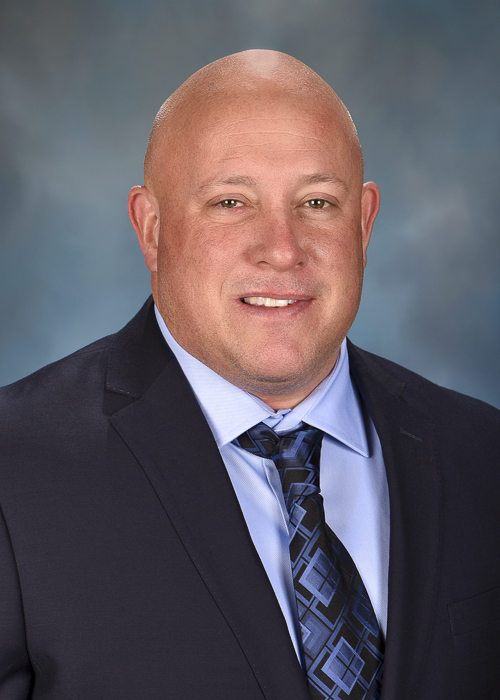
Rep. Michael Kelly
Sponsored bills
Amends the Expressway Camera Act. Provides that images from expressway cameras may be used by any municipal police department, county sheriff's office, State Police officer, or other law enforcement agency with jurisdiction over the expressway in Cook County in the investigation of any violent offenses, including, but not limited to, offenses involving the use of a firearm and vehicular hijacking. Provides that images from expressway cameras may be used by any law enforcement agency conducting an active law enforcement investigation involving a violent offense.
Creates the Crisis Intervention Training Program for Law Enforcement, Firefighters, Emergency Medical, and Corrections Community Act. Provides that, subject to appropriation, the Department of Human Services shall establish and maintain a program to contract with qualified crisis intervention training entities for the purpose of providing peer support crisis intervention, counseling, and wellness for the law enforcement, firefighter, emergency medical, and corrections communities impacted by trauma, cumulative stress, anxiety, addictions, death, and suicide and the impact on their personal lives. Provides that the required wellness strategies shall include, but not be limited to, resilience trainings related to resiliency for the job, emotional survival, substance abuse prevention, financial and relationship strategies, and suicide prevention. Defines "qualified crisis intervention training entity" to mean an entity approved by the International Critical Incident Stress Foundation to instruct the Critical Incident Stress Management crisis intervention process or any other public or private entity approved by the Department to provide the services required under the Act. Grants the Department rulemaking authority.
Amends the Illinois Vehicle Code. Provides that in a county having a population of 3,000,000 or more, the county sheriff shall establish with other law enforcement agencies a vehicle theft hotline to facilitate the location of stolen vehicles via their installed existing global positioning systems, collaborate with vehicle manufacturers and dealers to provide information and assistance to law enforcement officers in the investigation of vehicle theft, and ensure that consumers are provided with information concerning the hotline and any new or used vehicle manufactured with a global positioning system by publishing the information in a conspicuous location on the county sheriff's website. Provides that the manufacturer of any vehicle sold in this State shall establish a hotline available to State, county, and local law enforcement agencies exclusively for the purposes of law enforcement information sharing and the electronic tracking of vehicles stolen in vehicular hijacking incidents or that have been used in the commission of kidnapping, aggravated battery with a firearm, attempted homicide, or homicide. Provides that the manufacturer's hotline shall relay vehicle location information, including real-time vehicle location information whenever possible, to the 9-1-1 call center or designated dispatch center for the responding agency, to the best of the manufacturer's technical capability. Requires State, county, and local law enforcement agencies to use their respective 9-1-1 system call centers or designated dispatch centers for the purpose of verification of law enforcement officers' identities and bona fide incident report numbers related to incidents. Requires manufacturers to prepare written statements detailing tracking and disabling system capabilities and make them available to State, county, and local law enforcement agencies upon request. Requires that, if a vehicle is not subscribed to the manufacturer's tracking service, the manufacturer of any vehicle sold in this State shall waive all fees associated with initiating, renewing, reestablishing, or maintaining the location, disabling, or alert service with which the vehicle is equipped during a law enforcement response or investigation of specified offenses.

Amends the Illinois Governmental Ethics Act. Provides that no local elected official may engage in lobbying if he or she accepts compensation specifically attributable to such lobbying, other than that provided by law or ordinance for local elected officials. Provides that nothing prohibits a local elected official from lobbying without compensation. Defines terms. Effective immediately.
Amends the Higher Education Student Assistance Act. Provides for the issuance of grants to essential workers and the dependents of essential workers, subject to appropriation. Defines "essential worker" as an individual whose employment duties provide a service that is typically deemed vital to public health and safety and economic and national security and essential to continue critical infrastructure operations. Sets forth provisions concerning application and qualifications for a grant, the amount of a grant and its use, and rulemaking. Effective July 1, 2021.
Appropriates $3,000,000 from the General Revenue Fund to the Department of Human Services to provide grants to day care facilities for subsidized child care services for the children of first responders. Effective July 1, 2022.
Amends the Line of Duty Compensation Act. Expands the definition of "law enforcement officer" or "officer" to include any person working as a volunteer for the State or a local governmental entity in some position involving the enforcement of the law and protection of the public interest at the risk of that person's life, including, but not limited to, volunteers assisting with parking and traffic.
Amends the Election Code. Creates the Rights of Voters Article. Prohibits the imposition or application of a voting qualification or prerequisite to voting or standard, practice, or procedure by the State or any locality in a manner that results in a denial or abridgment of the right of any citizen of the United States to vote based on race or color or membership in a language minority group. Provides that a county, city, or town that has more than 5% of its eligible voters or 10,000 eligible voters that are members of a single language minority and are unable to speak or understand English adequately to participate in the electoral process shall provide voting or election materials in the language of that minority group. Requires notice of certain changes in the election process and allows for a public comment period. Alternatively, allows the election authority to submit proposed changes to the Attorney General for implementation. Prohibits the use of an at-large method of election in a manner that impairs the ability of members of a protected class to elect candidates of its choice or its ability to influence the outcome of an election. Creates the Voter Education and Outreach Fund as a special fund in the State treasury to deposit all penalties and charges related to violations of the provisions. Allows the Attorney General to commence a civil action in response to a violation of the provisions. Makes other and conforming changes. Provides that the amendatory Act may be referred to as the Illinois Voting Protection Act.
Amends the Environmental Protection Act. Provides that the Environmental Protection Agency shall, subject to appropriation, provide grants to municipalities to provide filters for areas with lead service lines whose areas do not have a plan to replace the lead service lines in accordance with the following restrictions and specifications: (1) all filters purchased must be produced in Illinois; (2) all filters must remove at least 99.9% of lead from water as demonstrated by independent laboratory validation in which the filter vendor has no financial or other interest whatsoever; (3) all filters must operate in a manner that does not waste water; (4) all filters must be recyclable and filter cartridges must be reusable; (5) all plastic used in the filter unit fabrication must be NSF certified and impurity free; and (6) municipalities must provide the filters for residential use only. Effective immediately.