Amends the Charter Schools Law of the School Code. Provides that any renewal of a certified charter must include a union neutrality clause. Requires a union neutrality clause to be included in a charter school proposal. Defines "union neutrality clause". Effective immediately.
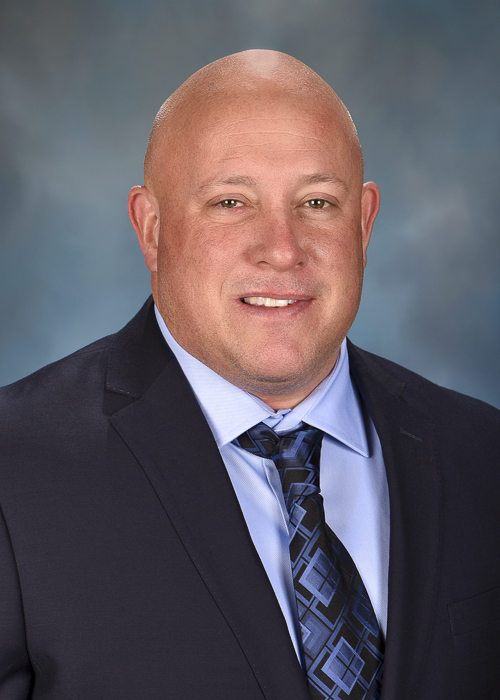
Rep. Michael Kelly
Sponsored bills
Creates the Access to Affordable Insulin Act. Sets forth provisions concerning an insulin urgent-need program. Provides that each manufacturer shall establish procedures to make insulin available to eligible individuals who are in urgent need of insulin or who are in need of assistance to access an affordable insulin supply. Sets forth provisions concerning insulin urgent-need program exceptions, eligibility, forms, applications, claims and reimbursement, copayments, information sheets, navigators, and penalties. Defines terms. Amends the Illinois Insurance Code. In provisions concerning cost sharing in prescription insulin drugs, provides that an insurer that provides coverage for prescription insulin drugs under the terms of a health coverage plan the insurer offers shall limit the total amount that an insured is required to pay for a 30-day supply of covered prescription insulin drugs at an amount not to exceed $35 (rather than $100). Effective immediately.
Amends the Department of Professional Regulation Law of the Civil Administrative Code of Illinois. In a provision concerning expedited licensure for service members and spouses, provides that a department shall waive any application, examination, or licensure fee for a service member or the service member's spouse. Removes references to fees.
Amends the State Employees Group Insurance Act of 1971. Makes a technical change in a Section concerning the short title.
Amends the State Commemorative Dates Act. Provides that the month of October of each year is designated as Italian Heritage Month to be observed throughout the State as a month to recognize the contributions and influence of Italians on American history, achievement, culture, and innovation.
Amends the Criminal Code of 2012. Creates the offense of lewd sexual display in a penal institution. Provides that a person commits the offense when he or she is in the custody of a penal institution and knowingly engages in any of the following acts while he or she is confined in a penal institution: engages in a lewd exposure of the body or sex organs, anus, or breast, for the purpose or effect of intimidating, harassing, or threatening one whom he or she believes to be in the presence or view of such acts. Excludes from the definition of "penal Institution" a facility of the Department of Juvenile Justice or a juvenile detention facility. Provides that lewd sexual display in a penal institution is a Class A misdemeanor, except that a person convicted of a third or subsequent violation is guilty of a Class 4 felony. Provides that the Illinois Criminal Justice Information Authority shall compile certain data provided to it and provide an annual report to the Governor and the General Assembly on or before January 1 of each year. Provides that the Illinois Criminal Justice Information Authority may include findings or recommendations in its published annual report. Amends the Sex Offender Registration Act. Provides that "sex offense" under the Act includes a third violation of lewd sexual display in a penal institution committed on or after the effective date of the amendatory Act and before January 1, 2030. Provides that a person convicted of a third violation of lewd sexual display in a penal institution, committed on or after the effective date of the amendatory Act and before January 1, 2030, who is required to register under the Act shall be required to register for a period of 10 years after conviction or adjudication if not confined to a penal institution, hospital, or any other institution or facility, and if confined, for a period of 10 years after parole, discharge, or release from any such facility. Repeals the Sections creating the offense of and reporting requirements regarding lewd sexual display in a penal institution on January 1, 2030.

Amends the State Fire Marshal Act. Establishes, subject to appropriation, the Division of Certified Youth Firesetter Interventionists within the Office of the State Fire Marshal. Provides that the Division shall consist of certified youth firesetter interventionists who conduct youth firesetter interventions when local authorities cannot do so on their own or when multiple local authorities in separate jurisdictions are involved. Describes the duties of the Division. Contains other provisions.
Amends the Illinois Vehicle Code. Provides that a person may not operate a motor vehicle on a roadway while using an electronic communication device, including using an electronic communication device to participate in any video conferencing application or to access any social media site. Excludes the exemptions that permit a driver to use an electronic communication device in hands-free or voice-operated mode or by pressing a single button to activate or terminate a voice communication when a person is using the electronic communication device to watch or stream video, participate in any video conferencing application, or access any social media site.
Amends the Overdose Prevention and Harm Reduction Act. Provides that a pharmacist may sell fentanyl test strips over-the-counter to the public to test for the presence of fentanyl, a fentanyl analogue, or a drug adulterant within a controlled substance. Provides that a county health department may distribute fentanyl test strips at the county health department facility for no fee. Amends the Drug Paraphernalia Control Act. Provides that "drug paraphernalia" does not include equipment, products, or materials to analyze or test for the presence of fentanyl, a fentanyl analogue, or a drug adulterant within a controlled substance.
Amends the Public Safety Employee Benefits Act. In a provision requiring a public safety employer to pay the entire premium of its health insurance plan for a public safety employee, the employee's spouse, and the employee's dependent children after the employee suffers a fatal or catastrophic injury in the line of duty, requires the employer to offer any individual who qualifies for such premium payments the choice of any health insurance plan available to currently employed full-time public safety employees.