

Creates the Firefighter Paid Family Leave Act. Provides that a firefighter shall receive 6 weeks of paid family leave that may be used: (1) for the birth of a child in order to care for the child; (2) to care for a newly adopted child under 18 years of age, a newly placed foster child under 18 years of age, or a newly adopted or placed foster child older than 18 years of age if the child is incapable of self-care because of a mental or physical disability; and (3) to care for a family member with a serious health condition. Provides that the paid family leave requirements shall be provided to a firefighter regardless of the employer's leave policies and shall be provided to a firefighter who has been employed by the employer for at least one year. Provides that a firefighter may voluntarily waive his or her right to paid family leave. Provides that the Department of Labor may adopt any rules necessary to implement the Act.
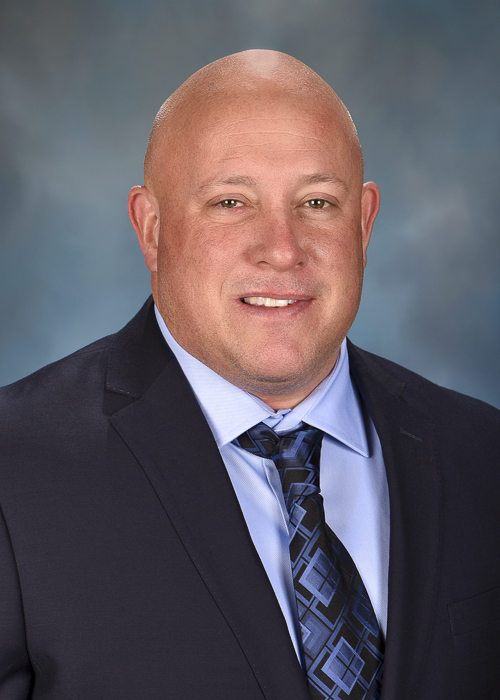
Rep. Michael Kelly
Sponsored bills
Amends the Highway Advertising Control Act of 1971. Defines "sign" as any outdoor sign, display, device, notice, figure painting, drawing, message, placard, poster, billboard, or other thing, which is operated or owned by a person or entity where any person or entity is paying or earning remuneration directly or indirectly for (i) the existence or placement of the outdoor sign or (ii) the placement of the message on the outdoor sign (rather than any outdoor sign which is designated, intended, or used to advertise or inform, and of which any part of the existing or intended advertising or informative content) is capable of being visible from any place on the main-traveled way of any portion of any Interstate or primary highway and which is within 660 feet of the nearest edge of the right-of-way of such highway. Provides that for purposes of the definition of "erect", attaching a vinyl substrate medium to a sign structure or wall surface shall constitute normal maintenance or repair of a sign or sign structure. Defines "remuneration". Removes the definitions of "on premise sign", "off premise sign", and "real estate sign". Removes language providing that registration must be made of each sign and shall be accompanied by a registration fee of $5. Removes provisions concerning directional and other official signs, real estate signs, on premise signs, off premise signs, and signs affixed by public utilities. Makes corresponding changes. Effective immediately.
Maddy summaryThis bill amends state laws governing public libraries in Illinois to prohibit limiting access to or purchasing books based on their depiction of race, ethnicity, sexual orientation, gender identity, religion, or human rights activism. It directly affects public library boards, staff, and library systems by establishing new rules that prevent censorship of specific subject matters while allowing restrictions for public safety or age-appropriateness. The legislation ensures that library collections remain inclusive by explicitly forbidding bans on biographies, autobiographies, and memoirs that cover these topics.
Maddy summaryThis bill creates the Early Childhood Education Act to establish a framework for early childhood education in Illinois. A specific provision within the legislation ensures that the rights, benefits, and employment status of state employees and their agencies remain unchanged by the new act. It explicitly states that the law does not affect existing personnel codes, labor relations, collective bargaining agreements, or pension plans. The bill was signed into law and became effective on June 25, 2024, with some provisions taking effect on July 1, 2026.
Amends the Chicago School District Article of the School Code. Provides that a local school council shall have and exercise the power and duty to contract with the Chicago Police Department to have police officers or school resource officers on school grounds. Effective immediately.
Maddy summarySB 914 updates the definition of who qualifies for free hunting licenses in Illinois by clarifying rules for landowners, tenants, and business owners. The bill establishes specific criteria for "bona fide equity" members of corporations, limited liability companies, and partnerships, requiring them to hold their interest for at least five years and hunt only on the business's land. It also expands eligibility to include family members who collectively own at least 40 acres but do not all live on the property. These changes aim to streamline the process for issuing free permits to eligible individuals while maintaining restrictions on non-resident fees and hunting outside the specified land.
Amends the Parking Excise Tax Act. Reinserts the definitions of "booking intermediary" and "charge or fee paid for parking" removed by Public Act 102-700 and reinserts those terms into the definition of "operator". Effective immediately.
Amends the Open Space Lands Acquisition and Development Act. Provides that a local government that has submitted a distressed location project as defined by Department of Natural Resources rule shall be eligible for assistance up to 100% for the acquisition of open space lands and for capital development and improvement projects on distressed location projects. Provides that no less than 10% of the amount appropriated under the Act in any fiscal year shall be made available as grants to distressed communities.
Amends the Mental Health and Developmental Disabilities Administrative Act. Provides that, for community-based providers serving persons with intellectual/developmental disabilities, subject to federal approval of any relevant Waiver Amendment, the rates taking effect for services delivered on or after January 1, 2025 shall include an increase in the rate methodology sufficient to provide a $3 per hour wage rate increase for all direct support personnel and all other frontline personnel who are not subject to the Bureau of Labor Statistics' average wage increases and who work in residential and community day services settings, with at least $1.50 of those funds to be provided as a direct increase to base wages and the remaining $1.50 to be used flexibly for base wage increases. Provides that the rates taking effect for services delivered on or after January 1, 2025 shall include an increase sufficient to provide wages for all residential non-executive direct care staff, excluding direct support personnel, at the federal Department of Labor, Bureau of Labor Statistics' average wage as defined by rule by the Department of Human Services. Provides that for facilities licensed by the Department of Public Health under the ID/DD Community Care Act as ID/DD facilities and under the MC/DD Act as MC/DD facilities, subject to federal approval of a State Plan Amendment, the rates taking effect for services delivered on or after January 1, 2025, shall include a $3 per hour wage rate increase for all direct support personnel and all other frontline personnel who are not subject to the Bureau of Labor Statistics' average wage increases and who work in residential and community day services settings, with at least $1.50 of those funds to be provided as a direct increase to all aide base wages and the remaining $1.50 to be used flexibly for base wage increases to the rate methodology for aides. Provides that for residential services delivered on or after January 1, 2025, the rates shall include an increase sufficient to provide wages for all residential non-executive direct care staff, excluding aides, at the federal Department of Labor, Bureau of Labor Statistics' average wage as determined by the Department. Requires the Department to adopt rules, including emergency rules, to implement the amendatory Act.
Amends the Illinois Act on the Aging. In a provision requiring the Department on Aging to require an annual audit from all personal assistant and home care aide vendors contracting with the Department, provides that the annual audit shall assure that each audited vendor's procedures are in compliance with the Department's financial reporting guidelines requiring an 80% or higher employee wage and benefits cost split and an administrative cost split of no more than 20% (rather than an administrative and employee wage and benefits cost split as defined in administrative rules). Provides that subject to federal approval, on and after January 1, 2025, rates for homemaker services shall be increased to $32.75 to sustain a minimum wage of $20 per hour for direct service workers. Provides that rates in subsequent State fiscal years shall be no lower than $32.75 upon federal approval. Requires providers of in-home services to be required to certify to the Department that they remain in compliance with the mandated wage increase for direct service workers. Provides that fringe benefits, including, but not limited to, paid time off and payment for training, health insurance, travel, or transportation, shall not be reduced in relation to the rate increases. Provides that subject to federal approval, on and after January 1, 2025, the Department shall pay a rate add-on under the Community Care Program to those in-home service provider agencies that attest and document their direct service workers attend paid, quarterly, in-person training sessions to fulfill the in-service training requirements. Provides that the add-on shall be 1% of the homemaker services rate. Requires the Department to adopt rules.