

Amends the Mental Health and Developmental Disabilities Code. Provides that the Department of Human Services when a recipient of services under this Code, whether admitted on a voluntary or involuntary basis, is being discharged from an inpatient facility, shall provide the recipient and the recipient's conservator, guardian, or other legally authorized representative a written aftercare plan prior to the recipient's discharge from the facility. Provides that the written aftercare plan shall include, to the extent known, all of the following components: (1) the nature of the illness and followup required; (2) medications including side effects and dosage schedules; (3) if the recipient was given an informed consent form with his or her medications, the form shall satisfy the requirement for information on side effects of the medications; 4) expected course of recovery; (5) recommendations regarding treatment that is relevant to the recipient's care; (6) referrals to providers of medical and mental health services; and (7) other relevant information. Provides that the recipient shall be advised by facility personnel that he or she may designate another person to receive a copy of the aftercare plan.
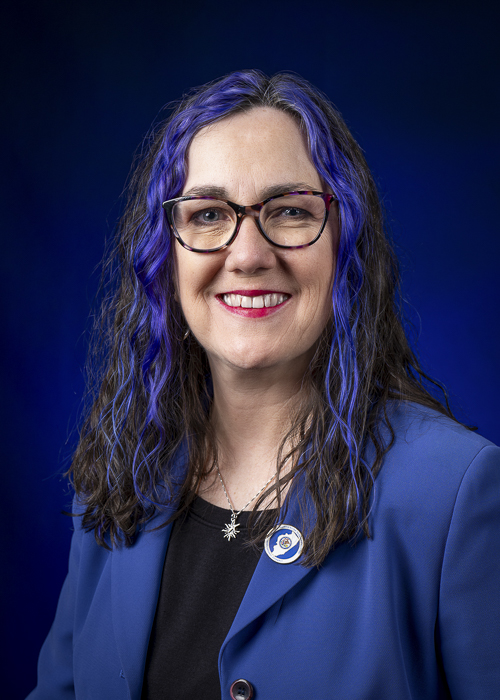
Rep. Kelly Cassidy
Sponsored bills
Amends the Children and Family Services Act. Provides that no youth in care shall be required to store his or her belongings in plastic bags or in similar forms of disposable containers, including, but not limited to, trash bags, paper or plastic shopping bags, or pillow cases when relocating from one placement type to another placement type or when discharged from the custody or guardianship of the Department of Children and Family Services. Requires the Department and all purchase of service agencies under contract with the Department to ensure that each youth in care has appropriate baggage and other items to store his or her belongings when moving through the State's child welfare system. Senate Committee Amendment No. 1 Removes language requiring all purchase of service agencies under contract with the Department of Children and Family Services to ensure that each youth in care has appropriate baggage and other items to store his or her belongings when moving through the State's child welfare system.
Amends the Criminal Code of 2012. Provides that a person commits stalking when he or she knowingly makes threats that are a part of a course of conduct and is aware of the threatening nature of his or her speech.
Amends the Criminal Code of 2012. Provides that independent of any criminal prosecution or the result of a criminal prosecution, any person suffering injury as a result of a hate crime may bring a civil action for damages, injunction or other appropriate relief if the hate crime was caused by disorderly conduct committed by: (1) transmitting or causing to be transmitted in any manner to any peace officer, public officer or public employee a report to the effect that an offense will be committed, is being committed, or has been committed, knowing at the time of the transmission that there is no reasonable ground for believing that the offense will be committed, is being committed, or has been committed; (2) transmitting or causing to be transmitted in any manner a false report to any public safety agency without the reasonable grounds necessary to believe that transmitting the report is necessary for the safety and welfare of the public; or (3) calling the number "911" or transmitting or causing to be transmitted in any manner to a public safety agency for the purpose of making or transmitting a false alarm or complaint and reporting information when, at the time the call or transmission is made, the person knows there is no reasonable ground for making the call or transmission and further knows that the call or transmission could result in the emergency response of any public safety agency.
If and only if House Bill 2170 of the 101st General Assembly becomes law, amends the Data Governance and Organization to Support Equity and Racial Justice Act to include, in addition to race and ethnicity, the demographic categories of age, sex, disability status, sexual orientation, and gender identity to the categories of data that must be reported. Amends the University of Illinois Hospital Act and the Hospital Licensing Act to require a hospital to report to the Department of Public Health certain demographic data for individuals who have the symptoms of or a potential exposure to COVID-19 and are released from and not admitted to the hospital and individuals who were tested for COVID-19, who were admitted into the hospital for COVID-19, or who have received a vaccination for COVID-19. Varied effective date. Senate Floor Amendment No. 1 Deletes reference to: 110 ILCS 330/8.5 new 210 ILCS 85/6.28 new Adds primary or preferred language to the statistical or demographic data that must be reported under the amendatory provisions. Removes provisions relating to the University of Illinois Hospital Act and the Hospital Licensing Act.
Amends the Criminal Code of 2012. Provides that it is unlawful for any person to knowingly make a video record or transmit live video of another's intimate parts. Provides that in any criminal proceeding, any property or material that constitutes child pornography shall remain in the care, custody, and control of either the State or the court. Determines when a victim is considered unable to give knowing consent. Defines terms. Makes other changes. Senate Committee Amendment No. 1 Adds reference to: 325 ILCS 5/3 from Ch. 23, par. 2053 Amends the Abused and Neglected Child Reporting Act. In the definition of "neglected child", provides that blatant disregard for the welfare of the child by the person responsible for the welfare of the child may contribute to the child being considered a "neglected child". In the definition of "person responsible for the child's welfare", deletes language referring to a custodian of a child under 18 years of age and reinserts the language without the age reference.
Amends the School Code and the Mental Health Early Action on Campus Act. Provides that if a school district issues an identification card to pupils in any of grades 7 through 12, the district shall provide contact information for the National Suicide Prevention Lifeline, the Crisis Text Line, and a local suicide prevention hotline on the identification card. Provides that if a public college or university issues an identification card to students, the public college or university must provide on the identification card (i) contact information for the National Suicide Prevention Lifeline, the Crisis Text Line, and a local suicide prevention hotline and (ii) the campus police or campus security telephone number or a local nonemergency telephone number. Effective July 1, 2022. House Floor Amendment No. 1 Deletes reference to: 105 ILCS 5/10-20.73 new 105 ILCS 5/27A-5 110 ILCS 58/25 Adds reference to: 105 ILCS 5/10-20.75 new Replaces everything after the enacting clause. Provides that the Act may be referred to as the Beyond Charity Law. Amends the School Code. Provides that each school district that serves pupils in any of grades 6 through 12 and that issues an identification card to pupils in any of grades 6 through 12 shall provide contact information for the National Suicide Prevention Lifeline (988), the Crisis Text Line, and either the Safe2Help Illinois helpline or a local suicide prevention hotline or both on the identification card. Requires the contact information to identify each helpline that may be contacted through text messaging. Provides that the contact information shall also be included in the school's student handbook and student planner if a student planner is custom printed by the school for distribution to students in any of grades 6 through 12. Effective July 1, 2022. House Floor Amendment No. 2 Deletes reference to: 105 ILCS 5/10-20.73 new 105 ILCS 5/27A-5 Adds reference to: 105 ILCS 5/10-20.75 new 110 ILCS 58/25 Replaces everything after the enacting clause. Provides that the Act may be referred to as the Beyond Charity Law. Amends the School Code. Provides that each school district that serves pupils in any of grades 6 through 12 and that issues an identification card to pupils in any of grades 6 through 12 shall provide contact information for the National Suicide Prevention Lifeline (988), the Crisis Text Line, and either the Safe2Help Illinois helpline or a local suicide prevention hotline or both on the identification card. Amends the Mental Health Early Action on Campus Act. Provides that if a public higher education institution issues student identification cards to its students, the institution must provide contact information for the National Suicide Prevention Lifeline (988), the Crisis Text Line, and a local suicide prevention hotline on the identification card. Requires the contact information on the school's or institution's card to identify each helpline that may be contacted through text messaging. Provides that the contact information shall also be included in the student handbook and student planner if a student planner is custom printed by the school or institution. Effective July 1, 2022.
Amends the Illinois Public Aid Code. Provides that, in determining income eligibility for child care benefits beginning in State fiscal year 2022, the income threshold shall be no less than 200% of the then-current federal poverty level for each family size. Effective July 1, 2021. House Floor Amendment No. 1 Provides that the income threshold established for the child care program in the amendatory Act shall be in effect notwithstanding any other provision of law or administrative rule to the contrary.
Amends the Downstate Teacher Article of the Illinois Pension Code. Allows a member to establish optional credit for up to 2 years of service as a teacher or administrator employed by a private school recognized by the Illinois State Board of Education, provided that the teacher (i) was certified under the law governing the certification of teachers at the time the service was rendered, (ii) applies in writing on or before June 30, 2023, (iii) supplies satisfactory evidence of the employment, (iv) completes at least 10 years of contributing service as a teacher, and (v) pays the required contribution. Effective immediately. House Floor Amendment No. 2 Adds reference to: 40 ILCS 5/16-158 from Ch. 108 1/2, par. 16-158 Replaces everything after the enacting clause. Reinserts the provisions of the engrossed bill with the following changes. Further amends the Downstate Teacher Article of the Illinois Pension Code. In a provision that requires an employer to make an additional contribution to the System for certain salary increases greater than 6%, excludes salary increases resulting from teaching summer school on or after May 1, 2021 and before September 15, 2022. Effective immediately. Pension Note, House Floor Amendment No. 2 (Government Forecasting & Accountability) SB 1646, as amended by HA 2, would reopen a window for teachers to apply for optional service credit for work done in approved private schools as teachers and administrators. The Teachers' Retirement System reports having 3,463 members who have applied for this private school credit in previous window openings, as described below. TRS estimates that the fiscal impact of this bill would be low, as the member must pay both the member and employer contributions, plus the actuarially assumed rate of interest to take advantage of this credit. The fiscal impact to TRS as a result of exempting summer school teaching from the 6% Final Average Salary Cap is unknown, as it is not known how many teachers would accrue pensionable salary in excess of 6% from the previous school year with the same employer via summer school teaching rendered between May 1, 2021 and September 15, 2022. Fiscal Note, House Floor Amendment No. 2 (Teachers Retirement System) Actuarial cost impact. SB 1646 as amended would have an unknown impact to TRS. Changes allowing optional service purchase under the bill are designed to be fully paid for by the related member contributions. Changes in required school district contributions would likely create some additional cost to the State of Illinois, but the total cost cannot be calculated without knowing the actual behavior of individual school districts and employees. Administrative cost impact. Administering the provisions of this bill would not increase the administrative costs ofTRS.
Creates the Racial Disproportionality in Child Welfare Task Force Act. Creates the Racial Disproportionality in Child Welfare Task Force within the Department of Children and Family Services. Requires the Task Force to examine the historical and current role of mandatory reporting and its impact on the racial and gender disparities of families involved with the Department of Children and Family Services; examine the underlying factors that bring families into contact with the Department and the factors that lead to child removal; review the Department's progress on the planning and implementation of the Family First Prevention Services Act; examine the current processes and policies, data, and data collection methods for families involved simultaneously in the child welfare, juvenile justice, or criminal justice systems; explore policies and protocols for race-blind child protection screenings and child removal reviews; and other duties. Contains provisions concerning the composition of the Task Force and Task Force meetings. Requires the Task Force to submit a report to the General Assembly and the Governor within one year after the Task Force has its first meeting. Provides that the report shall contain policy recommendations that seek to prioritize preserving and reunifying families involved in the child welfare system, particularly Black families; reduce child welfare system involvement, particularly for Black families; and eliminate racial disproportionality in system involvement and the disproportionate impact of system involvement on families. Provides that the Task Force is dissolved, and the Act repealed, on January 1, 2024. Effective immediately. House Committee Amendment No. 1 Replaces everything after the enacting clause. Reinserts the provisions of the introduced bill with the following changes. Provides that the Task Force shall include one member (rather than 2 members) from an organization with expertise in the child welfare system that advocates to preserve and reunify families, appointed by the Governor's Office; 2 members who provide legal representation on behalf of the State of Illinois in child protection cases, one from the Cook County State's Attorney's Office, appointed by the Governor's Office, and one from a State's Attorney's office outside of Cook County, appointed by the Governor's Office; and one member from a statewide organization advocating for the advancement of civil liberties for at least 80 years in Illinois, appointed by the Governor's Office. Provides that the Department of Children and Family Services shall facilitate the prompt and timely collection and provision of data as requested by or on behalf of the Task Force. Requires the Task Force to explore policies and protocols that honor language, culture, and heritage in identity formation and familial relationships, including, but not limited to, race-blind child protection screenings and child removal reviews, as implemented in other jurisdictions around the United States, and to make recommendations for implementation in Illinois. Effective immediately. House Floor Amendment No. 2 Provides that any data provided by the Department of Children and Family Services to the Racial Disproportionality in Child Welfare Task Force shall not contain any personally identifiable information of any clients or families in accordance with the provisions of the Abused and Neglected Child Reporting Act.