

Creates the Safer Consumption Services Act. Provides that, notwithstanding any provision of law to the contrary, the Department of Public Health may approve an entity to operate a program in one or more jurisdictions upon satisfaction of specified requirements relating to, among other things, the safe and hygienic use of preobtained drugs. Requires the Department to establish standards for program approval and training and allows it to adopt any rules that are necessary to implement the Act. Requires the Department to approve or deny an application within 45 days after its receipt. Provides that a program approved by the Department must also be designated as an authorized needle and hypodermic syringe access program under the Overdose Prevention and Harm Reduction Act. Provides reporting requirements for entities operating programs under the Act. Provides that, except for criminal prosecution for any activities that are not conducted, permitted, and approved pursuant to the Act, specified persons related to a program shall not be subject to civil or criminal liability solely for participation or involvement in the program if it is approved by the Department under the Act. House Floor Amendment No. 1 Deletes reference to: New Act Adds reference to: 20 ILCS 301/5-26 new 20 ILCS 301/15-10 Replaces everything after the enacting clause. Amends the Substance Use Disorder Act. Permits the Department of Human Services to approve an entity to operate a safe consumption and overdose prevention services program (program). Requires the Department to establish standards for program approval and training and to adopt any rules that are necessary to license and monitor the program. Sets forth the minimum requirements that an entity must meet to obtain an approval on its application to operate a program. Requires any entity that operates a program to submit a report to the Department that contains specific information, including the number of program participants; the number of hypodermic needles, syringes, and harm reduction supplies distributed for use on-site; and the number of ancillary services provided to family members and the public, including, but not limited to, social service referrals and educational services. Grants immunity from criminal and civil liability to specified persons who participate in or have some involvement with a program approved by the Department. Requires the Department to establish a new intervention license category entitled Harm Reduction Services and to approve or deny an application for a Harm Reduction Services license. Fiscal Note, House Floor Amendment No. 1 (Dept. of Human Services) No fiscal impact to IDHS for the regulation and licensing of the Safe Consumption Services programs.
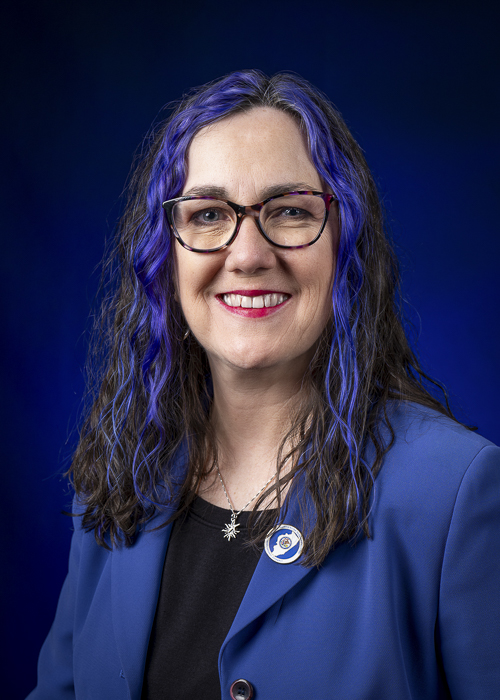
Rep. Kelly Cassidy
Sponsored bills
Creates the Clean Jobs, Workforce, and Contractor Equity Act. Creates the Equity and Empowerment in Clean Energy Advisory Board to administer the Clean Jobs Workforce Hubs Network Program, the Expanding Clean Energy Entrepreneurship and Contractor Incubator Network Program, the Returning Residents Clean Jobs Training Program, and the Illinois Clean Energy Black, Indigenous, and People of Color Primes Contractor Accelerator Programs. Establishes the Returning Residents Clean Jobs Training Program within the Department of Commerce and Economic Opportunity to assist inmates in their rehabilitation through training that prepares them to successfully hold employment in the clean energy jobs sector upon their release from incarceration. Requires the Department of Commerce and Economic Opportunity to create an Illinois Clean Energy Black, Indigenous, and People of Color Primes Contractor Accelerator Program. Creates the Illinois Clean Energy Jobs and Justice Fund Act to ensure access to financial products that allow Illinois residents and businesses to invest in clean energy. Creates the Community Energy, Climate, and Jobs Planning Act to aid local governments in developing a comprehensive approach to combining different energy, climate, and jobs programs and funding resources to achieve complementary impact. Creates the Energy Community Reinvestment Fund Act. Amends the State Finance Act to create the Energy Community Reinvestment Fund and the Illinois Clean Energy Jobs and Justice Fund. Amends the School Code. Sets forth provisions concerning a clean energy jobs curriculum. Amends the Public Utilities Act. Sets forth provisions concerning the Equitable Energy Upgrade Program. Amends the Environmental Protection Act. Sets forth provisions concerning the energy community reinvestment fee. Effective immediately.
Amends the School Visitation Rights Act. Provides that an employer that terminates an employee for absences to attend school conferences is liable in a civil action for damages resulting to the employee. Imposes upon the employer the burden of proof to demonstrate that termination is not related to an employee's absence for attendance at a school conference, behavioral meeting, or academic meeting. Effective August 1, 2021.
Condemns the treatment of Haitian refugees by members of the U.S. Border Patrol and U.S. policies that undermine the people of Haiti. Urges President Biden and Congress to adopt a compassionate and humane immigration system that respects the dignity and value of each human life, including the Haitian people who wish to make a life in the United States.
Amends the Election Code. Allows the State Board of Elections to receive voter registration information provided by applicants using electronic voter registration portals (rather than the Board's website). Provides that notwithstanding any other provision of law, a person who is otherwise qualified to vote may preregister to vote on or after that person's 16th birthday, with the registration held in abeyance by the appropriate election authority until that individual attains the required age to vote. Requires preregistration to be completed using the online voter registration system or an electronic voter registration portal. Provides that for the purposes of the Code, an individual who is 16 years of age or older (rather than who is 17 years of age and who will be 18 years of age on the date of the general or consolidated election) shall be deemed competent to execute and attest to any voter registration forms.
Amends the Wildlife Code. Provides that the Department of Natural Resources shall encourage the owners of structures to eliminate nonflashing (steady burning) L-810 lights by January 1, 2024. Provides that the owners of structures constructed on or after March 1, 2022 that are located within migratory flyways, or in ecologically sensitive areas, or are within one mile of a forest preserve or federal or State park or wildlife area shall turn off all lights not required for safety or maintenance between 12:00 a.m. through 7:00 a.m. during migratory seasons. Provides the Department of Natural Resources with rulemaking authority. Effective immediately. House Floor Amendment No. 1 Adds reference to: New Act Replaces everything after the enacting clause with the provisions of the introduced bill with the following changes. Creates the Bird Conservation Commission Act. Creates the Bird Conservation Commission for the purpose of promoting bird conservation and providing education and awareness on issues concerning bird conservation. Adds provisions concerning the membership, duties, powers, and reporting requirements of the Commission. In provisions amending the Wildlife Code, provides that the owners of structures with a height over 50 feet above ground level constructed on or after March 1, 2022 that are located in ecologically sensitive areas, or are within one-half mile of a forest preserve or federal or State park or wildlife area shall turn off all lights not required for safety or maintenance between 11:00 p.m. and 7:00 a.m. during migratory seasons (instead of requiring owners of structures constructed on or after March 1, 2022 that are located within migratory flyways, or in ecologically sensitive areas, or are within one mile of a forest preserve or federal or State park or Wildlife area to turn off all lights not required for safety or maintenance between 12:00 a.m. through 7:00 a.m. during migratory seasons). Effective immediately.
Amends the Criminal Code of 2012. Provides that a prosecution for perjury may be commenced within 5 years of the last act committed in furtherance of the crime (rather than 3 years after the commission of the act).
Creates the Mental Health Assessment Reform Act. Provides that the purpose of the Act is to remove barriers to care in the Medicaid mental health assessment and treatment planning process. Provides that, within 3 months after the effective date of the Act, the Department of Healthcare and Family Services shall clearly identify the minimum information necessary to establish and document medical necessity in an individual's medical record for each community mental health general rehabilitation option service through the use of the Department's standardized assessment and treatment planning tool required in the integrated assessment and treatment planning process. Requires minimum medical necessity documentation requirements to be publicly available to all community mental health centers and behavioral health clinics. Provides that an individual is immediately eligible to receive any community mental health service upon documentation of the specified medical necessity criteria in his or her medical record, and the provider shall be reimbursed for such delivered services. Provides that the integrated assessment and treatment planning process shall be required no more frequently than annually for specified community mental health services. Contains provisions requiring the Department to establish a workgroup to resolve certain issues identified by the Department with the assessment tool and the integrated assessment and treatment planning process. Requires the Department to submit a report to the General Assembly that outlines the issues and recommendations discussed by the workgroup. Contains provisions concerning the Department's development of a billing code, modifier, or other mechanism to reimburse providers for the full time spent on the integrated assessment and treatment planning process; assessment tool training; and other matters. Requires the Department to seek federal approval, if required to implement the Act. Permits the Department, with input from the Department's workgroup, to adopt emergency rules in accordance with the Illinois Administrative Procedure Act. Effective immediately.
Amends the Criminal Code of 2012. Provides that any person who, prior to the effective date of the amendatory Act, lawfully possessed an assault weapon shall register the assault weapon with the Illinois State Police within 90 days after the effective date of the amendatory Act and any person who acquired an assault weapon on or after the effective date of the amendatory Act shall register the assault weapon with the Illinois State Police within 90 days after he or she purchased or was given the weapon. Provides that the registration shall contain a description of the assault weapon that identifies it uniquely, including all identification marks, the full name, address, date of birth, and thumbprint of the owner, and any other information that the Director of the Illinois State Police deems appropriate. Provides that the Illinois State Police may charge a fee for registration not to exceed the reasonable processing costs of the Illinois State Police. Provides that the fees shall be deposited into the State Police Firearm Services Fund. Provides that a violation of these provisions is a Class A misdemeanor. Defines various terms.
Amends the Illinois Act on the Aging, the Rehabilitation of Persons with Disabilities Act, and the Illinois Public Aid Code. Provides that individuals with a score of 29 or higher based on the determination of need (DON) assessment tool shall be eligible to receive services through the Community Care Program, services to prevent unnecessary or premature institutionalization, and services through the program of supportive living facilities. Further amends the Illinois Public Aid Code. Provides that on and after July 1, 2023, level of care eligibility criteria for home and community-based services for medically fragile and technology dependent children shall be no more restrictive than the level of care criteria in place on January 1, 2021. Requires the Department of Healthcare and Family Services to execute, relative to the nursing home prescreening project, written agreements with the Department of Human Services and the Department on Aging to effect, on and after July 1, 2023, an increase in the DON score threshold to 37 for applicants for institutional long term care, subject to federal approval. Provides that on and after July 1, 2023 but before July 1, 2025, continuation of a nursing facility stay that began on or before June 30, 2023 by a person with a DON score between 29 and 36 may be covered when such stay would be otherwise eligible under this Code, provided the nursing facility performs certain actions. Requires the Department to, by rule, set a maximum total number of individuals to be covered and other limits on utilization that it deems appropriate. Effective July 1, 2023.